Results by title
313 books match the query 'Environmental policy' and 30 start with e

Eco-Sufficiency and Global Justice
Women Write Political EcologyEdited by Ariel Salleh
Pluto Press, 2009
As the twenty-first century faces a crisis of democracy and sustainability, this book attempts to bring academics and alternative globalisation activists into conversation.
Through studies of global neoliberalism, ecological debt, climate change, and the ongoing devaluation of reproductive and subsistence labour, these uncompromising essays by internationally distinguished women thinkers expose the limits of current scholarship in political economy, ecological economics, and sustainability science.
The book introduces groundbreaking theoretical concepts for talking about humanity-nature links and will be a challenging read for activists and for students of political economy, environmental ethics, global studies, sociology, women's studies, and critical geography.

Eco-pragmatism
Making Sensible Environmental Decisions in an Uncertain WorldDaniel A. Farber
University of Chicago Press, 1999
"A comprehensive well-argued effort to address many of the most difficult issues facing legislators concerned with environmental issues."—Stephen P. Adamian, Boston Book Review
"A timely and well-argued contribution."—Calestous Juma, Nature
Ecocide
A Short History of the Mass Extinction of SpeciesFranz Broswimmer
Pluto Press, 2002

Ecological Communication
Niklas Luhmann
University of Chicago Press, 1989
Luhmann extends the concept of "ecology" to refer to any analysis that looks at connections between social systems and the surrounding environment. He traces the development of the notion of "environment" from the medieval idea—which encompasses both human and natural systems—to our modern definition, which separates social systems from the external environment.
In Luhmann's thought, human beings form part of the environment, while social systems consist only of communications. Utilizing this distinctive theoretical perspective, Luhmann presents a comprehensive catalog of society's reactions to environmental problems. He investigates the spheres of the economy, law, science, politics, religion, and education to show how these areas relate to environmental issues.
Ecological Communication is an important work that critically examines claims central to our society—claims to modernity and rationality. It will be of great importance to scholars and students in sociology, political science, philosophy, anthropology, and law.
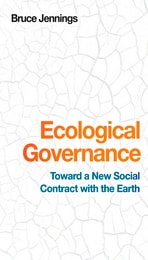
Ecological Governance
Toward a New Social Contract with the EarthBruce Jennings
West Virginia University Press, 2016
As our economic and natural systems continue on their collision course, Bruce Jennings asks whether we have the political capacity to avoid large-scale environmental disaster. Can liberal democracy, he wonders, respond in time to ecological challenges that require dramatic changes in the way we approach the natural world? Must a more effective governance be less democratic and more autocratic? Or can a new form of grassroots ecological democracy save us from ourselves and the false promises of material consumption run amok?
Ecological Governance is an ethicist’s reckoning with how our political culture, broadly construed, must change in response to climate change. Jennings argues that during the Anthropocene era a social contract of consumption has been forged. Under it people have given political and economic control to elites in exchange for the promise of economic growth. In a new political economy of the future, the terms of the consumptive contract cannot be met without severe ecological damage. We will need a new guiding vision and collective aim, a new social contract of ecological trusteeship and responsibility.

Ecological Politics
Greta Gaard
Temple University Press, 1998
A member of both movements, Greta Gaard bases her analysis on her personal experience as well as extensive secondary sources and interviews with key theorists, activists, and speakers across the United States. By allowing each movement's members to speak for themselves, she traces the separate origins and development of each movement, explains their connections, and reveals the light that each can cast upon the other and on the difficulties facing social action in general.
Beginning with the ecofeminists, Gaard describes the paths -- environmental causes, the feminist peace movement, the feminist spirituality movement, the animal liberation movement, and the anti-toxics movements, as well as experiences of interconnectedness -- that have led women (and a few men) to articulate an ecofeminist perspective. Tracing the movement from the 1980s to the present, she defines its present strands as liberal ecofeminism, radical ecofeminism, socialist ecofeminism, and social ecofeminism.
Gaard illustrates the development of the U.S. Greens from a national movement into a political party. She defines the various factions -- the Left Greens, the Youth Greens, and the Green Politics Network -- that influenced the movement's direction and underlay the debates during Ralph Nadar's 1996 presidential campaign. She shows how the history of these three groups can be seen as stages in the transition from a leftist and sometimes anarchist action that places the Green movement squarely within the pattern of other social movements around the world.
Despite the significant influence that ecofeminists have had in shaping the Greens as a national movement, many have chosen to withdraw from the Greens. Gaard looks at the reasons for member disaffection and draws disturbing conclusions about the compatibility between liberal feminism and cultural ecofeminism and patriarchal politics. She also presents the divisions within the Greens as ongoing battles within the new left, the radical ecology movement, and various social justice movements. She focuses on three general areas -- conflicts over philosophy, conflicts over representation, and conflicts over strategy -- to make suggestions for how to bring about the kind of social transformation envisioned by both the Greens and the ecofeminists. Arguing that the Concord Principles represent a populist form of liberal democracy that fundamentally betrays both ecofeminism and Green philosophy, she uses the 1996 Nadar campaign as a departure point to developing an ecofeminist theory of radical democracy and to speculate on future directions for Green politics and for ecofeminism. Her analysis illuminates the nature and direction of each of these important movements and the pressures and conflicts experienced by all social movements at the end of the twentieth century.

Ecologists and Environmental Politics
A History of Contemporary EcologyStephen Bocking
West Virginia University Press, 2017
Bocking tells this history through four case studies: the origins and early research of the Nature Conservancy in Great Britain; the development of ecology at the Oak Ridge National Laboratory in Tennessee; the work of the Hubbard Brook Ecosystem Study in New Hampshire; and research in fisheries ecology at the University of Toronto. By comparing these case studies, Bocking demonstrates how the places of contemporary science—laboratories, landscapes, and funding agencies—and science’s purposes, as expressed through the political roles of expertise and specific managerial and regulatory responsibilities, have shaped contemporary ecology and its application to pressing environmental problems.
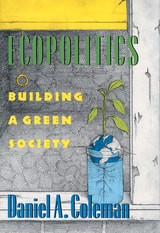
Ecopolitics
Building a Green SocietyColeman, Daniel
Rutgers University Press, 1994
Those solutions are just "Band-Aids on a bleeding Earth," argues environmental activist Daniel A. Coleman. Where conventional wisdom sees both the cause of the environmental crisis and its cure in individual actions, Coleman says: Look again. By blaming ourselves as individuals, we let governments and corporations off the hook. Making "50 simple" changes in our personal lifestyles is worthwhile, but must not divert our attention from the underlying causes of environmental disaster. The real causes are rooted deep in the politics of human affairs-and so are their solutions.We should be asking: Why do we allow such harm to our environment? How did we create a society with no stake in the future? How can we build a green society?
The good news is that we can reverse the process of environmental abuse. Political strategies driven by the key values of ecological responsibility, participatory democracy, environmental justice, and community action are effective. Dan Coleman's stories of citizen groups whose grassroots organizing has already put ecologically sound policies in place demonstrate that the sustainable society is indeed possible.
Lucid, lively, probing, serious, yet optimistic-Coleman's analysis is required reading for all who count the earth as their home.
Ecospeak
Rhetoric and Environmental Politics in AmericaM. Jimmie Killingsworth and Jacqueline S. Palmer
Southern Illinois University Press, 1992
In this book, M. Jimmie Killingsworth and Jacqueline S. Palmer have a twofold purpose: to analyze the patterns of rhetoric used in written discourse about environmental politics and to make a practical contribution to the art of rhetorical criticism through the study of rhetoric in use.
The language, professional objectivity, and research programs of scientists insulate these best-informed citizens in enclaves of specialization, limiting access to crucial information and hindering effective reformative action. Science, the authors stress, is not merely a database to rely upon but a view of the world that must be broadened in order to affect social morality. Science-based activism must arise to ensure the care and future of the environment.
Killingsworth and Palmer argue that for grassroots activism to be tied to this globally conscious philosophy, a rhetoric of sustainability must be cultivated.
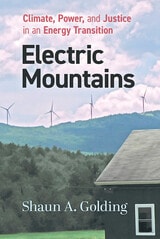
Electric Mountains
Climate, Power, and Justice in an Energy TransitionShaun A. Golding
Rutgers University Press, 2021
Committed environmentalists in one of North America’s most progressive regions desperately wanted energy policies that address the climate crisis. For many of them, wind turbines on Northern New England’s iconic ridgelines symbolize the energy transition that they have long hoped to see. For others, however, ridgeline wind takes on a very different meaning. When weighing its costs and benefits locally and globally, some wind opponents now see the graceful structures as symbols of corrupted energy politics.
This book derives from several years of research to make sense of how wind turbines have so starkly split a community of environmentalists, as well as several communities. In doing so, it casts a critical light on the roadmap for energy transition that Northern New England’s ridgeline wind projects demarcate. It outlines how ridgeline wind conforms to antiquated social structures propping up corporate energy interests, to the detriment of the swift de-carbonizing and equitable transformation that climate predictions warrant. It suggests, therefore, that the energy transition of which most of us are a part, is probably not the transition we would have designed ourselves, if we had been asked.

Embracing Watershed Politics
Edella Schlager
University Press of Colorado, 2008
Enriched by case studies of the organizations and decision making processes in several major U.S. watersheds (the Delaware River Basin, San Gabriel River, Platte River, and the Columbia River Basin), Embracing Watershed Politics presents a reasoned explanation of why there are so few watershed-scale integrated management agencies and how the more diverse multi-organizational arrangements found in the vast majorities of watersheds work. Although the presence of multiple organizations representing a multitude of communities of interest complicates watershed management, these institutional arrangements can-under certain conditions-suit the complexity and uncertainty associated with watershed management in the twenty-first century.
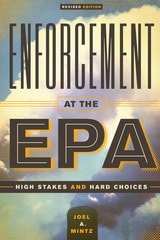
Enforcement at the EPA
High Stakes and Hard Choices, Revised EditionBy Joel A. Mintz
University of Texas Press, 2012
The only published work that treats the historical evolution of EPA enforcement, this book provides a candid inside glimpse of a crucial aspect of the work of an important federal agency. Based on 190 personal interviews with present and former enforcement officials at EPA, the U.S. Department of Justice, and key congressional staff members—along with extensive research among EPA documents and secondary sources—the book vividly recounts the often tumultuous history of EPA’s enforcement program. It also analyzes some important questions regarding EPA’s institutional relationships and the Agency’s working environment.
This revised and updated edition adds substantial new chapters examining EPA enforcement during the Clinton and George W. Bush administrations. Its treatment of issues of civil service decline and the applicability of captive agency theory is also new and original.

Environment in the Global Arena
Actors, Values, Policies, and FuturesKenneth A. Dahlberg, Marvin S. Soroos, Anne Thompson Feraru, James E. Harf, and B. Thomas Trout
Duke University Press, 1985
The issues in the series are each considered within a systematic framework common to all. Each volume begins with a historical background and then the issues are placed in their contemporary context. Four distinct perspectives are presented: (1) Who are the "global actors" involved in the issue, and what are the linkages among them? (2) What prevailing values are operating, and how have the relevant actors responded to those values? (3) What policies are applied by these actors at the global level, and how are these policies determined? (4) What are the possible results of the values and policies of these global actors?
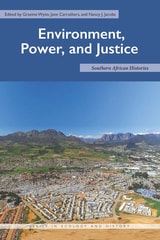
Environment, Power, and Justice
Southern African HistoriesGraeme Wynn
Ohio University Press, 2022
Environmental Assessment in Countries in Transintion
Norman Lee
Central European University Press, 2000
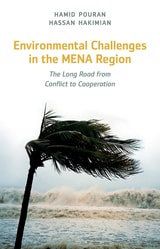
Environmental Challenges in the MENA Region
The Long Road from Conflict to CooperationHamid Pouran and Hassan Hakimian
Gingko, 2019
Although the region’s fragile environmental state has increasingly preoccupied policymakers in individual countries, there is currently insufficient attention paid to coordinating collaborative action to recognise and address problems relating to its environmental sustainability and climatic change. In the absence of a positive agenda for tackling these issues, recurrent environmental setbacks and rapid depletion of the region’s natural resources continue to pose a major threat to the long-term economic, political, and social stability of the region.
Despite the urgency of these challenges, there is little research dedicated to studying MENA’s environmental sustainability. Environmental Challenges in the MENA Region: The Long Road from Conflict to Cooperation draws from the proceedings of a seminal international conference on the subject at SOAS in October 2016, which was held as a celebration of the SOAS Centenary. This led to a collective contribution by experts and policy-makers concerned with the state of the MENA region’s environmental predicament with the aim of addressing these problems in a constructive and forward-looking approach.
The chapters in this book are predicated upon two critical premises. First, expertise and awareness from a wide range of disciplines is required to understand and address environmental challenges. And, second, to have a real chance of success, MENA countries need to confront these problems as their common threats and to see them as an opportunity for regional cooperation and policy coordination. This book provides the results of an interdisciplinary effort to address the various dimensions of the region’s environmental challenges from across the region and disciplines.
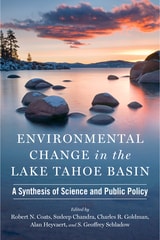
Environmental Change in the Lake Tahoe Basin
A Synthesis of Science and Public PolicyRobert N. Coats
University of Nevada Press, 2025
For over a century, scientific research and management efforts have aimed to mitigate the impacts of logging, mining, pollution, and invasive species while balancing urban development, tourism, and ecological preservation on the Lake. The book explores these challenges through a multidisciplinary lens, integrating environmental science, policy analysis, and case studies of both successful and failed management strategies. Written by experts who have played direct roles in key scientific discoveries and policy decisions, the book also examines the influence of environmental organizations and litigation in shaping conservation efforts.
At its core, the authors argue that the Tahoe Basin serves as a model for science-driven land and water stewardship. The book evaluates long-term monitoring programs, offering actionable recommendations for improving environmental oversight and resource management. Combining scientific analysis with accessible language, Environmental Change in the Lake Tahoe Basin serves as an up-to-date review of the region’s environmental challenges, providing an essential guide for scientists, resource managers, and policymakers.
The authors will donate all royalties from the sale of this volume to the Union of Concerned Scientist, www.ucs.org.

Environmental Imaginaries of the Middle East and North Africa
Diana K. Davis
Ohio University Press, 2011
The landscapes of the Middle East have captured our imaginations throughout history. Images of endless golden dunes, camel caravans, isolated desert oases, and rivers lined with palm trees have often framed written and visual representations of the region. Embedded in these portrayals is the common belief that the environment, in most places, has been deforested and desertified by centuries of misuse. It is precisely such orientalist environmental imaginaries, increasingly undermined by contemporary ecological data, that the eleven authors in this volume question. This is the first volume to critically examine culturally constructed views of the environmental history of the Middle East and suggest that they have often benefitted elites at the expense of the ecologies and the peoples of the region. The contributors expose many of the questionable policies and practices born of these environmental imaginaries and related histories that have been utilized in the region since the colonial period. They further reveal how power, in the form of development programs, notions of nationalism, and hydrological maps, for instance, relates to environmental knowledge production.
Contributors: Samer Alatout, Edmund Burke III, Shaul Cohen, Diana K. Davis, Jennifer L. Derr, Leila M. Harris, Alan Mikhail, Timothy Mitchell, Priya Satia, Jeannie Sowers, and George R. Trumbull IV

Environmental Injustices, Political Struggles
Race, Class and the EnvironmentDavid E. Camacho, ed.
Duke University Press, 1998
David E. Camacho’s collection of essays examines the value-laden choices behind the public policy that determines placement of commercial environmental hazards, points to the underrepresentation of people of color in the policymaking process, and discusses the lack of public advocates representing low-income neighborhoods and communities. This book combines empirical evidence and case studies—from the failure to provide basic services to the “colonias” in El Paso County, Texas, to the race for water in Nevada—and covers in great detail the environmental dangers posed to minority communities, including the largely unexamined communities of Native Americans. The contributors call for cooperation between national environmental interest groups and local grassroots activism, more effective incentives and disincentives for polluters, and the adoption by policymakers of an alternative, rather than privileged, perspective that is more sensitive to the causes and consequences of environmental inequities.
Environmental Injustices, Political Struggles is a unique collection for those interested in the environment, public policy, and civil rights as well as for students and scholars of political science, race and ethnicity, and urban and regional planning.
Contributors. C. Richard Bath, Kate A. Berry, John G. Bretting, David E. Camacho, Jeanne Nienaber Clarke, Andrea K. Gerlak, Peter I. Longo, Diane-Michele Prindeville, Linda Robyn, Stephen Sandweiss, Janet M. Tanski, Mary M. Timney, Roberto E. Villarreal, Harvey L. White

Environmental Policy Analysis and Practice
Greenberg, Michael R
Rutgers University Press, 2008
In Environmental Policy Analysis and Practice, Michael R. Greenberg cuts through the complicated layers of bureaucracy, science, and the public interest to show how all policy considerations can be broken down according to six specific factors: 1) the reaction of elected government officials, 2) the reactions of the public and special interests, 3) knowledge developed by scientists and engineers, 4) economics, 5) ethical imperatives, and 6) time pressure to make a decision.
The book is organized into two parts, with the first part defining and illustrating each one of these criteria. Greenberg draws on examples such as nuclear power, pesticides, brownfield redevelopment, gasoline additives, and environmental cancer, but focuses on how these subjects can be analyzed rather than exclusively on the issues themselves. Part two goes on to describe a set of over twenty tools that are used widely in policy analysis, including risk assessment, environmental impact analysis, public opinion surveys, cost-benefit analysis, and others. These tools are described and then illustrated with examples from part one.
Weaving together an impressive combination of practical advice and engaging first person accounts from government officials, administrators, and leaders in the fields of public health and medicine, this clearly written volume is poised to become a leading text in environmental policy.
Environmental Politics and Policy in the West, Revised Edition
Zachary A. Smith
University Press of Colorado, 2007
Zachary A. Smith and John Freemuth bring together a roster of top scholars to explicate the issues noted above as well as other key questions in this new edition of Environmental Politics and Policy in the West, which was first published in 1993. This thoroughly revised and updated edition offers a comprehensive and current survey.
Contributors address the policy process as it affects western states, how bureaucracy and politics shape environmental dialogues in the West, how western states innovate environmental policies independently of Washington, and how and when science is involved (or ignored) in management of the West's federal lands. Experts in individual resource areas explore multifaceted issues such as the politics of dam removal and restoration, wildlife resource concerns, suburban sprawl and smart growth, the management of hard-rock mining, and the allocation of the West's tightly limited water resources. Contributors include: Leslie R. Alm, Carolyn D. Baber, Walter F. Baber, Robert V. Bartlett, Hugh Bartling, Matthew A. Cahn, R. McGreggor Cawley, Charles Davis, Sandra Davis, John C. Freemuth, Sheldon Kamieniecki, Matt Lindstrom, William R. Mangun, Denise McCain-Tharnstrom, Daniel McCool, Jaina L. Moan, and Zachary A. Smith.
Environmental Politics and Policy in the West, Third Edition
Zachary A. Smith
University Press of Colorado, 2016
In the third edition of Environmental Politics and Policy in the West, Zachary A. Smith and John C. Freemuth bring together a roster of top scholars to explicate the key issues involved. The volume has been completely updated to cover rapidly changing developments in the West, including climate change, land management politics and policy, science controversies, western water and river restoration, tribal sovereignty issues, the management of endangered species, and renewable energy development. Contributors also address how bureaucracy and politics shape environmental dialogues and explore multifaceted issues such as the politics of dam removal and restoration, wildlife resource concerns, suburban sprawl and smart growth, the management of renewable resources, public land reform and science, tribal sovereignty and energy, and the allocation of the West’s tightly limited water resources.
This timely new edition offers a comprehensive and current survey of influential western policy and environmental issues. It will be of great use to students of environmental studies and also public and environmental policy, as well as activists and professionals working in the environmental arena.
Contributors: Leslie R. Alm, Carolyn D. Baber, Walter F. Baber, Robert V. Bartlett, Hugh Bartling, Matthew A. Cahn, R. McGreggor Cawley, Charles Davis, Sandra Davis, John C. Freemuth, Sheldon Kamieniecki, Matt Lindstrom, William R. Mangun, Denise McCain-Tharnstrom, Daniel McCool, Jaina L. Moan, Zachary A. Smith
Environmental Politics and Policy
Theories and EvidenceJames P. Lester, ed.
Duke University Press, 1995
From reviews of the First Edition:
"All the authors in this collection of essays are well known in the field of environmental policy. Their breadth of knowledge, and diversity of perspectives, permit a rich and comprehensive coverage of the scholarly work in this field."—Daniel McCool, Journal of Politics
"An excellent collection of readings with a strong emphasis on institutional analysis as an approach to environmental policy in the United States."—Robert Paehlke, Natural Resources and Environmental Administration
"No better review of the political science of environmental policy-making has yet been published."—Christopher J. Bailey, Environmental Politics
Contributors. David Colnic, Douglas Costain, John S. Dryzek, Riley E. Dunlap, Helen M. Ingram, Sheldon Kamieniecki, Michael E. Kraft, James P. Lester, Dean E. Mann, Evan J. Ringquist, Walter A. Rosenbaum, Mark E. Rushefsky, Gerald B. Thomas, Lettie M. Wenner

Environmental Program Evaluation
A PrimerEdited by Gerrit Knaap and Tschango John Kim: Foreword by Ravinder K. Jain
University of Illinois Press, 1998

Environmental Security
Simon Dalby
University of Minnesota Press, 2002
A critical look at the relationship between environmental degradation and international relations.
Since the end of the Cold War, environmental matters-especially the international implications of environmental degradation-have figured prominently in debates about rethinking security. But do the assumptions underlying such discussions hold up under close scrutiny? In this first treatment of environmental security from a truly critical perspective, Simon Dalby shows how attempts to explain contemporary insecurity falter over unexamined notions of both environment and security.
Adding environmental history, aboriginal perspectives, and geopolitics to the analysis explicitly suggests that the growing disruptions caused by a carbon-fueled and expanding modernity are at the root of contemporary difficulties. Environmental Security argues that rethinking security means revisiting questions of how we conceive identities as endangered and how we perceive threats to these identities. The book clearly demonstrates that the conceptual basis for critical security studies requires an extended engagement with political theory and with the assumptions of the modern subject as progressive political agent. Viewed thus on a global scale, the environmental security discourse raises profoundly troubling political questions as to who we are and what kind of world we are collectively making in our efforts to be secure.
Environmental Security
Concepts, Challenges, and Case StudiesEdited by John M. Lanicci, Elisabeth Hope Murray, and James D. Ramsay
American Meteorological Society, 2019
The purpose of text is to better address the many aspects of environmental security and to represent this major area of academic research in an introductory text format that can be used in the rapidly growing number of homeland security studies programs as well as related degree programs. The concepts, challenges, and case studies in this text vitally extended such curricula, giving students a deeper appreciation for the critical role environmental security plays in overall state security, as well as for our nation, our way of life, and indeed for the human race at large.
Environmentality
Technologies of Government and the Making of SubjectsArun Agrawal
Duke University Press, 2005
Agrawal brings environment and development studies, new institutional economics, and Foucauldian theories of power and subjectivity to bear on his ethnographical and historical research. He visited nearly forty villages in Kumaon, where he assessed the state of village forests, interviewed hundreds of Kumaonis, and examined local records. Drawing on his extensive fieldwork and archival research, he shows how decentralization strategies change relations between states and localities, community decision makers and common residents, and individuals and the environment. In exploring these changes and their significance, Agrawal establishes that theories of environmental politics are enriched by attention to the interconnections between power, knowledge, institutions, and subjectivities.
European Energy Challenge
East and WestGeorge W. Hoffman
Duke University Press, 1985

Everything for Sale
The Virtues and Limits of MarketsRobert Kuttner
University of Chicago Press, 1999
"The best survey of the limits of free markets that we have. . . . A much needed plea for pragmatism: Take from free markets what is good and do not hesitate to recognize what is bad."—Jeff Madrick, Los Angeles Times
"It ought to be compulsory reading for all politicians—fortunately for them and us, it is an elegant read."—The Economist
"Demonstrating an impressive mastery of a vast range of material, Mr. Kuttner lays out the case for the market's insufficiency in field after field: employment, medicine, banking, securities, telecommunications, electric power."—Nicholas Lemann, New York Times Book Review
"A powerful empirical broadside. One by one, he lays on cases where governments have outdone markets, or at least performed well."—Michael Hirsh, Newsweek
"To understand the economic policy debates that will take place in the next few years, you can't do better than to read this book."—Suzanne Garment, Washington Post Book World
Evolution of the Great Lakes Water Quality Agreement
Lee Botts
Michigan State University Press, 2005
Water quality concerns are not new to the Great Lakes. They emerged early in the 20th century, in 1909, and matured in 1972 and 1978. They remain a prominent part of today’s conflicted politics and advancing industrial growth. The Great Lakes Water Quality Agreement, under the Boundary Waters Treaty of 1909, became a model to the world for environmental management across an international boundary. Evolution of the Great Lakes Water Quality Agreement recounts this historic binational relationship, an agreement intended to protect the fragile Great Lakes.
One strength of the agreement is its flexibility, which includes a requirement for periodic review that allows modification as problems are solved, conditions change, or scientific research reveals new problems. The first progress was made in the 1970s in the area of eutrophication, the process by which lakes gradually age, which normally takes thousands of years to progress, but is accelerated by modern water pollution. The binational agreement led to the successful lowering of phosphorus levels that saved Lake Erie and prevented accelerated eutrophication in the rest of the Great Lakes ecosystem. Another major success at the time was the identification and lowering of the levels of toxic contaminants that cause major threats to human and wildlife health, from accumulating PCBs and other persistent organic pollutants