Results by title
425 books match the query 'Ethics' and 62 start with e
Ecstatic Émigré
An Ethics of PracticeClaudia Keelan
University of Michigan Press, 2018
Ecstatic Émigré pays homage to poets from Thoreau and Whitman to Alice Notley, all of whom share a commitment to living and writing in the moment. Keelan asks the same questions about the growth of flowers or the meaning of bioluminescence as she does about the poetics of John Cage or George Oppen. Her originality is grounded by the ways in which she connects poetic principles with the spiritual concepts of via negativa demonstrated both in St. John of the Cross and Mahayana Buddhism. In addition, her essays demonstrate an activist spirit and share a commitment to the passive resistance demonstrated in Martin Luther King, Jr.’s concept of the “beloved community” and philosopher Simone Weil’s dedication to “exile.”

Edmund Burke and the Discourse of Virtue
Stephen Howard Browne
University of Alabama Press, 2007
"A major accomplishment in the study of Burke." —Choice
More than 200 years after his death, Edmund Burke remains among the most influential conservative writers in the Anglophone world. Burke’s relevance has only grown as the nature of what it means to be a conservative has become hotly contested.
And yet Burke is often discussed more than he is read. Worse, his rhetoric is often pressed into the service of other ideologies. In Edmund Burke and the Discourse of Virtue, Stephen Browne of Pennsylvania State University subjects Burke’s work to the close textual analysis it has never received.
The result of Browne's study is to present Burke and his work in a light that was clearly essential to Burke himself, one that illuminates the link between rhetoric and action that is key to understanding Burke, his career, his work, and his influence on contemporary conservatism.
Readers interested in the development of conversative philosophy, politics, and writing from its earliest roots will value this rare and illuminating work.
Elements Of Ethics
Tom Regan
Temple University Press, 1991
Emerson's Ethics
Gustaaf Van Cromphout
University of Missouri Press, 1999
Everyone knows that Emerson was a moralist, but what does that really mean? In an attempt to answer that question, Gustaaf Van Cromphout provides in Emerson's Ethics a detailed and philosophically grounded discussion of Emerson's moral thought. In this first comprehensive study of Emerson's ethics in the broader context of ethical theory, Van Cromphout explores Emerson's answers to what he considered the basic question facing any thinking human being: "How should I live?"
Van Cromphout begins by examining Emerson's college essays on ethics—essays that reflect his response to the moral thought prevailing in his intellectual environment. He then discusses the mature Emerson's attempt to establish ethics on a surer foundation than the religion inherited from his forebears, showing that Emerson was influenced significantly by Kant's moral thought.
He goes on to examine Emerson's search for a morally competent self in an age when the very notion of "self" was under serious threat. The ethical dimension of Emerson's politics and his theories of friendship and love, as well as the quest for a life worth living in the modern world, are also addressed. The last chapters are devoted to nature and literature. Van Cromphout explores Emerson's understanding of nature as a focus of ethical responsibility, and he examines the corruptibility of language, the ethics of self- expression, and the moral responsibilities of writers toward their audiences. Emerson believed that ethics permeated every aspect of human life. By examining Emerson's understanding of ethics and his contribution to ethical thought, Emerson's Ethics shows one of the truly great minds in American culture confronting issues of fundamental relevance to all human beings. Filling an important gap in Emerson studies, this book will appeal not only to readers interested in Emerson and his significance in American thought and literature but also to readers concerned with ethics and, more generally, with the interrelations of literature and philosophy.
Erotic Attunement
Parenthood and the Ethics of Sensuality between UnequalsCristina L. H. Traina
University of Chicago Press, 2011
Heightened awareness of the problem of sexual abuse has led to deep anxiety over adults touching children—in nearly any context. Though our society has moved toward increasingly strict enforcement of this taboo, studies have shown that young children need regular human contact, and the benefits of breastfeeding have been widely extolled. Exploring the complicated history of love, desire, gender, sexuality, parenthood, and inequality, Erotic Attunement probes the disquieting issue of how we can draw a clear line between natural affection toward children and perverse exploitation of them.
Cristina L. H. Traina demonstrates that we cannot determine what is wrong about sexual abuse without first understanding what is good about appropriate sensual affection. Pondering topics such as the importance of touch in nurturing children, the psychology of abuse and victimhood, and recent ideologies of motherhood, she argues that we must expand our philosophical and theological language of physical love and make a distinction between sexual love and erotic love. Taking on theological and ethical arguments over the question of sexuality between unequals, she arrives at the provocative conclusion that it can be destructive to completely bar eroticism from these relationships.
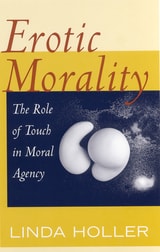
Erotic Morality
The Role of Touch in Moral AgencyLinda Holler
Rutgers University Press, 2002
Essays on Logic, Ethics, and Universal Grammar
Edited by Philip Schofield
University College London, 2025
Best known as the founder of the ethical theory of utilitarianism, Bentham’s philosophical contributions spanned political economy, judicial administration, prison reform, policing, religion, and many more fields. This new addition to The Collected Works of Jeremy Bentham deals with his ideas about logic, language, ethics, and grammar. Distributed across four essays written between 1814 and 1816 and an appendix, it includes discussions of methodization, ontology, real and fictitious entities, and propositions as the fundamental components of language. In addition to constituting a major contribution to the history of logic and language, this collection establishes the philosophical basis for classical utilitarianism and Chrestomathia, Bentham’s major work outlining his materialist theory of language.
Ethica Thomistica
The Moral Philosophy of Thomas AquinasRalph McInerny
Catholic University of America Press, 1997
Chapters: Morality and Human Life; The Good for Man; Ultimate End and Moral Principles; The Structure of the Human Act; Good and Evil Action; Character and Decision; Prudence and Conscience; Religion and Morality ABOUT THE AUTHOR:
Ralph McInerny is Michael P. Grace Professor of Medieval Studies and director of the Jacques Maritain Center at the University of Notre Dame, where he has taught since 1955. He is founder and publisher of Catholic Dossier magazine; cofounder of Crisis magazine; and author of several books published by CUA Press, including Aquinas on Human Action (1992), The Question of Christian Ethics (1993), and Aquinas and Analogy (1996).
PRAISE FOR THE BOOK:
"Remarkable for its moderation and common sense. . . . [McInerny] rapidly sketches selected themes from Thomistic moral thinking: what distinguishes the moral activities of man, what is distinctive of moral goodness (in Aristotle and in Aquinas), an analysis of practical reason in relation to natural law, the bases for judging good and evil moral actions, the roles of intellect and will in voluntary activity, the work of virtues as components of moral character, the functions of prudence and conscience, and finally the relation of ethics to religious belief. . . . For the person who desires a quick and understandable introduction to this subject, this little book can be recommended as readable and reliable."—Vernon J. Bourke, Speculum "An important contribution both to moral philosophy and to its teaching. . . . [McInerny] has put us all in his debt by writing it."—Alasdair MacIntyre, Teaching Philosophy "A clear, thorough and readable introduction to the thought of one of the intellectual giants of the Catholic moral tradition."—National Catholic Register
Ethical Communication
Moral Stances in Human DialogueClifford G. Christians and John C. Merrill
University of Missouri Press, 2009

Ethical Principles and Practice
John Howie
Southern Illinois University Press, 1987
The second volume in applied ethics based on the distinguished Wayne Leys Memorial Lectureship Series.
With guidelines from legal reasoning, Michael D. Bayles examines “Moral Theory and Application.” Abraham Edel questions “Ethics Applied Or Conduct Enlightened?” The late Warner A. Wick shows in “The Good Person and the Good Society: Some Ideals Foolish and Otherwise” that devotion to ideals need not be either fanaticism or foolishness. John Lachs contends that many public gains are purchased at the cost of individuals being manipulated in “Public Benefit, Private Costs.” James E. Childress in “Gift of Life…” considers ethical issues in obtaining and distributing human organs. Carl Wellman in “Terrorism and Moral Rights” argues that there can be no “rights-based justification” for anti-abortion terrorism.
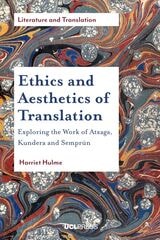
Ethics and Aesthetics of Translation
Exploring the Works of Atxaga, Kundera and SemprúnHarriet Hulme
University College London, 2018

Ethics and Its Sources in Nature and Revelation
Karol Wojtyla
Catholic University of America Press, 2026
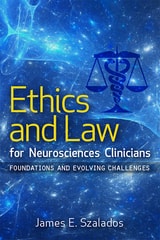
Ethics and Law for Neurosciences Clinicians
Foundations and Evolving ChallengesJames E. Szalados
Rutgers University Press, 2019

Ethics and Morality in Sport Management
Fourth EditionJoy T. DeSensi
FiT Publishing, 2020
Ethics and morality are generally viewed as critical areas in contemporary sport and need not be limited to such topics as sportsmanship, the use of performance-enhancing drugs, violence and cheating. Those in sport management are responsible for addressing ethical and moral questions pertaining to professionalism, equity, legal and financial management, personnel concerns, governance and policies, league and franchise issues, and matters of social justice associated with all aspects of sport. Sport managers must also be aware of and approach these queries logically, rationally and with sensitivity to ensure the integrity of sport, the sport community and society at large.
Ethics & Morality in Sport Management, 4th edition, presents concepts and theories in ethics and morality and demonstrates their applicability in sport management. While addressed primarily to undergraduate and graduate students interested in the organization and administration of sport, this text is also a practical guide and reference for professionals already in the field, as well as athletes, coaches, franchise owners, journalists, spectators, governmental agencies and others associated with sport. Sport managers must be aware of and concerned about their own obligations, rights and responsibilities, as well as those they influence. As such, nothing short of sound ethical and moral reasoning must inform their managerial decisions and actions. This text aims to make clear the nature of ethics and morality, introducing readers to several major ethical theories, and discussing and analyzing the practical ramifications of these precepts in several sport management contexts.
Ethics and Personality
Essays in Moral PsychologyEdited by John Deigh
University of Chicago Press, 1992
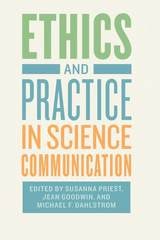
Ethics and Practice in Science Communication
Edited by Susanna Priest, Jean Goodwin, and Michael F. Dahlstrom
University of Chicago Press, 2018
In three sections—how ethics matters, professional practice, and case studies—contributors to this volume explore the many complex questions surrounding the communication of scientific results to nonscientists. Has the science been shared clearly and accurately? Have questions of risk, uncertainty, and appropriate representation been adequately addressed? And, most fundamentally, what is the purpose of communicating science to the public: Is it to inform and empower? Or to persuade—to influence behavior and policy? By inspiring scientists and science communicators alike to think more deeply about their work, this book reaffirms that the integrity of the communication of science is vital to a healthy relationship between science and society today.

Ethics and Theological Disclosures
The Thought of Robert SokolowskiGuy Mansini, O.S.B.
Catholic University of America Press, 2003
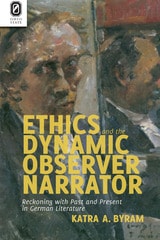
Ethics and the Dynamic Observer Narrator
Reckoning with Past and Present in German LiteratureKatra A. Byram
The Ohio State University Press, 2015
Ethics and the Dynamic Observer Narrator contributes to scholarship on both narrative theory and the historical and cultural context of German and Austrian literary studies. Narrative theory, according to Byram, should understand this form to register complex interactions between history and narrative form. Byram also juxtaposes new readings of works by Textor, Storm, and Raabe from the nineteenth century with analyses of twentieth-century works by Grass, Handke, and Sebald, ultimately reframing our understanding of literary Vergangenheitsbewältigung, or the struggle to come to terms with the past. Overall, Byram shows that neither the problem of reckoning with the past nor the dynamic observer form is unique to Germany’s post-WWII era. Both are products of the dynamics of modern identity, surfacing whenever critical change separates what was from what is.
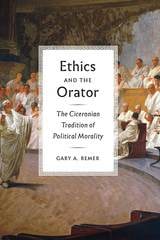
Ethics and the Orator
The Ciceronian Tradition of Political MoralityGary A. Remer
University of Chicago Press, 2017
Remer’s study is distinct from other works on political morality in that it turns to Cicero, not Aristotle, as the progenitor of an ethical rhetorical perspective. Contrary to many, if not most, studies of Cicero since the mid-nineteenth century, which have either attacked him as morally indifferent or have only taken his persuasive ends seriously (setting his moral concerns to the side), Ethics and the Orator demonstrates how Cicero presents his ideal orator as exemplary not only in his ability to persuade, but in his capacity as an ethical person. Remer makes a compelling case that Ciceronian values—balancing the moral and the useful, prudential reasoning, and decorum—are not particular only to the philosopher himself, but are distinctive of a broader Ciceronian rhetorical tradition that runs through the history of Western political thought post-Cicero, including the writings of Quintilian, John of Salisbury, Justus Lipsius, Edmund Burke, the authors of The Federalist, and John Stuart Mill.

Ethics at the Bedside
Edited by Charles M. Culver
Brandeis University Press, 1993
Ethics by Committee
A History of Reasoning Together about Medicine, Science, Society, and the StateNoortje Jacobs
University of Chicago Press, 2022
Ethics boards have become obligatory passage points in today’s medical science, and we forget how novel they really are. The use of humans in experiments is an age-old practice that records show goes back to at least the third century BC, and it has been popular as a practice since the early modern period. Yet in most countries around the world, hardly any formal checks and balances existed to govern the communal oversight of experiments involving human subjects until at least the 1960s. Ethics by Committee traces the rise of ethics boards for human experimentation in the second half of the twentieth century.
Using the Netherlands as a case study, historian Noortje Jacobs shows how the authority of physicians to make decisions about clinical research in this period gave way in most developed nations to formal mechanisms of communal decision-making that served to regiment the behavior of individual researchers. This historically unprecedented change in scientific governance came out of the growing international wariness of medical research in the decades after World War II and was meant to solidify a new way of reasoning together in liberal democracies about medicine and science. But what reasoning together meant, and who was invited to participate, changed drastically over time. In detailing this history, Jacobs shows that research ethics committees were originally intended not only to make human experimentation more ethical but also to raise its epistemic quality and intensify the use of new clinical research methods. By examining complex negotiations over the appropriate governance of human subjects research, Ethics by Committee is an important contribution to our understanding of the randomized controlled trial and the history of research ethics and bioethics more generally.
Ethics for Beginners
Big Ideas from 32 Great MindsPeter Kreeft
St. Augustine's Press, 2019
Most ethics textbooks are anthologies of articles by contemporary philosophers, or a whole book by one contemporary philosopher, about ethical puzzles to be solved by logical analysis. This is good mental exercise but it will not change your life, and you will not remember it ten years from now. You will not remember a hundred bright little ideas, you will remember only a few Big Ideas, the ones that changed your life. This book is about 52 of them..
And it is by 32 great philosophers. They are all dead. (Philosophers die, but philosophy does not; it buries all its undertakers.) Living philosophers who write ethics textbooks are usually very bright, but they do not include any name we know will live for centuries. Why apprentice yourself to second rate scribblers like me when you can apprentice yourself to the greatest minds in history? Why not learn from Socrates, Buddha, Confucius, Plato, Aristotle, Kant, Kierkegaard, and Nietzsche? Why prefer little minds to big ones?
They disagree with each other, to be sure, but all of them will help you, not least those who contradict you and challenge you, and stretch you by forcing you to reply to them, and fight with them. I am appalled by the fact that 90% of the best philosophy students at the best universities, which say they cultivate "diversity," have exactly the same politically correct opinions, whether of the Left or the Right.
When you were a child your mother probably reminded you before you went out not to forget something like your lunch box or your umbrella. Ethics today is usually treated that way: as an afterthought: check with an ethicist before doing the really important things like business or law or medicine or diplomacy. But ethics is not a P.S. to life. It is about the most fundamental things in life: values, good and evil. Socrates said that a good person does not worry much about little things like whether he lives or dies, but only about big things like whether he is a good person or a bad one.

Ethics for International Medicine
A Practical Guide for Aid Workers in Developing CountriesAnji E. Wall
Dartmouth College Press, 2012
Ethics from a Theocentric Perspective, Volume 1
Theology and EthicsJames M. Gustafson
University of Chicago Press, 1983
Ethics from a Theocentric Perspective, Volume 2
Ethics and TheologyJames M. Gustafson
University of Chicago Press, 1984
"Breadth and subtlety, wisdom and insight . . . Gustafson is a first-rate theologian."—Commonweal
"The two-volume work, now complete, will be a benchmark for discussions of Christian ethics for years to come. With it Gustafson becomes one of the thinkers by whom others can, by agreement or divergence, define their own ethics."—Roger L. Shinn, Christianity and Crisis
"Gustafson's theocentrism is an original and creative contribution to modern ethical discussion."—Douglas Sturm, Ethics
Ethics in Action
Case Studies in Archaeological DilemmasChip Colwell-Chanthaphonh
University Press of Colorado, 2008
Ethics in Mental Health and Deafness
Virginia Gutman
Gallaudet University Press, 2002
This volume explores ethical issues specific to working with deaf clients, particularly matters of confidentiality, managing multiple relationships, and the clinician’s competency to provide services, particularly in communicating with and understanding deaf people. Led by editor Virginia Gutman, a unique assembly of respected mental health professionals share their experiences and knowledge in working with deaf clients.
Irene Leigh commences Ethics in Mental Health and Deafness with her varied experiences as a deaf mental health practitioner, and Gutman follows with insights on ethics in the “small world” of the Deaf community. William McCrone discusses the law and ethics, and Patrick Brice considers ethical issues regarding deaf children, adolescents, and their families. In contrast, Janet Pray addresses concerns about deaf and hard of hearing older clients.
Minority deaf populations pose additional ethical aspects, which are detailed by Carolyn Corbett. Kathleen Peoples explores the challenges of training professionals in mental health services specifically for deaf clients. Closely related to these topics is the influence of interpreters with deaf clients in mental health settings, which Lynnette Taylor thoroughly treats. Ethics and Mental Health in Deafness also features a chapter on genetic counseling and testing for deafness by Kathleen Arnos. The final section, written by Robert Pollard, examines ethical conduct in research with deaf people, a fitting conclusion to a volume that will become required reading for all professionals and students in this discipline.
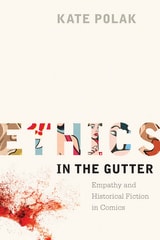
Ethics in the Gutter
Empathy and Historical Fiction in ComicsKate Polak
The Ohio State University Press, 2017
This book’s most important questions surround how we receive and interpret representations of history, considering the ways in which what we think we know about historical atrocities can be at odds with the convoluted circumstances surrounding violence. Beginning with a new look at Watchmen, and including examinations of such popular series as Scalped and Hellblazer as well as Bayou and Deogratias, the book questions how graphic narratives create an alternative route by which to understand large-scale violence. Ethics in the Gutter explores how graphic narrative representations of violence can teach readers about the possibilities and limitations of empathy and ethics.

Ethics of Citizenship
Immigration and Group Rights in GermanyWilliam A. Barbieri Jr.
Duke University Press, 1998
Although some of Germany’s foreign workers have gradually attained a degree of social and economic legitimacy, Barbieri explains how they remain effectively excluded from true German citizenship. Describing how this exclusion has occurred and assessing current attitudes toward political membership in Germany, he argues for a just and democratic policy toward the tax-paying, migrant worker minority, one that would combine the extension of the individual rights of citizenship with the establishment of certain group rights. Through a dissection of ongoing public “membership debates” over issues such as suffrage, dual citizenship, and immigration and refugee policy, Barbieri identifies a range of competing responses to the question of who “belongs” in Germany. After critiquing these views, he proposes an alternative ethic of membership rooted in an account of domination and human rights that seeks to balance individual and group rights within the context of a commitment to democracy and equal citizenship.
Indispensable for scholars of German studies, Ethics of Citizenship also raises questions that will attract moral philosophers, constitutional scholars, and those interested in the continuing, global problems associated with migration.
Ethics of Environment and Development
Global Challenge, International ResponseJ. Ronald Engel
University of Arizona Press, 1990
Ethics of Liberation
In the Age of Globalization and ExclusionEnrique Dussel
Duke University Press, 2012
Throughout his career, Dussel has sought to open a space for articulating new possibilities for humanity out of, and in light of, the suffering, dignity, and creative drive of those who have been excluded from Western Modernity and neoliberal rationalism. Grounded in engagement with the oppressed, his thinking has figured prominently in philosophy, political theory, and liberation movements around the world.
In Ethics of Liberation, Dussel provides a comprehensive world history of ethics, demonstrating that our most fundamental moral and ethical traditions did not emerge in ancient Greece and develop through modern European and North American thought. The obscured and ignored origins of Modernity lie outside the Western tradition. Ethics of Liberation is a monumental rethinking of the history, origins, and aims of ethics. It is a critical reorientation of ethical theory.

Ethics of Life
Contemporary Iberian DebatesKatarzyna Beilin
Vanderbilt University Press, 2016
• What are the different rhetorical strategies employed by writers, artists, filmmakers, and activists to react to the degradation of life and climate change?
• How are urban movements using environmental issues to resist corporate privatization of the commons?
• What is the shape of Spanish debates on reproductive rights and biotechnology?
• What is the symbolic significance of the bullfighting debate and other human/animal issues in today's political turmoil in Spain?
Hispanic Issues Series
Nicholas Spadaccini, Editor-in-Chief
Hispanic Issues Online
hispanicissues.umn.edu/online_main.html
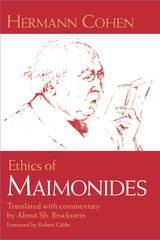
Ethics of Maimonides
Hermann Cohen, Translated by Almut Sh. Bruckstein
University of Wisconsin Press, 2004
Hermann Cohen’s essay on Maimonides’ ethics is one of the most fundamental texts of twentieth-century Jewish philosophy, correlating Platonic, prophetic, Maimonidean, and Kantian traditions. Almut Sh. Bruckstein provides the first English translation and her own extensive commentary on this landmark 1908 work, which inspired readings of medieval and rabbinic sources by Leo Strauss, Franz Rosenzweig, and Emmanuel Levinas.
Cohen rejects the notion that we should try to understand texts of the past solely in the context of their own historical era. Subverting the historical order, he interprets the ethical meanings of texts in the light of a future yet to be realized. He commits the entire Jewish tradition to a universal socialism prophetically inspired by ideals of humanity, peace, and universal justice.
Through her own probing commentary on Cohen’s text, like the margin notes of a medieval treatise, Bruckstein performs the hermeneutical act that lies at the core of Cohen’s argument: she reads Jewish sources from a perspective that recognizes the interpretive act of commentary itself.

Ethics of Procreation and the Defense of Human Life
Contraception, Artficial Fertilization, and AbortionMartin Rhonheimer
Catholic University of America Press, 2010
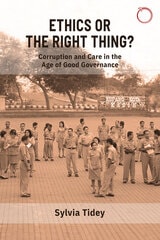
Ethics or the Right Thing?
Corruption and Care in the Age of Good GovernanceSylvia Tidey
HAU, 2021
Combining ethnographic fieldwork in the city of Kupang with an acute historical sensibility, Sylvia Tidey shows how good governance initiatives paradoxically perpetuate civil service corruption while also facilitating the emergence of new forms of it. Importing critical insights from the anthropology of ethics to the burgeoning anthropology of corruption, Tidey exposes enduring developmentalist fallacies that treat corruption as endemic to non-Western subjects. In practice, it is often indistinguishable from the ethics of care and exchange, as Indonesian civil servants make worthwhile lives for themselves and their families. This book will be a vital text for anthropologists and other social scientists, particularly scholars of global studies, development studies, and Southeast Asia.
Ethics, Business and Capitalism
Thailand and Indonesia in an Asian PerspectiveEdited by Janet Hunter, Patnaree Srisuphaolarn, Pierre van der Eng, and Julia Yongue
National University of Singapore Press, 2024
Taking cues from the Japanese concept of ethical or stakeholder capitalism, this book demonstrates how the business activities of firms in Thailand and Indonesia are guided by their perceptions of morality in society and their concerns about the environment. The authors explore the likelihood that foreign influences contributed to the development of such management philosophies, for example through the expansion of Japanese subsidiary firms in the 1980s or the spread of foreign articulations of the concept of corporate social responsibility (CSR) since the 2000s. Companies in both countries may exercise a degree of pragmatism in how they develop these activities. As the authors reveal, the perceptions of morality in business that have shaped many entrepreneurs and companies in Thailand and Indonesia are their responses to the dynamic political, social, and economic factors that have formed the business environments of both countries.
Ethics, Life and Institutions
An Attempt at Practical PhilosophyJan Sokol
Karolinum Press, 2017
With few exceptions, moral philosophy considers the acting person to be an autonomous, independent individual pursuing his or her own happiness. But in the context of social institutions—for example, in workplaces—it is often an organization’s goals, not an individual’s, that take precedence. In complex networks of organizations, morals take a different shape. Divided into three parts, this book begins by exploring basic notions such as freedom, life, responsibility, and justice, and their relationship to practical philosophy; looks to the main schools of Western thought in the search for a common moral foundation; and reintroduces the forgotten idea of biological and cultural heritage—an idea that could prove fundamental in addressing our responsibility not only to human lives, but also to the natural world. In a closing analysis, Sokol brings all of these moral concepts to bear on problems connected to the growing complexity of institutions, offering hope for a practical philosophy for the modern world.
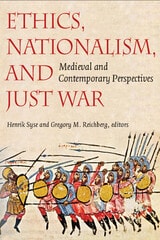
Ethics, Nationalism, and Just War
Medieval and Contemporary PerspectivesHenrik Syse
Catholic University of America Press, 2007
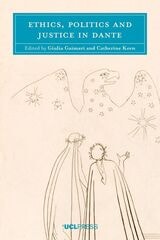
Ethics, Politics and Justice in Dante
Edited by Giulia Gaimari and Catherine Keen
University College London, 2019
Bringing together an international and interdisciplinary group of contributors, ranging across history, philology, classical studies, philosophy, and theology, Ethics, Politics and Justice in Dante presents new research on ethics, politics, and justice in the works of Dante Alighieri, including chapters on Dante’s conception of the afterlife. Contributors scrutinize the Divine Comedy and Dante’s other works in Italian and Latin, showing the evolution of his thought throughout his writing career, with chapters focusing especially on his early philosophical Convivio and on the two “Eclogues” of his final years. Other chapters tackle themes relating to judgment, justice, rhetoric, and literary ethics in the Divine Comedy, as well as the differing public reception and use of Dante’s work in Italy and Britain.
Ethics, volume 131 number 4 (July 2021)
The University of Chicago Press
University of Chicago Press Journals, 2021
Ethics, volume 132 number 1 (October 2021)
The University of Chicago Press
University of Chicago Press Journals, 2021
Ethics, volume 132 number 2 (January 2022)
The University of Chicago Press
University of Chicago Press Journals, 2022
Ethics, volume 132 number 3 (April 2022)
The University of Chicago Press
University of Chicago Press Journals, 2022
Ethics, volume 132 number 4 (July 2022)
The University of Chicago Press
University of Chicago Press Journals, 2022
Ethics, volume 133 number 1 (October 2022)
The University of Chicago Press
University of Chicago Press Journals, 2022
Ethics, volume 133 number 2 (January 2023)
The University of Chicago Press
University of Chicago Press Journals, 2023
Ethics, volume 133 number 3 (April 2023)
The University of Chicago Press
University of Chicago Press Journals, 2023
Ethics, volume 133 number 4 (July 2023)
The University of Chicago Press
University of Chicago Press Journals, 2023
Ethics, volume 134 number 1 (October 2023)
The University of Chicago Press
University of Chicago Press Journals, 2023
Ethics, volume 134 number 2 (January 2024)
The University of Chicago Press
University of Chicago Press Journals, 2024