Results by title
338 books match the query 'Ethnology' and 23 start with e
Early Observations of Marquesan Culture, 1595–1813
Edwin N. Ferdon
University of Arizona Press, 1993
Early Tahiti As the Explorers Saw It, 1767–1797
Edwin N. Ferdon
University of Arizona Press, 1981
Early Tonga As the Explorers Saw It, 1616–1810
Edwin N. Ferdon
University of Arizona Press, 1987
The ethnohistorical approach to early Tongan culture offers not only a fascinating glimpse into a world long past but also a basis for the comparative study of European acculturation throughout Polynesia.
Edwin N. Ferdon first became interested in early Polynesia while serving as an archaeologist with Thor Heyerdahl’s 1955 expedition to Easter Island. He is also the author of Early Tahiti As the Explorers Saw It, 1767–1797.
Earth Beings
Ecologies of Practice across Andean WorldsMarisol de la Cadena
Duke University Press, 2015
Ecologies of Comparison
An Ethnography of Endangerment in Hong KongTim Choy
Duke University Press, 2011
Ecology of Pastoralism
P. Nick Kardulias
University Press of Colorado, 2015
In The Ecology of Pastoralism, diverse contributions from archaeologists and ethnographers address pastoralism’s significant impact on humanity’s basic subsistence and survival, focusing on the network of social, political, and religious institutions existing within various societies dependent on animal husbandry.
Pastoral peoples, both past and present, have organized their relationships with certain animals to maximize their ability to survive and adapt to a wide range of conditions over time. Contributors show that despite differences in landscape, environment, and administrative and political structures, these societies share a major characteristic—high flexibility. Based partially on the adaptability of various domestic animals to difficult environments and partially on the ability of people to establish networks allowing them to accommodate political, social, and economic needs, this flexibility is key to the survival of complex pastoral systems and serves as the connection among the varied cultures in the volume.
In The Ecology of Pastoralism, a variety of case studies from a broad geographic sampling uses archaeological and contemporary data and offers a new perspective on the study of pastoralism, making this volume a valuable contribution to current research in the area.
El Castillo
The Politics of Tradition in an Andalusian TownRichard Maddox
University of Illinois Press, 1993
Maddox argues that we can best understand culture in complex societies by taking into account the ways in which institutionally generated discourses and practices articulate with the informal, improvisational, and commonsense speech and customs that guide the conduct of everyday life. He bases his study on a wide range of published and unpublished materials, including biographies, notarial records, wills, tax and voting lists, historical surveys, records of property transactions and town council meetings, privately held documents, and interviews with men and women of Aracena.
Through a genealogical approach to traditional culture, Maddox demonstrates that traditions repeatedly have been transformed and reinvented in accordance with shifts in relationships of power and in response to changing political and socioeconomic conditions.
Ethnic Diversity and the Control of Natural Resources in Southeast Asia
A. Terry Rambo, Kathleen Gillogly, and Karl L. Hutterrer, Editors
University of Michigan Press, 1988
Ethnic Los Angeles
Roger Waldinger
Russell Sage Foundation, 1996
Ethnic Relations in the Ancient Mediterranean
Social Life Under EmpirePhilip A. Harland
University of Chicago Press, 2026
With this book, Philip A. Harland presents a large-scale rereading of social and cultural life in the eastern part of the ancient Mediterranean in particular, examining social interactions among peoples, from culturally dominant groups to minority populations. Harland assesses literary and archaeological evidence to yield fresh insights into the dynamics of ethnic relations in the region and to explore how the population navigated questions of identification, differentiation, categorization, stratification, criminalization, and population production.
Harland considers encounters between peoples as well as their representations of one another, reframing the social landscape of the ancient world by focusing on the influence and ubiquity of the ethnographic imagination between the fifth century BCE and the third century CE. Drawing insights from anthropology, sociology, and postcolonial studies, Harland offers close readings of papyri, inscriptions, monuments, sculptures, and other materials that reflect interactions between different populations at all levels of society. He gives careful attention to the perspectives of enslaved, immigrant, and subject peoples, including Egyptians, Babylonians, Syrians, and Judeans under Persian, Hellenistic, or Roman rule.
Offering an innovative reading of social and cultural life from the ground up, this book reveals the extent to which ethnographic thinking structured the sociocultural landscape of the ancient world.
Ethnicity and Inequality in Hawai'i
Jonathan Y. Okamura
Temple University Press, 2008
Challenging the dominant view of Hawai’i as a “melting pot paradise”—a place of ethnic tolerance and equality—Jonathan Okamura examines how ethnic inequality is structured and maintained in island society. He finds that ethnicity, not race or class, signifies difference for Hawaii’s people and therefore structures their social relations. In Hawai’i, residents attribute greater social significance to the presumed cultural differences between ethnicities than to more obvious physical differences, such as skin color.
According to Okamura, ethnicity regulates disparities in access to resources, rewards, and privileges among ethnic groups, as he demonstrates in his analysis of socioeconomic and educational inequalities in the state. He shows that socially and economically dominant ethnic groups—Chinese Americans, Japanese Americans, and Whites—have stigmatized and subjugated the islands’ other ethnic groups—especially Native Hawaiians, Filipino Americans, and Samoans. He demonstrates how ethnic stereotypes have been deployed against ethnic minorities and how these groups have contested their subordinate political and economic status by articulating new identities for themselves.
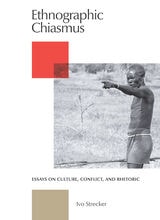
Ethnographic Chiasmus
Essays on Culture, Conflict and RhetoricIvo Strecker
Michigan State University Press, 2011
Ethnographic Contributions to the Study of Endangered Languages
Edited by Tania Granadillo and Heidi A. Orcutt-Gachiri
University of Arizona Press, 2011
To combat this, indigenous and scholarly communities around the world have undertaken various efforts, from archiving and lexicography to the creation of educational and cultural programs. What works in one community, however, may not work in another. Indeed, while the causes of language endangerment may be familiar, the responses to it depend on “highly specific local conditions and opportunities.” In keeping with this premise, the editors of this volume insist that to understand language endangerment, “researchers and communities must come to understand what is happening to the speakers, not just what is happening to the language.” The eleven case studies assembled here strive to fill a gap in the study of endangered languages by providing much-needed sociohistorical and ethnographic context and thus connecting specific language phenomena to larger national and international issues.
The goal is to provide theoretical and methodological tools for researchers and organizers to best address the specific needs of communities facing language endangerment. The case studies here span regions as diverse as Kenya, Siberia, Papua New Guinea, Mexico, Venezuela, the United States, and Germany. The volume includes a foreword by linguistic anthropologist Jane Hill and an afterword by poet and linguist Ofelia Zepeda.
Ethnographies of U.S. Empire
Carole McGranahan and John F. Collins, editors
Duke University Press, 2018
Contributors: Kevin K. Birth, Joe Bryan, John F. Collins, Jean Dennison, Erin Fitz-Henry, Adriana María Garriga-López, Olívia Maria Gomes da Cunha, Matthew Gutmann, Ju Hui Judy Han, J. Kēhaulani Kauanui, Eleana Kim, Heonik Kwon, Soo Ah Kwon, Darryl Li, Catherine Lutz, Sunaina Maira, Carole McGranahan, Sean T. Mitchell, Jan M. Padios, Melissa Rosario, Audra Simpson, Ann Laura Stoler, Lisa Uperesa, David Vine

Ethnography At The Border
Pablo Vila
University of Minnesota Press, 2003
An illuminating account of life at the U.S.-Mexico border
For cultural theorists, “the border” has proven a fluid and hybrid space profitably explored for new ideas about identity, gender, and ethnicity. But for those who occupy this region, the border is not merely a metaphor, but a lived experience, yielding immediate, often pressing ambiguities, problems, and perils.
Focusing on a particular area of the U.S.-Mexico border, Ciudad Juarez-El Paso, Ethnography at the Border brings out the complexity of the border experience through the voices of the diverse people who inhabit the region. In a series of ethnographic essays that investigate specific aspects of border existence, the contributors provide rich and detailed insights into such topics as life in illegal subdivisions, called colonias, in Texas; the experience of actually crossing the bridge between El Paso and Ciudad Juarez; the impact of Operation Blockade on illegal crossings; the controversy surrounding the El Paso Border Patrol’s proposal for a border wall in Sunland Park; the paradoxes of making “American products” using Mexican workers; and the relevance of grassroots efforts, environmental problems, and the multiple meanings of “Mexican.” The final chapter offers a critique of the all too metaphorical border often depicted by cultural studies. Painstakingly conveying how the border looks and feels to those on both sides, Ethnography at the Border transmutes statistics on migration, labor markets, and economic trends—as well as conceptualizations of cross-cultural identities—into the experience, the observations, and the troubling lessons of border life.Contributors: Eduardo Barrera, U of Texas, El Paso, and El Colegio de la Frontera Norte; Jessica Chapin, U of Texas, Austin; Tim J. Dunn, Salisbury U; Sarah Hill, Western Michigan U; Victor M. Ortiz, Northeastern Illinois U at Chicago; John A. Peterson, U of Texas, El Paso; Leslie Salzinger, U of Chicago; David Spener, Trinity U; María Socorro Tabuenca Córdoba, El Colegio de la Frontera Norte; Melissa W. Wright, Penn State U.
Ethnography and Human Development
Context and Meaning in Social InquiryEdited by Richard Jessor, Anne Colby, and Richard A. Shweder
University of Chicago Press, 1996
Part 1, informed by a post-positivist philosophy of science, argues for the validity of ethnographic knowledge. Part 2 examines a range of qualitative methods, from participant observation to the hermeneutic elaboration of texts. In Part 3, ethnographic methods are applied to issues of human development across the life span and to social problems including poverty, racial and ethnic marginality, and crime.
Restoring ethnographic methods to a central place in social inquiry, these twenty-two lively essays will interest everyone concerned with the epistemological problems of context, meaning, and subjectivity in the behavioral sciences.
Ethnography as Commentary
Writing from the Virtual ArchiveJohannes Fabian
Duke University Press, 2008
In his commentary, Fabian reconstructs his meeting with the healer Kahenga Mukonkwa Michel, in which the two discussed the ritual that Kahenga performed to protect Fabian’s home from burglary. Fabian reflects on the expectations and terminology that shape his description of Kahenga’s ritual and meditates on how ethnographic texts are made, considering the settings, the participants, the technologies, and the linguistic medium that influence the transcription and translation of a recording and thus fashion ethnographic knowledge. Turning more directly to Kahenga—as a practitioner, a person, and an ethnographic subject—and to the questions posed to him, Fabian reconsiders questions of ethnic identity, politics, and religion. While Fabian hopes that emerging anthropologists will share their fieldwork through virtual archives, he does not suggest that traditional ethnography will disappear. It will become part of a broader project facilitated by new media.
Ethnological Imagination
A Cross-Cultural Critique Of ModernityFuyuki Kurasawa
University of Minnesota Press, 2004
A significant intervention in contemporary debates about cross-cultural understanding
Fuyuki Kurasawa unearths what he terms “the ethnological imagination,” a substantial countercurrent of thought that interprets and contests Western modernity’s existing social order through comparison and contrast to a non-Western other. Accordingly, Kurasawa traces and critiques, through this prism of cultural alterity, the writings of some of the key architects of this way of thinking: Jean-Jacques Rousseau, Karl Marx, Max Weber, Émile Durkheim, Claude Lévi-Strauss, and Michel Foucault.
In the work of these thinkers, Kurasawa finds little justification for two of the most prevalent claims about social theory: the wholesale “postmodern” dismissal of the social-theoretical enterprise because of its supposedly intractable ethnocentrism and imperialism, or, on the other hand, the traditionalist and historicist revival of a canon stripped of its intercultural foundations. Rather, Kurasawa’s book defends a cultural perspective that eschews both the false universalism of “end of history” scenarios and the radical particularism embodied in the vision of “the clash of civilizations.” It contends that the ethnological imagination can invigorate critical social theory by informing its response to an increasingly multicultural world—a response that calls for a reconsideration of the identity and boundaries of the West as well of modernity itself.
Ethnopornography
Sexuality, Colonialism, and Archival KnowledgePete Sigal, Zeb Tortorici, and Neil L. Whitehead, editors
Duke University Press, 2020
Contributors. Joseph A. Boone, Pernille Ipsen, Sidra Lawrence, Beatrix McBride, Mireille Miller-Young, Bryan Pitts, Helen Pringle, Pete Sigal, Zeb Tortorici, Neil L. Whitehead
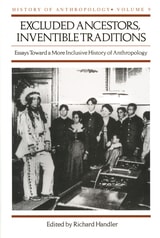
Excluded Ancestors, Inventible Traditions
Essays Toward a More Inclusive History of AnthropologyEdited by Richard Handler
University of Wisconsin Press, 2015
Excluded Ancestors, Inventible Traditions focuses on little-known scholars who contributed to the anthropological work of their time, such as John William Jackson, the members of the Hampton Folk-Lore Society, Charlotte Gower Chapman, and Lucie Varga. In addition, essays on Marius Barbeau and Sol Tax present figures who were centrally located in the anthropologies of their day. A final essay analyzes notions of "the canon" and considers the place of a classic ethnographic area, highland New Guinea, in anthropological canon-formation.
Exotics at Home
Anthropologies, Others, and American ModernityMicaela di Leonardo
University of Chicago Press, 1998
"An impressive work of scholarship that is mordantly witty, passionately argued, and takes no prisoners."—Lesley Gill, News Politics
"[Micaela] di Leonardo eloquently argues for the importance of empirical, interdisciplinary social science in addressing the tragedy that is urban America at the end of the century."—Jonathan Spencer, Times Literary Supplement
"In her quirky new contribution to the American culture brawl, feminist anthropologist Micaela di Leonardo explains how anthropologists, 'technicians of the sacred,' have distorted American popular debate and social life."—Rachel Mattson, Voice Literary Supplement
"At the end of di Leonardo's analyses one is struck by her rare combination of rigor and passion. Simply, [she] is a marvelous iconoclast."—Matthew T. McGuire, Boston Book Review
Experimenting with Ethnography
A Companion to AnalysisAndrea Ballestero and Brit Ross Winthereik, editors
Duke University Press, 2021
Contributors. Patricia Alvarez Astacio, Andrea Ballestero, Ivan da Costa Marques, Steffen Dalsgaard, Endre Dányi, Marisol de la Cadena, Marianne de Laet, Carolina Domínguez Guzmán, Rachel Douglas-Jones, Clément Dréano, Joseph Dumit, Melanie Ford Lemus, Elaine Gan, Oliver Human, Alberto Corsín Jiménez, Graham M. Jones, Trine Mygind Korsby, Justine Laurent, James Maguire, George E. Marcus, Annemarie Mol, Sarah Pink, Els Roding, Markus Rudolfi, Ulrike Scholtes, Anthony Stavrianakis, Lucy Suchman, Katie Ulrich, Helen Verran, Else Vogel, Antonia Walford, Karen Waltorp, Laura Watts, Brit Ross Winthereik
Explorations into Highland New Guinea, 1930-1935
Michael J. Leahy, edited by Douglas E. Jones, with a foreword by Jane C. Goodale
University of Alabama Press, 1991
In the 1920s and 1930s there were adventures to be lived and fortunes to be made by strong young men in the outback of Australia and the gold fields of New Guinea. This is the diary of five years spent in hot pursuit—not of honor and glory, but of excitement and riches—by one such adventurer, Michael "Mick" Leahy, his brothers Jim and Pat, and friends Mick Dwyer and Jim Taylor. Leahy and his associates explored the unknown interior of New Guinea, seeking gold and making contact for the first time with the aborigines of the interior mountains and valleys.
White man was unknown to these often cannibalistic, always dangerous, aborigines who thought the seekers of yellow in the streams slightly mad, and thus easy prey. The chronicles of their explorations and their hundreds of photographs brought news of these native peoples to the outside world. In doing so, they changed forever our understanding of the human landscape of New Guinea, and carved a place in history for these explorers who, braving the environment in search of gold, found people.