Results by title
61 books match the query 'Expeditions & Discoveries' and 6 start with e
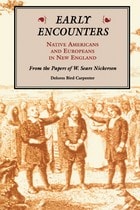
Early Encounters
Native Americans and Europeans in New England. From the Papers of W. Sears NickersonDelores Bird Carpenter
Michigan State University Press, 1994
Early Encounters contains a selection of nineteen essays from the papers of prominent New England historian, antiquarian, and genealogist Warren Sears Nickerson (1880-1966). This extensive study of his own family ties to the Mayflower, and his exhaustive investigation of the first contacts between Europeans and Native Americans, in what is today New England, made him an unquestioned authority in both fields.
The research upon which the text of Early Encounters is based occurred between the 1920s and the 1950s. Each of Nickerson’s works included in this carefully edited volume is placed in its context by Delores Bird Carpenter; she provides the reader with a wealth of useful background information about each essay’s origin, as well as Nickerson’s reasons for undertaking the research. Material is arranged thematically: the arrival of the Mayflower; conflicts between Europeans and Native Americans; and other topics related to the history and legends of early European settlement on Cape Cod. Early Encounters is a thoughtfully researched, readable book that presents a rich and varied account of life in colonial New England.
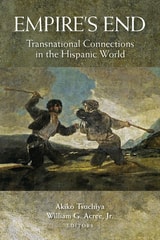
Empire's End
Transnational Connections in the Hispanic WorldAkiko Tsuchiya
Vanderbilt University Press, 2015
Empire's End showcases the work of scholars of literature, cultural studies, and history, centering on four interrelated issues crucial to understanding the end of the Spanish empire: the mappings of the Hispanic Atlantic, race, human rights, and the legacies of empire.
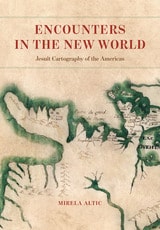
Encounters in the New World
Jesuit Cartography of the AmericasMirela Altic
University of Chicago Press, 2022
In 1540, in the wake of the tumult brought on by the Protestant Reformation, Saint Ignatius of Loyola founded the Society of Jesus, also known as the Jesuits. The Society’s goal was to revitalize the faith of Catholics and to evangelize to non-Catholics through charity, education, and missionary work. By the end of the century, Jesuit missionaries were sent all over the world, including to South America. In addition to performing missionary and humanitarian work, Jesuits also served as cartographers and explorers under the auspices of the Spanish, Portuguese, and French crowns as they ventured into remote areas to find and evangelize to native populations.
In Encounters in the New World, Mirela Altic analyzes more than 150 of their maps, most of which have never previously been published. She traces the Jesuit contribution to mapping and mapmaking from their arrival in the New World into the post-suppression period, placing it in the context of their worldwide undertakings in the fields of science and art. Altic’s analysis also shows the incorporation of indigenous knowledge into the Jesuit maps, effectively making them an expression of cross-cultural communication—even as they were tools of colonial expansion. This ambiguity, she reveals, reflects the complex relationship between missions, knowledge, and empire. Far more than just a physical survey of unknown space, Jesuit mapping of the New World was in fact the most important link to enable an exchange of ideas and cultural concepts between the Old World and the New.
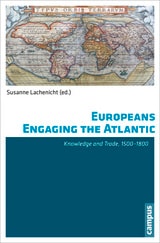
Europeans Engaging the Atlantic
Knowledge and Trade, 1500-1800Edited by Susanne Lachenicht
Campus Verlag, 2014
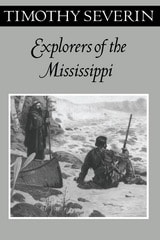
Explorers Of The Mississippi
Timothy Severin
University of Minnesota Press, 2002
Spirited stories of the heroes and scoundrels who explored the Big Muddy—now back in print!
The Mississippi River has intrigued the footloose for centuries. Here, for the first time in paperback, are briskly told biographies of the chief protagonists in the drama, with Old Man River as the constant and invincible antagonist. From conquistadors to nineteenth-century gentlemen explorers, Timothy Severin depicts the disasters and adventures of familiar, but often misunderstood, figures in American history, as well as the chicanery of others, less well known, who used the river for their own purposes.
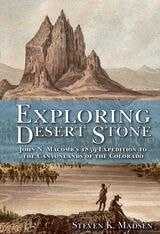
Exploring Desert Stone
John N. Macomb's 1859 Expedition to the Canyonlands of the ColoradoSteven K. Madsen
Utah State University Press, 2022
The soldiers and scientists followed in part the Old Spanish Trail, whose location they documented and verified. Seeking to find the confluence of the Colorado and the Green and looking for alternative routes into Utah, which was of particular interest in the wake of the Utah War, they produced a substantial documentary record, most of which is published for the first time in this volume. Theirs is also the first detailed map of the region, and it is published in Exploring Desert Stone, as well.