Results by title
55 books match the query 'Exploring' and 20 start with e
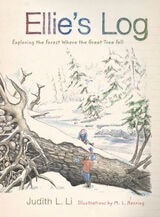
Ellie's Log
Exploring the Forest Where the Great Tree FellJudith L. Li
Oregon State University Press, 2013
After a huge tree crashes to the ground during a winter storm, ten-year-old Ellie and her new friend, Ricky, explore the forest where Ellie lives. Together, they learn how trees provide habitat for plants and animals high in the forest canopy, down among mossy old logs, and deep in the pools of a stream. The plants, insects, birds, and mammals they discover come to life in colored pen-and-ink drawings.
An engaging blend of science and storytelling, Ellie’s Log also features:
• Pages from Ellie’s own field notebook, which provide a model for recording observations in nature
• Ellie’s advice to readers for keeping a field notebook
• Ellie’s book recommendations Online resources for readers and teachers—including a Teacher’s Guide—are available at ellieslog.org.
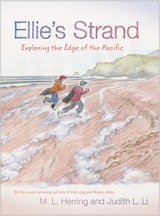
Ellie's Strand
Exploring the Edge of the PacificM. L. Herring
Oregon State University Press, 2018
Green Earth Book Award, Honor Book
There are days in late winter when the Pacific coast enjoys a brief spell of clear, warm weather. Most of the winter storms have passed and the summer fog has not yet settled in. This is when some coastal communities plan their annual beach clean-ups.
In this sequel to Ellie’s Log and Ricky’s Atlas, Ellie and Ricky travel to the Oregon coast from their home in the Cascade Mountains to help with a one-day beach clean-up. Hoping to find a prized Japanese glass float, they instead find more important natural treasures, and evidence of an ocean that needs its own global-scale clean-up.
Ellie and Ricky are amazed by their discoveries at the edge of the world’s largest ocean. Together, they realize the power of volunteering and grapple with the challenges of ocean conservation. In her journal Ellie records her observations of their adventures in her own words and pictures.
With charming pen-and-ink drawings and a compelling story, Ellie's Strand makes coastal science exciting for upper elementary school students. It will be a treasured companion for young beach explorers everywhere.
Ethics and Aesthetics of Translation
Exploring the Works of Atxaga, Kundera and SemprúnHarriet Hulme
University College London, 2018
Exploring The Beloved Country
American Society And CultureWilbur Zelinsky
University of Iowa Press, 1994
For fifty years geographer Wilbur Zelinsky has charted the social, cultural, and historical map of the American experience. A self-confessed incurable landscape voyeur, he has produced order and pattern from massive amounts of data, zestfully finding societal meaning in the terra incognita of our postmodern existence. Now he has gathered his most original and exciting explorations into a volume that captures the nature and dynamics of this remarkable phenomenon we call the United States of America. Each the product of Zelinsky's joyous curiosity, these energetic essays trace the innermost contours of our bewildering American reality.
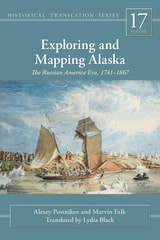
Exploring and Mapping Alaska
The Russian America Era, 1741-1867Alexey Postnikov and Marvin Falk
University of Alaska Press, 2015
Exploring and Mapping Alaska focuses on this foundational period in Arctic cartography. Russia spurred a golden era of cartographic exploration, while shrouding their efforts in a veil of secrecy. They drew both on old systems developed by early fur traders and new methodologies created in Europe. With Great Britain, France, and Spain following close behind, their expeditions led to an astounding increase in the world’s knowledge of North America.
Through engrossing descriptions of the explorations and expert navigators, aided by informative illustrations, readers can clearly trace the evolution of the maps of the era, watching as a once-mysterious region came into sharper focus. The result of years of cross-continental research, Exploring and Mapping Alaska is a fascinating study of the trials and triumphs of one of the last great eras of historic mapmaking.
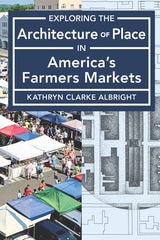
Exploring the Architecture of Place in America’s Farmers Markets
Kathryn Clarke Albright
University of Minnesota Press, 2020
Architect, teacher, and founder of the Friends of the Farmers Market, Katheryn Clarke Albright combines historically informed architectural observation with interview material and images drawn from conversations with farmers, vendors, market managers and shoppers.
Using eight scales of interaction and interface, Albright presents in-depth case studies to demonstrate how architectural elements and spatial conditions foster social and economic exchange between vendors, shoppers, and the community at large. Albright looks ahead to an emerging typology—the mobile market—bringing local farmers and healthy foods to underserved neighborhoods.
The impact farmers markets make on their local communities inspires place-making, improves the local economy, and preserves rural livelihoods. Developed organically and distinctively out of the space they occupy, these markets create and revitalize communities as rich as the produce they sell.
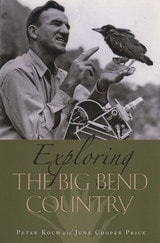
Exploring the Big Bend Country
By Peter Koch and June Cooper Price
University of Texas Press, 2007
Photographer-naturalist Peter Koch first visited the new Big Bend National Park in February, 1945, on assignment to take promotional pictures for the National Park Service. He planned to spend a couple of weeks—and ended up staying for the rest of his life. Koch's magnificent photographs and documentary film-lectures Big Bend, Life in a Desert Wilderness and Desert Gold introduced the park to people across the United States, drawing thousands of visitors to the Big Bend. His photographs and films of the region remain among the best ever produced, and are an invaluable visual record of the first four decades of Big Bend National Park.
In this highly readable book, Koch's daughter June Cooper Price draws on the newspaper columns her father wrote for the Alpine Avalanche, supplemented by his photographs, journal entries, and short pieces by other family members, to present Peter Koch's vision of the Big Bend. The book opens with his first "big adventure," a six-day photographic trip through Santa Elena Canyon on a raft made from agave flower stalks. From there, Koch takes readers hiking on mountain trails and driving the scenic loop around Fort Davis. He also describes "wax smuggling" and other ways of making a living on the Mexican border; ranching in the Big Bend; the prehistory and Native Americans of the region; collaborating with botanist Barton Warnock on books of Trans-Pecos wildflowers; and the history and beauty of Presidio County, the Rio Grande, and the Chihuahuan Desert.
This fascinating blend of firsthand adventures, natural history, and personal musings on anthropology and history creates an unforgettable portrait of both Peter Koch and the Big Bend region he so loved.
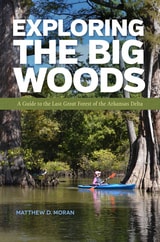
Exploring the Big Woods
A Guide to the Last Great Forest of the Arkansas DeltaMatthew D. Moran
University of Arkansas Press, 2016
Exploring the Big Woods: A Guide to the Last Great Forest of Eastern Arkansas is both a natural history and a guide to one of the last remnants of Mississippi bottomland forest, an ecosystem that once stretched from southern Illinois to the Gulf Coast.
Crossed by the White River and its tributaries, which periodically flood and release nutrients, the Big Woods is one of the few places in the Mississippi River Valley where this life-giving flood cycle persists. As a result, it is home to an unusual abundance of animals and plants.
Immense cypresses, hickories, sweetgums, oaks, and sycamores; millions of migrating waterfowl; incredible scenery; and the complex relationship between humans and nature are all to be discovered here.
Exploring the Big Woods will introduce readers to the natural features, plants, animals, and hiking and canoeing trails going deep into the forests and swamps of this rare and beautiful natural resource.
Exploring the Boundary Waters
A Trip Planner and Guide to the BWCAWDaniel Pauly
University of Minnesota Press, 2005

Exploring the Great Salt Lake
The Stansbury Expedition of 1849-50Brigham D. Madsen
University of Utah Press, 1989
Exploring the Johnson Years
Edited by Robert A. Divine
University of Texas Press, 1981
More than a decade after LBJ left office, researchers began to open up the Johnson administration as an important area of scholarly study. Exploring the Johnson Years is an invaluable introduction to that administration and to the LBJ Library’s more than thirty million separate documents. The contributors cover every major aspect of the Johnson presidency, from Vietnam (George C. Herring) to the War on Poverty (Mark I. Gelfand), including coverage of Latin American policy (Walter LaFeber), education (Hugh Davis Graham), civil rights (Steven F. Lawson), the nature of the White House staff (Larry Berman), and Johnson’s stormy relationship with the media (David Culbert).
The essays illuminate some of the most important files and show how they can be used to further historical understanding of the Johnson years. As a result, scholars who plan to use the library will have a useful guide before they begin, while general readers will be able to discover the ways in which the library’s holdings relate to the existing body of literature on the Johnson administration.
Exploring the Land of Lincoln
The Essential Guide to Illinois Historic SitesCharles Titus
University of Illinois Press, 2021
Discovering Illinois through twenty of the state's most important places
A one-of-a-kind travel guide, Exploring the Land of Lincoln invites road-trippers and history buffs to explore the Prairie State's most extraordinary historic sites. Charles Titus blends storytelling with in-depth research to highlight twenty must-see destinations selected for human drama, historical and cultural relevance, and their far-reaching impact on the state and nation. Maps, illustrations, and mileage tables encourage readers to create personal journeys of exploration to, and beyond, places like Cahokia, the Lincoln sites, Nauvoo, and Chicago's South Side Community Art Center.
Detailed and user-friendly, Exploring the Land of Lincoln is the only handbook you need for the sights and stories behind the names on the map of Illinois.
Exploring the Little Rivers of New Jersey
James and Margaret Cawley
Rutgers University Press, 1993
In this fourth edition, the Little Rivers Club has brought the Cawleys' work up to date. This group of experienced canoeists dedicated themselves to re-exploring familiar waterways and adding new ones. Faithful to the Cawley spirit, this edition includes new maps, many new photographs, a directory of canoe liveries, tips of planning a trip, a loving portrait of the Cawleys, and, best of all, twenty-four beautiful waterways to discover.
Featuring 166 photos, 22 maps, and these rivers:
- Batsto
- Cedar Creek
- Delaware and Raritan Canal
- Great Egg Harbor River
- Hackensack
- Manasquan River and Inlet
- Maurice
- Millstone
- Mullica
- Musconetcong
- Oswego River and Lake
- Passaic
- Paulins Kill
- Pequest
- Ramapo-Pompton
- Rancocas
- South and North Branches of the Raritan
- Toms
- Wading
- Black-Lamington
- Cohansey River, Raceway, and Sunset Lake
- Crosswicks Creek
- Metedeconk
- Stony Brook
Exploring the Mesoamerican Subterranean Realm
James E. Brady
University Press of Colorado, 2025
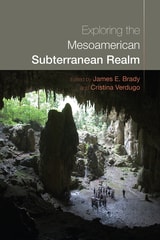
The volume expands the study of caves to focus on the broader realm of subterranean space, introducing the concept of the constructed subterranean, a space in which the Maya deliberately created sacred landmarks through excavation. Chapters critically examine chultuns, previously thought to be subterranean storage chambers, and sascaberas, previously considered mines, demonstrating that the traditional archaeological models are deeply flawed. A wealth of data on both features is used to envision a new sacred landscape filled with thousands of subterranean sacred landmarks. Natural caves are also examined; a survey conducted around the ancient site of Yaxchilan considers the obvious importance of large stalagmites set up in the site core as monuments. Long-distance pilgrimages to these caves fundamentally reevaluates the nature of pilgrimage and reveals an economic and political importance that structured settlement and activities around the pilgrimage sites. Finally, evidence is analyzed to show that the human bones recovered from Midnight Terror Cave, Belize, were the result of human sacrifice.
Dealing equally with the archaeology of both natural and constructed subterranean spaces, Exploring the Mesoamerican Subterranean Realm challenges preconceived notions of these spaces and their meanings, dramatically shifting the field’s focus and extending the understanding of the critical importance of this “dark side” of archaeology.
Exploring the Nature of Law
Thomistic Juridical Realism and the Elements of Law's OntologyPetar Popovic
Catholic University of America Press, 2025
Exploring the Public Effects of Religious Communication on Politics
Brian Calfano, Editor
University of Michigan Press, 2021
Though not all people are religious believers, religion has played important historic roles in developing political systems, parties, and policies—affecting believers and nonbelievers alike. This is particularly true in the United States, where scholars have devoted considerable attention to a variety of political phenomena at the intersection of religious belief and identity, including social movements, voting behavior, public opinion, and public policy. These outcomes are motivated by “identity boundary-making” among the religiously affiliated. The contributors to this volume examine two main factors that influence religious identity: the communication of religious ideas and the perceptions of people (including elites) in communicating said ideas.
Exploring the Public Effects of Religious Communication on Politics examines an array of religious communication phenomena. These include the media’s role in furthering religious narratives about minority groups, religious strategies that interest groups use to advance their appeal, the variable strength of Islamophobia in cross-national contexts, what qualifies as an “evangelical” identity, and clergy representation of religious and institutional teachings. The volume also provides ways for readers to think about developing new insights into the influence religious communication has on political outcomes.
Exploring the Roots of Digital and Media Literacy through Personal Narrative
Renee Hobbs
Temple University Press, 2016
Exploring the Roots of Digital and Media Literacy through Personal Narrative provides a wide-ranging look at the origins, concepts, theories, and practices of the field. This unique, exciting collection of essays by a range of distinguished scholars and practitioners offers insights into the scholars and thinkers who fertilized the minds of those who helped shape the theory and practice of digital and media literacy education.
Each chapter describes an individual whom the author considers to be a type of “grandparent.” By weaving together two sets of personal stories—that of the contributing author and that of the key ideas and life history of the historical figure under their scrutiny—major concepts of digital media and learning emerge.
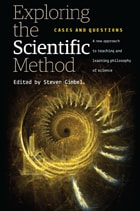
Exploring the Scientific Method
Cases and QuestionsEdited by Steven Gimbel
University of Chicago Press, 2011
From their grade school classrooms forward, students of science are encouraged to memorize and adhere to the “scientific method”—a model of inquiry consisting of five to seven neatly laid-out steps, often in the form of a flowchart. But walk into the office of a theoretical physicist or the laboratory of a biochemist and ask “Which step are you on?” and you will likely receive a blank stare. This is not how science works. But science does work, and here award-winning teacher and scholar Steven Gimbel provides students the tools to answer for themselves this question: What actually is the scientific method?
Exploring the Scientific Method pairs classic and contemporary readings in the philosophy of science with milestones in scientific discovery to illustrate the foundational issues underlying scientific methodology. Students are asked to select one of nine possible fields—astronomy, physics, chemistry, genetics, evolutionary biology, psychology, sociology, economics, or geology—and through carefully crafted case studies trace its historical progression, all while evaluating whether scientific practice in each case reflects the methodological claims of the philosophers. This approach allows students to see the philosophy of science in action and to determine for themselves what scientists do and how they ought to do it.
Exploring the Scientific Method will be a welcome resource to introductory science courses and all courses in the history and philosophy of science.
Exploring the World of Human Practice
Readings in and about the Philosophy of Aurel KolnaiZoltán Balázs
Central European University Press, 2005
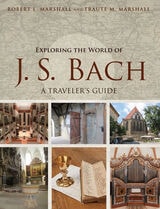
Exploring the World of J. S. Bach
A Traveler's GuideRobert L. Marshall
University of Illinois Press, 2016