Results by title
95 books match the query 'Fairy Tales, Folk Tales, Legends & Mythology' and 3 start with e
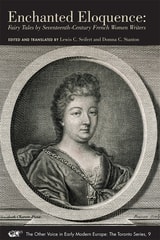
Enchanted Eloquence
Fairy Tales by Seventeenth–Century French Women WritersEdited and Translated by Lewis C. Seifert and Domna C. Stanton
Iter Press, 2010
This is a superb book on all levels. The translations of the tales are excellent. The research is impeccable. The introduction and notes are highly informative. Most important, Lewis Seifert and Domna Stanton have focused on unusual fairy tales that have never been translated before and are seminal for understanding the development of the literary fairy tale as genre. French women writers played a central role in the institutionalization of a literary genre in the French civilizing process that had huge ramifications in opera, theater, vaudeville, music, and film. Moreover, their tales influenced other writers of fairy tales in Europe. This book does an honor to their creative efforts and provides the basis for further research on the development of European fairy tales.
—Jack Zipes
Professor of German, Emeritus, University of Minnesota
—Jack Zipes
Professor of German, Emeritus, University of Minnesota
[more]
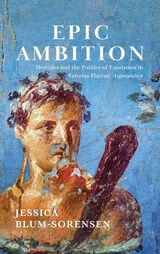
Epic Ambition
Hercules and the Politics of Emulation in Valerius Flaccus' ArgonauticaJessica Blum-Sorensen
University of Wisconsin Press, 2023
By the time the Roman poet Valerius Flaccus wrote in the first century CE, the tale of Jason and his famous ship the Argo had been retold so often it was a byword for poetic banality. Why, then, did Valerius construct his epic Argonautica? In this innovative analysis, Jessica Blum-Sorensen argues that it was precisely the myth’s overplayed nature that appealed to Valerius, operating in and responding to a period of social and political upheaval. Seeking to comment obliquely on Roman reliance on mythic exempla to guide action and expected outcomes, there was no better vessel for his social and political message than the familiar Argo.
Focusing especially on Hercules, Blum-Sorensen explores how Valerius’ characters—and, by extension, their Roman audience—misinterpret exemplars of past achievement, or apply them to sad effect in changed circumstances. By reading such models as normative guides to epic triumph, Valerius’ Argonauts find themselves enacting tragic outcomes: effectively, the characters impose their nostalgic longing for epic triumph on the events before them, even as Valerius and his audience anticipate the tragedy awaiting his heroes. Valerius thus questions Rome’s reliance on the past as a guide to the present, allowing for doubt about the empire’s success under the new Flavian regime. It is the literary tradition’s exchange between triumphant epic and tragedy that makes the Argo’s voyage a perfect vehicle for Valerius’ exploration: the tensions between genres both raise and prohibit resolution of anxieties about how the new age—mythological or real—will turn out.
Focusing especially on Hercules, Blum-Sorensen explores how Valerius’ characters—and, by extension, their Roman audience—misinterpret exemplars of past achievement, or apply them to sad effect in changed circumstances. By reading such models as normative guides to epic triumph, Valerius’ Argonauts find themselves enacting tragic outcomes: effectively, the characters impose their nostalgic longing for epic triumph on the events before them, even as Valerius and his audience anticipate the tragedy awaiting his heroes. Valerius thus questions Rome’s reliance on the past as a guide to the present, allowing for doubt about the empire’s success under the new Flavian regime. It is the literary tradition’s exchange between triumphant epic and tragedy that makes the Argo’s voyage a perfect vehicle for Valerius’ exploration: the tensions between genres both raise and prohibit resolution of anxieties about how the new age—mythological or real—will turn out.
[more]
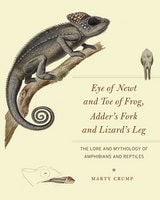
Eye of Newt and Toe of Frog, Adder's Fork and Lizard's Leg
The Lore and Mythology of Amphibians and ReptilesMarty Crump
University of Chicago Press, 2015
From celebrated herpetologist and science writer Marty Crump, a beautifully illustrated exploration of the interlinked stories of herp folklore, natural history, and conservation.
Frogs are worshipped for bringing nourishing rains, but blamed for devastating floods. Turtles are admired for their wisdom and longevity, but ridiculed for their sluggish and cowardly behavior. Snakes are respected for their ability to heal and restore life, but despised as symbols of evil. Lizards are revered as beneficent guardian spirits, but feared as the Devil himself.
In this ode to toads and snakes, newts and tuatara, crocodiles and tortoises, herpetologist and science writer Marty Crump explores folklore across the world and throughout time. From creation myths to trickster tales; from associations with fertility and rebirth to fire and rain; and from the use of herps in folk medicines and magic, as food, pets, and gods, to their roles in literature, visual art, music, and dance, Crump reveals both our love and hatred of amphibians and reptiles—and their perceived power. In a world where we keep home terrariums at the same time that we battle invasive cane toads, and where public attitudes often dictate that the cute and cuddly receive conservation priority over the slimy and venomous, she shows how our complex and conflicting perceptions threaten the conservation of these ecologically vital animals.
Sumptuously illustrated, Eye of Newt and Toe of Frog, Adder’s Fork and Lizard’s Leg is a beautiful and enthralling brew of natural history and folklore, sobering science and humor, that leaves us with one irrefutable lesson: love herps. Warts, scales, and all.
[more]