Results by title
95 books match the query 'Fall' and 3 start with e
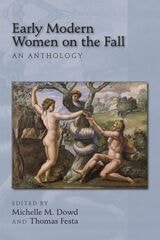
Early Modern Women on the Fall
An AnthologyMichelle M. Dowd
Arizona Center for Medieval and Renaissance Studies, 2012
[more]
Eat What You Kill
The Fall of a Wall Street LawyerMilton C. Regan, Jr.
University of Michigan Press, 2005
"A wonderful character study of someone whose cognitive dissonance ('I am brilliant, therefore I must be doing everything correctly') led directly to his downfall. Students would do well to read this book before venturing forth into a large firm, a small firm, or any pressure-cooker environment."
-Nancy Rapoport, University of Houston Law Center
"Eat What You Kill is gripping and well written. . . . It weaves in academic commentary and understanding of professional ethics issues in a way that makes it accessible to everyone."
-Frank Partnoy, University of San Diego Law School
He had it all, and then he lost it. But why did he do it, risking everything-wealth, success, livelihood, freedom, and the security of family?
Eat What You Kill is the story of John Gellene, a rising star and bankruptcy partner at one of Wall Street's most venerable law firms. But when Gellene became entangled in a web of conflicting corporate and legal interests involving one of his clients, he was eventually charged with making false statements, indicted, found guilty of a federal crime, and sentenced to prison.
Milton C. Regan Jr. uses Gellene's case to prove that such conflicting interests are now disturbingly commonplace in the world of American corporate finance. Combining a journalist's eye with sharp psychological insight, Regan spins Gellene's story into a gripping drama of fundamental tensions in modern-day corporate practice and describes in perfect miniature the inexorable confluence of the interests of American corporations and their legal counselors.
This confluence may seem natural enough, but because these law firms serve many masters-corporations, venture capitalists, shareholder groups-it has paradoxically led to deep, pervasive conflicts of interest. Eat What You Kill gives us the story of a man trapped in this labyrinth, and reveals the individual and systemic factors that contributed to Gellene's demise.
[more]
English after the Fall
From Literature to TextualityRobert Scholes
University of Iowa Press, 2011
Robert Scholes’s now classic Rise and Fall of English was a stinging indictment of the discipline of English literature in the United States. In English after the Fall, Scholes moves from identifying where the discipline has failed to providing concrete solutions that will help restore vitality and relevance to the discipline.
With the self-assurance of a master essayist, Scholes explores the reasons for the fallen status of English and suggests a way forward. Arguing that the fall of English as a field of study is due, at least in part, to the narrow view of “literature” that prevails in English departments, Scholes charts how the historical rise of English as a field of study during the early twentieth century led to the domination of modernist notions of verbal art, ultimately restricting English studies to a narrow cannon of approved texts.
After tracing the various meanings attached to the word “literature” since the Renaissance, Scholes argues that the concept of it that currently shapes the work of English departments excludes both powerful sacred documents (from the Declaration of Independence to the Bible) and pleasurable, profane works that involve the performance of roles like those of clown and teacher in many media (including popular musicals, opera, and film)—and that both sorts of works should be studied in English courses. English after the Fall is a bold manifesto for the replacement of literature with what Scholes calls textuality—an expansive and ecumenical notion of what we read and write—as the primary object of English instruction. This concise and persuasive work is destined to become required reading for anyone who cares about the future of the humanities.
[more]