Results by title
50 books match the query 'Field' and 5 start with e
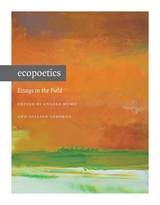
Ecopoetics
Essays in the FieldAngela Hume and Gillian Osborne
University of Iowa Press, 2018
Ecopoetics: Essays in the Field makes a formidable intervention into the emerging field of ecopoetics. The volume’s essays model new and provocative methods for reading twentieth and twenty-first century ecological poetry and poetics, drawing on the insights of ecocriticism, contemporary philosophy, gender and sexuality studies, black studies, Native studies, critical race theory, and disability studies, among others.
Contributors offer readings of a diverse range of poets, few of whom have previously been read as nature writers—from midcentury Beat poet Michael McClure, Objectivist poet George Oppen, and African American poets Melvin Tolson and Robert Hayden; to contemporary writers such as Diné poet Sherwin Bitsui, hybrid/ collage poets Claudia Rankine and Evelyn Reilly, emerging QPOC poet Xandria Phillips, and members of the Olimpias disability culture artists’ collective. While addressing preconceptions about the categories of nature writing and ecopoetics, contributors explore, challenge, and reimagine concepts that have been central to environmental discourse, from apocalypse and embodiment to toxicity and sustainability.
This collection of essays makes the compelling argument that ecopoetics should be read as “coextensive with post-1945 poetry and poetics,” rather than as a subgenre or movement within it. It is essential reading for any student or scholar working on contemporary literature or in the environmental humanities today.
Contributors: Joshua Bennett, Rob Halpern, Matt Hooley, Angela Hume, Lynn Keller, Petra Kuppers, Michelle Niemann, Gillian Osborne, Samia Rahimtoola, Joan Retallack, Joshua Schuster, Jonathan Skinner.
Ethnographers In The Field
The Psychology of ResearchJohn L. Wengle
University of Alabama Press, 1988
A study of how doing field research submerged in a different culture impacts one's sense of identity.
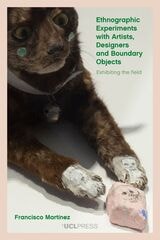
Ethnographic Experiments with Artists, Designers and Boundary Objects
Exhibiting the FieldFrancisco Martínez
University College London, 2021
Richly illustrated, Ethnographic Experiments with Artists, Designers and Boundary Objects reflects on the experimental skills and practices shared by ethnographers and curators. Francisco Martínez highlights relationships between contemporary art, design, and anthropology and imagines creative ways to develop new infrastructure that supports vital interdisciplinary work. Attentive to the experimental nature of exhibitions, Martínez models a new approach to both ethnography and objecthood across disciplinary boundaries.
Evaluating Anti-Trafficking Interventions
Critical Reflections and Lessons from the FieldEdited by Ella Cockbain, Aiden Sidebottom, and Sheldon X. Zhang
University College London, 2025
Despite vast investment in anti-trafficking measures worldwide, there is a stark lack of evidence of effective interventions. It is unethical and ineffective to keep throwing money at anti-trafficking efforts without a more nuanced understanding of how they can help and harm. After all, advances in crime prevention and harm reduction both rely heavily on evaluation science. Bringing together contributors from across different perspectives, disciplines, backgrounds, and geographies, Evaluating Anti-Trafficking Interventions focuses on the sharp end of criminal abuses. It offers both practical guidance and critical reflections on the promises and pitfalls of evaluation for anti-trafficking interventions. The book also introduces foundational theory and practice around evaluations (including both qualitative and quantitative evidence), highlights innovative new directions, and draws lessons from real-world case studies. It is designed to function both as a practical companion guide and to stimulate reflection on the tensions and constraints of funding, doing, and assessing evaluations in this domain.

Exploring Phenomenology
A Guide to the Field & Its LiteratureDavid Stewart
Ohio University Press, 1990
Existential philosophy has perhaps captured the public imagination more completely than any other philosophical movement in the twentieth century. But less is known about the phenomenological method lying behind existentialism. In this solid introduction to phenomenological philosophy, authors David Stewart and Algis Mickunas show that phenomenology is neither new nor bizarre but is a contemporary way of raising afresh the major problems of philosophy that have dominated the traditions of Western thought. The authors carefully lead the reader trough the maze of terminology, explaining the major problems phenomenology has treated and showing how these are a consistent extension of the traditional concerns of philosophy.
In concise, uncluttered, and straightforward terms, the history, development, and contemporary status of phenomenology is explained with a copiously annotated bibliography following each chapter. Nothing in print combines the extensive introductory materials with a guide to the massive literature that has been produced by phenomenological and existential studies.