Results by title
340 books match the query 'Folklore' and 9 start with e
Eight Words for the Study of Expressive Culture
Edited by Burt Feintuch
University of Illinois Press, 2003
No matter where we are--in academic institutions, in cultural agencies, at home, or in a casual conversation--these are words we use when we talk about creative expression in its cultural contexts. Eight Words for the Study of Expressive Culture is a thoughtful, interdisciplinary examination of the keywords that are integral to the formulation of ideas about the diversity of human creativity, presented as a set of essays by leading folklorists.
Many of us use these eight words every day. We think with them. We teach with them. Much of contemporary scholarship rests on their meanings and implications. They form a significant part of a set of conversations extending through centuries of thought about creativity, meaning, beauty, local knowledge, values, and community. Their natural habitats range across scholarly disciplines from anthropology and folklore to literary and cultural studies and provide the framework for other fields of practice and performance as well.
Eight Words for the Study of Expressive Culture is a much-needed study of keywords that are frequently used but not easily explained. Anchored by Burt Feintuch’s cogent introduction, the book features essays by Dorothy Noyes, Gerald L. Pocius, Jeff Todd Titon, Trudier Harris, Deborah A. Kapchan, Mary Hufford, Henry Glassie, and Roger D. Abrahams.
El Monte's New Itineraries
Afrodiasporic Spirituality in the Contemporary CaribbeanAlberto Sosa-Cabanas
Rutgers University Press, 2025
El Monte's New Itineraries is the first book fully devoted to the study of Cuban author and ethnographer Lydia Cabrera’s El Monte (1954), one of the most influential books in Caribbean cultural history. Highly referenced, if understudied, El Monte is a comprehensive work that intertwines ethnobotany, popular orality, and Afro-Cuban traditions. Its pages have enjoyed a transnational influence, enriching domains such as ethnography, politics, theater, and even science fiction literature in the Caribbean, and the knowledge contained in it lies at the heart of Afrodiasporic spirituality and ethnomedicinal practices across Hispanic Caribbean cultures and beyond.
El Monte
Notes on the Religions, Magic, and Folklore of the Black and Creole People of CubaLydia Cabrera
Duke University Press, 2023
El Narcotraficante
Narcocorridos and the Construction of a Cultural Persona on the U.S.–Mexico BorderBy Mark Cameron Edberg
University of Texas Press, 2004
Since the late 1970s, a new folk hero has risen to prominence in the U.S.-Mexico border region and beyond—the narcotrafficker. Celebrated in the narcocorrido, a current form of the traditional border song known as the corrido, narcotraffickers are often portrayed as larger-than-life "social bandits" who rise from poor or marginalized backgrounds to positions of power and wealth by operating outside the law and by living a life of excess, challenging authority (whether U.S. or Mexican), and flouting all risks, including death. This image, rooted in Mexican history, has been transformed and commodified by the music industry and by the drug trafficking industry itself into a potent and highly marketable product that has a broad appeal, particularly among those experiencing poverty and power disparities. At the same time, the transformation from folk hero to marketable product raises serious questions about characterizations of narcocorridos as "narratives of resistance."
This multilayered ethnography takes a wide-ranging look at the persona of the narcotrafficker and how it has been shaped by Mexican border culture, socioeconomic and power disparities, and the transnational music industry. Mark Edberg begins by analyzing how the narcocorrido emerged from and relates to the traditional corrido and its folk hero. Then, drawing upon interviews and participant-observation with corrido listening audiences in the border zone, as well as musicians and industry producers of narcocorridos, he elucidates how the persona of the narcotrafficker has been created, commodified, and enacted, and why this character resonates so strongly with people who are excluded from traditional power structures. Finally, he takes a look at the concept of the cultural persona itself and its role as both cultural representation and model for practice.
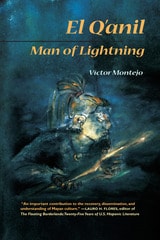
El Q'anil
Man of LightningVictor Montejo
University of Arizona Press, 2001
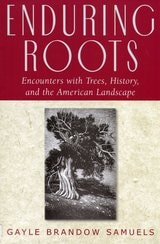
Enduring Roots
Encounters with Trees, History, and the American LandscapeGayle Brandow Samuels
Rutgers University Press, 2005
Trees are the grandest and most beautiful plant creations on earth. From their shade-giving, arching branches and strikingly diverse bark to their complex root systems, trees represent shelter, stability, place, and community as few other living objects can.
Enduring Roots tells the stories of historic American trees, including the oak, the apple, the cherry, and the oldest of the world’s trees, the bristlecone pine. These stories speak of our attachment to the land, of our universal and eternal need to leave a legacy, and demonstrate that the landscape is a gift, to be both received and, sometimes, tragically, to be destroyed.
Each chapter of this book focuses on a specific tree or group of trees and its relationship to both natural and human history, while exploring themes of community, memory, time, and place. Readers learn that colonial farmers planted marker trees near their homes to commemorate auspicious events like the birth of a child, a marriage, or the building of a house. They discover that Benjamin Franklin’s Newtown Pippin apples were made into a pie aboard Captain Cook’s Endeavour while the ship was sailing between Tahiti and New Zealand. They are told the little-known story of how the Japanese flowering cherry became the official tree of our nation’s capital—a tale spanning many decades and involving an international cast of characters. Taken together, these and many other stories provide us with a new ways to interpret the American landscape.
“It is my hope,” the author writes, “that this collection will be seen for what it is, a few trees selected from a great forest, and that readers will explore both—the trees and the forest—and find pieces of their own stories in each.”
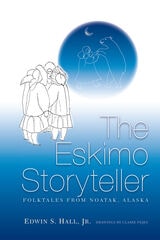
Eskimo Storyteller
Folktales from Noatak, Alaska New EditionEdwin Hall
University of Alaska Press, 1999
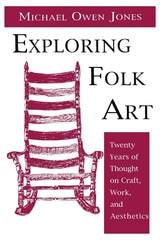
Exploring Folk Art
Michael Owen Jones
Utah State University Press, 1993
Jones explores the human impulse to create, the necessity for having aesthetically satisfying experiences, and the craving for tradition. He also considers topics such as making chairs, remodeling houses, using and preserving soda-fountain slang, preparing and eating food, and sculpting lifelike figures out of cement.
Eye of Newt and Toe of Frog, Adder's Fork and Lizard's Leg
The Lore and Mythology of Amphibians and ReptilesMarty Crump
University of Chicago Press, 2015
Frogs are worshipped for bringing nourishing rains, but blamed for devastating floods. Turtles are admired for their wisdom and longevity, but ridiculed for their sluggish and cowardly behavior. Snakes are respected for their ability to heal and restore life, but despised as symbols of evil. Lizards are revered as beneficent guardian spirits, but feared as the Devil himself.
In this ode to toads and snakes, newts and tuatara, crocodiles and tortoises, herpetologist and science writer Marty Crump explores folklore across the world and throughout time. From creation myths to trickster tales; from associations with fertility and rebirth to fire and rain; and from the use of herps in folk medicines and magic, as food, pets, and gods, to their roles in literature, visual art, music, and dance, Crump reveals both our love and hatred of amphibians and reptiles—and their perceived power. In a world where we keep home terrariums at the same time that we battle invasive cane toads, and where public attitudes often dictate that the cute and cuddly receive conservation priority over the slimy and venomous, she shows how our complex and conflicting perceptions threaten the conservation of these ecologically vital animals.
Sumptuously illustrated, Eye of Newt and Toe of Frog, Adder’s Fork and Lizard’s Leg is a beautiful and enthralling brew of natural history and folklore, sobering science and humor, that leaves us with one irrefutable lesson: love herps. Warts, scales, and all.