Results by title
932 books match the query 'Genres & Styles' and 17 start with e
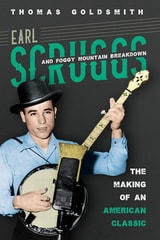
Earl Scruggs and Foggy Mountain Breakdown
The Making of an American ClassicThomas Goldsmith
University of Illinois Press, 2019
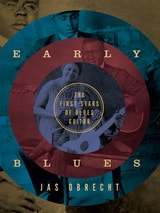
Early Blues
The First Stars of Blues GuitarJas Obrecht
University of Minnesota Press, 2015
Winner of the 2016 Living Blues Award for Blues Book of the Year
The complete history of early blues guitar, with portraits of its first stars—now in paperback
Since the early 1900s, blues and the guitar have traveled side by side. This book tells the story of their pairing from the first reported sightings of blues musicians, to the rise of nationally known stars, to the onset of the Great Depression, when blues recording virtually came to a halt.
Like the best music documentaries, Early Blues: The First Stars of Blues Guitar interweaves musical history, quotes from celebrated musicians (B.B. King, John Lee Hooker, Ry Cooder, and Johnny Winter, to name a few), and a spellbinding array of life stories to illustrate the early days of blues guitar in rich and resounding detail. In these chapters, you’ll meet Sylvester Weaver, who recorded the world’s first guitar solos, and Paramount Records artists Papa Charlie Jackson, Blind Lemon Jefferson, and Blind Blake, the “King of Ragtime Blues Guitar.” Blind Willie McTell, the Southeast’s superlative twelve-string guitar player, and Blind Willie Johnson, street-corner evangelist of sublime gospel blues, also get their due, as do Lonnie Johnson, the era’s most influential blues guitarist; Mississippi John Hurt, with his gentle, guileless voice and syncopated fingerpicking style; and slide guitarist Tampa Red, “the Guitar Wizard.”
Drawing on a deep archive of documents, photographs, record company ads, complete discographies, and up-to-date findings of leading researchers, this is the most comprehensive and complete account ever written of the early stars of blues guitar—an essential chapter in the history of American music.
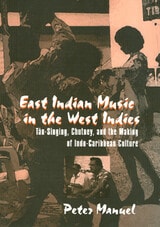
East Indian Music
Peter Manuel
Temple University Press, 2000
In recent decades, however, tan-singing has been declining, regarded as quaint and crude by younger generations raised on MTV, Hindi film music, and disco. At the same time, Indo-Caribbeans have been participating in their countries' economic, political, and cultural lives to a far greater extent than previously. Accompanying this participation has been a lively cultural revival, encompassing both an enhanced assertion of Indianness and a spirit of innovative syncretism. One of the most well-known products of this process is chutney, a dynamic music and dance phenomenon that is simultaneously a folk revival and a pop hybrid. In Trinidad, it has also been the vehicle for a controversial form of female empowerment and an agent of a new, more inclusive, conception of national identity.
Thus, East Indian Music in the West Indies is a portrait of a diaspora community in motion. It documents the social and cultural development of a people "without history," a people who have sometimes been dismissed as foreigners who merely perpetuate the culture of the homeland rather than becoming "truly" Caribbean. Professor Manuel shows how inaccurate this characterization is. On the one hand, in the form of tan-singing, it examines the distinctiveness of traditional Indo-Caribbean musical culture. On the other, in the form of chutney, it examines the new assertiveness and syncretism of Indo-Caribbean popular music.
Students of Indo-Caribbean music and curious world-music fans alike will be fascinated by Professor Manuel's guided tour through the complex and exciting world of Indo-Caribbean musical culture.

Easy
A Hard Look at Soft RockTimothy Gray
University of Iowa Press, 2026

Edipo Coloneo
Tragedy by Sophocles Rendered in Italian Verse by Giambattista GiustiGioachino Rossini
University of Chicago Press, 1985
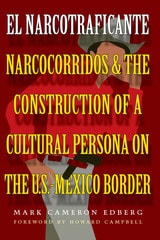
El Narcotraficante
Narcocorridos and the Construction of a Cultural Persona on the U.S.–Mexico BorderBy Mark Cameron Edberg
University of Texas Press, 2004
Since the late 1970s, a new folk hero has risen to prominence in the U.S.-Mexico border region and beyond—the narcotrafficker. Celebrated in the narcocorrido, a current form of the traditional border song known as the corrido, narcotraffickers are often portrayed as larger-than-life "social bandits" who rise from poor or marginalized backgrounds to positions of power and wealth by operating outside the law and by living a life of excess, challenging authority (whether U.S. or Mexican), and flouting all risks, including death. This image, rooted in Mexican history, has been transformed and commodified by the music industry and by the drug trafficking industry itself into a potent and highly marketable product that has a broad appeal, particularly among those experiencing poverty and power disparities. At the same time, the transformation from folk hero to marketable product raises serious questions about characterizations of narcocorridos as "narratives of resistance."
This multilayered ethnography takes a wide-ranging look at the persona of the narcotrafficker and how it has been shaped by Mexican border culture, socioeconomic and power disparities, and the transnational music industry. Mark Edberg begins by analyzing how the narcocorrido emerged from and relates to the traditional corrido and its folk hero. Then, drawing upon interviews and participant-observation with corrido listening audiences in the border zone, as well as musicians and industry producers of narcocorridos, he elucidates how the persona of the narcotrafficker has been created, commodified, and enacted, and why this character resonates so strongly with people who are excluded from traditional power structures. Finally, he takes a look at the concept of the cultural persona itself and its role as both cultural representation and model for practice.
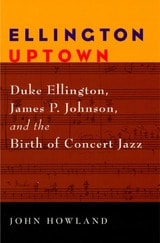
Ellington Uptown
Duke Ellington, James P. Johnson, and the Birth of Concert JazzJohn Howland
University of Michigan Press, 2009

Elliott Carter
James Wierzbicki
University of Illinois Press, 2011
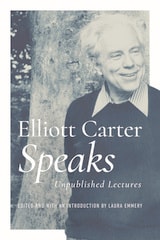
Elliott Carter Speaks
Unpublished LecturesElliott Carter. Edited and with an Introduction by Laura Emmery
University of Illinois Press, 2021
Expansive and essential, Elliott Carter Speaks opens up the artist's teaching and introspection to new contemporary perspectives on his thought and art.
Please note that the order and arrangement of materials in this book differs from that of Elliott Carter’s original lectures.
Emo
How Fans Defined a SubcultureJudith May Fathallah
University of Iowa Press, 2020
For many, the word “emo” calls to mind angsty teenagers, shaggy black haircuts, and skinny jeans. A popular music phenomenon in the early 2000s, emo is short for “emotional hardcore,” and refers to both a music genre and a youth scene notable for its androgynous style. Judith May Fathallah pushes beyond the stereotypes and social stigma to explore how online fandom has shaped the definition of emo, with significant implications both for millennial constructs of gender and for contemporary fan studies.
First laying out the debate over what emo is, Fathallah walks superfans and newcomers through the culture surrounding thegenre’s major bands, including the emo holy trinity: My Chemical Romance, Fall Out Boy, and Panic! At the Disco. Next she examines fans’ main mode of participation in the emo subculture—online communities such as LiveJournal, Tumblr, MySpace, and band websites. Taking a hard look at the gender politics that dominated those spaces, she unearths a subculture that simultaneously defines itself by its sensitivity and resistance to traditional forms of masculinity, yet ruthlessly enforces homophobic and sexist standards. Fathallah demonstrates fandom’s key role in defining emo as a concept and genre after 2001, with probing insight into its implications for gender constructions through popular music.

Emotional Signals
Auto-Tune, Melodyne, and the Cultural Politics of Pitch CorrectionCatherine Provenzano
University of Michigan Press, 2027
An ethnographic account of the history, development, and cultural impacts of digital tuning software

English Pastoral Music
From Arcadia to Utopia, 1900-1955Eric Saylor
University of Illinois Press, 2017

Ernani
Dramma lirico in Four Acts by Francesco Maria PiaveGiuseppe Verdi
University of Chicago Press, 1985
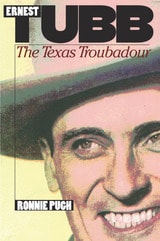
Ernest Tubb
The Texas TroubadourRonnie Pugh
Duke University Press, 1996
Tubb began his career as an imitator of Jimmie Rodgers, but stormed the country music scene in the 1940s with a new honky tonk sound and a string of hits that included “Walking the Floor Over You.” His innovations marked an important transition in country music to a style and lyric in tune with modern American working people, or at least that offered the real-life themes of hard drinking, divorce, tough times, and ruined lives—changes that helped define the music we recognize today as “country.” A member of the Grand Ole Opry until 1982, Tubb hosted a live radio broadcast from the Ernest Tubb Record Shop in Nashville for years and became one of the first country music stars to host his own television show in the mid-1960s. Always popular and on the road much of the time even after his prime hit-making years had ended, he was well-known for promoting the careers of many new performers on the rise.
Delving into fan club journals, songbooks, newspaper broadcast logs, record company files, and hundreds of interviews, Ronnie Pugh draws a picture of Tubb—exploring both his personal and professional life—that is unprecedented in its intimacy, detail, and vitality. We get a close-up view of Tubb riding the crest of his popularity, setting the pace for Nashville, facing the onslaught of Elvis Presley and rock ’n roll, and surviving as a country music legend. Richly illustrated with almost a hundred photographs, many of which are rare unpublished shots from private collections, Ernest Tubb also contains a detailed and complete sessionography, a resource that will be of continuing importance for serious record collectors.
A biography that has been long awaited from Ronnie Pugh, unquestionably the leading authority on Ernest Tubb, this book will delight readers from among the fans of country music, those interested in the history of country music or American popular music and culture generally, and, of course, Ernest Tubb fans.
Evenings with the Orchestra
Hector Berlioz
University of Chicago Press, 1999
Exploring the World of J. S. Bach
A Traveler's GuideRobert L. Marshall
University of Illinois Press, 2016
Extended Play
Sounding Off from John Cage to Dr. FunkensteinJohn Corbett
Duke University Press, 1994
Using cultural critique and textual theory, Corbett addresses a broad spectrum of issues, such as the status of recorded music in postmodern culture, the politics of self-censorship, experimentation, and alternativism in the music industry, and the use of metaphors of space and madness in the work of African American musicians. He follows these more theoretically oriented essays with a series of extensive profiles and in-depth interviews that offer contrasting and complementary perspectives on some of the world’s most creative musicians and their work. Included here are more than twenty original photographs as well as a meticulously annotated discography. The result is one of the most thoughtful, and most entertaining, investigations of contemporary music available today.