Results by title
1441 books match the query 'Great Britain' and 59 start with e
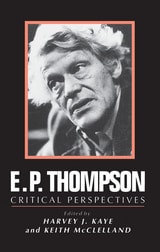
E. P. Thompson
Critical PerspectivesHarvey Kaye
Temple University Press, 1990
EDUCATING THE PROPER WOMAN READER
VICTORIAN FAMILY LITERARY MAGAZINES & CULTURAL HEALTH OF THE NATIONJennifer Phegley
The Ohio State University Press, 2004
Jennifer Phegley presents an examination of four mid-Victorian magazines that middle-class women read widely. Educating the Proper Woman Reader reevaluates prevailing assumptions about the vexed relationship between nineteenth-century women readers and literary critics.
While many scholars have explored the ways nineteenth-century critics expressed their anxiety about the dangers of women’s unregulated and implicitly uncritical reading practices, which were believed to threaten the sanctity of the home and the cultural status of the nation, Phegley argues that family literary magazines revolutionized the position of women as consumers of print by characterizing them as educated readers and able critics. Her analysis of images of influential women readers (in Harper’s), intellectual women readers (in The Cornhill), independent women readers (in Belgravia), and proto-feminist women readers/critics (in Victoria) indicates that women played a significant role in determining the boundaries of literary culture within these magazines. She argues that these publications supported women’s reading choices, inviting them to define literary culture rather than to consume it passively.
Not only does this book revise our understanding of nineteenth-century attitudes toward women readers, but it also takes a fresh look at the transatlantic context of literary production. Further, Phegley demonstrates the role these publications played in improving cultural literacy among women of the middle classes as well as the interplay between fiction and essays of the time by writers such as Mary Braddon, Charles Dickens, George Eliot, Elizabeth Gaskell, G. H. Lewes, Harriet Martineau, Margaret Oliphant, George Sala, William Thackeray, and Anthony Trollope.

EMBASSY GIRLS
JULIA DAVIS
West Virginia University Press, 1992
ETERNALLY WOUNDED WOMAN
"WOMEN, DOCTORS, AND EXERCISE IN THE LATPatricia A. Vertinsky
University of Illinois Press, 1994
"A review of thinking is needed in the field of sociohistorical analysis concerning attitudes toward the female body and attempts to regulate female physical activity. Such analyses may generate new insights into the questions of both social control and the unevenness of progress in women's real or perceived opportunities for participating freely and fully in sports and exercise of their choice."
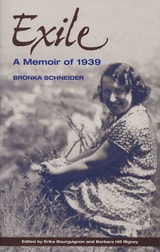
EXILE
A MEMOIR OF 1939Bronka Schneider Edited with forewords by Erika Bourguignon and Barbara Hill Rigney
The Ohio State University Press, 1998
Bronka Schneider and her husband, Joseph, were two of the thirty thousand Austrian Jews admitted as refugees to Great Britain between March 1938 and 2 September 1939. It was not until 1960, however, that Schneider wrote her memoir about the year she spent as a housekeeper, with Joseph as a butler, in a Scottish castle.
Schneider tells of daily encounters—with her employers, the English lady and her husband, a retired British civil servant who had spent many years in India; the village locals; other refugees; and a family of evacuees from the slums of Glasgow.
The editors have divided this memoir into chapters, adding headlines from the London Times as epigraphs. These headlines, reporting the escalating events of World War II, are in stark contrast to daily activities of the residents of this isolated region of Scotland. A commentary by Erika Bourguignon provides historical, political, and cultural background of this period.
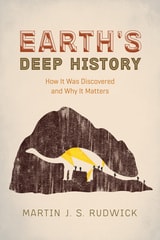
Earth's Deep History
How It Was Discovered and Why It MattersMartin J. S. Rudwick
University of Chicago Press, 2014
Rudwick begins in the seventeenth century with Archbishop James Ussher, who famously dated the creation of the cosmos to 4004 BC. His narrative later turns to the crucial period of the late eighteenth and early nineteenth centuries, when inquisitive intellectuals, who came to call themselves “geologists,” began to interpret rocks and fossils, mountains and volcanoes, as natural archives of Earth’s history. He then shows how this geological evidence was used—and is still being used—to reconstruct a history of the Earth that is as varied and unpredictable as human history itself. Along the way, Rudwick rejects the popular view of this story as a conflict between science and religion and shows how the modern scientific account of the Earth’s deep history retains strong roots in Judaeo-Christian ideas.
Extensively illustrated, Earth’s Deep History is an engaging and impressive capstone to Rudwick’s distinguished career. Though the story of the Earth is inconceivable in length, Rudwick moves with grace from the earliest imaginings of our planet’s deep past to today’s scientific discoveries, proving that this is a tale at once timeless and timely.
East India Company at Home, 1757-1857
Edited by Margot Finn and Kate Smith
University College London, 2018

Economic Knowledge in Socialism, 1945–1989
Till Düppe and Ivan Boldyrev, issue editors
Duke University Press, 0
Contributors. Oleg Ananyin, Johanna Bockman, Ivan Boldyrev, Till Düppe, Richard Ericson, Yakov Feygin, Olessia Kirtchik, Martha Lampland, Adam Leeds, Denis Melnik, Chris Miller, György Peteri, Eglė Rindzevičiūtė, Vítězslav Sommer, Joachim Zweynert
Economic Women
Essays on Desire and Dispossession in Nineteenth-Century British CultureEdited by Lana L. Dalley and Jill Rappoport
The Ohio State University Press, 2013
Economists Papers, 1750-1950
A Guide to Archive and other Manuscript Sources for the History of British and Irish Economic ThoughtR. P. Sturges
Duke University Press, 1975
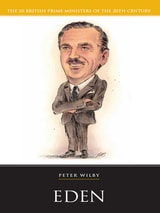
Eden
Peter Wilby
Haus Publishing, 2006
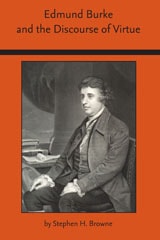
Edmund Burke and the Discourse of Virtue
Stephen Howard Browne
University of Alabama Press, 2007
"A major accomplishment in the study of Burke." —Choice
More than 200 years after his death, Edmund Burke remains among the most influential conservative writers in the Anglophone world. Burke’s relevance has only grown as the nature of what it means to be a conservative has become hotly contested.
And yet Burke is often discussed more than he is read. Worse, his rhetoric is often pressed into the service of other ideologies. In Edmund Burke and the Discourse of Virtue, Stephen Browne of Pennsylvania State University subjects Burke’s work to the close textual analysis it has never received.
The result of Browne's study is to present Burke and his work in a light that was clearly essential to Burke himself, one that illuminates the link between rhetoric and action that is key to understanding Burke, his career, his work, and his influence on contemporary conservatism.
Readers interested in the development of conversative philosophy, politics, and writing from its earliest roots will value this rare and illuminating work.
Educating Women
Cultural Conflict and Victorian LiteratureLaura Morgan Green
Ohio University Press, 2001
In 1837, when Queen Victoria came to the throne, no institution of higher education in Britain was open to women. By the end of the century, a quiet revolution had occurred: women had penetrated even the venerable walls of Oxford and Cambridge and could earn degrees at the many new universities founded during Victoria's reign. During the same period, novelists increasingly put intellectually ambitious heroines students, teachers, and frustrated scholars—at the center of their books. Educating Women analyzes the conflict between the higher education movement's emphasis on intellectual and professional achievement and the Victorian novel's continuing dedication to a narrative in which women's success is measured by the achievement of emotional rather than intellectual goals and by the forging of social rather than institutional ties.
Focusing on works by Charlotte Brontë, George Eliot, Anna Leonowens, and Thomas Hardy, Laura Morgan Green demonstrates that those texts are shaped by the need to mediate the conflict between the professionalism and publicity increasingly associated with education, on the one hand, and the Victorian celebration of women as emblems of domesticity, on the other. Educating Women shows that the nineteenth-century “heroines” of both history and fiction were in fact as indebted to domestic ideology as they were eager to transform it.
Edward III
William Shakespeare
Arizona Center for Medieval and Renaissance Studies, 2022
Written after England’s victory over the Spanish Armada in 1588, Edward III follows the exploits of King Edward III and his son Edward, the Black Prince of Wales. England dominates on the battlefield as the play explores questions of kinghood and chivalry through the actions of King Edward and his son. Octavio Solis’s translation of the play provides all of the complexity and richness of the original while renewing the allusions and metaphors lost through time.
This translation of Edward III was written as part of the Oregon Shakespeare Festival’s Play On! project, which commissioned new translations of thirty-nine Shakespeare plays. These translations present work from “The Bard” in language accessible to modern audiences while never losing the beauty of Shakespeare’s verse. Enlisting the talents of a diverse group of contemporary playwrights, screenwriters, and dramaturges from diverse backgrounds, this project reenvisions Shakespeare for the twenty-first century. These volumes make these works available for the first time in print—a new First Folio for a new era.

Edwardian Stories of Divorce
Janice Hubbard Harris
Rutgers University Press, 1996
Much as abortion in the United States today is a contentious issue used for scripting women's roles and potential into the national agenda, divorce was an issue dividing England in the Edwardian era. According to Janice Harris, anything and everything, from illicit sex and family values to the Garden of Eden, wrath of children, poverty of women, nature of cruelty, scandal of America, threat of Germany, and future of England were part of the debate over divorce. Living under marriage laws far more restrictive than those of their Protestant neighbors, Edwardian women and men campaigned for reform with a barrage of compelling stories. Organizing her analysis around three major sources of narrative on divorce––the Sunday papers, the Report of the Royal Commission on Divorce and Matrimonial causes, and the novel––Harris uncovers a war of words and a competition of tales. In raising questions about the winners, losers, and spoils, Harris expands our understanding of the history of divorce, the wars between the sexes, and the political import of those wars.
In the end, she presents a complex and lively story herself, one that illuminates battles over marriage and divorce taking place in our own era as well. This humane book on a long-neglected subject marks an important contribution to narrative studies and Edwardian history.
Eighteenth-Century Contexts
Historical Inquiries in Honor of Philip HarthHoward D. Weinbrot
University of Wisconsin Press, 2001
Eighteenth-Century Contexts offers a lively array of essays that consider literary, intellectual, political, theological, and cultural aspects of the years 1650–1800, in the British Isles and Europe. At the center of the book is Jonathan Swift; several essays delve into his poetry, his similarities to Bernard Mandeville, his response to Anthony Collins’s Discourse of Free-Thinking, and the relationship between his Gulliver’s Travels and Thomas More’s Utopia. Other essays discuss Alexander Pope, eighteenth-century music and poetry, William Congreve, James Boswell, Samuel Richardson, and women’s novels of the eighteenth century.
Eleanor of Aquitaine
Patron and PoliticianEdited by William W. Kibler
University of Texas Press, 1976
Eleanor of Aquitaine was the wife of two kings, Louis VII of France and Henry II Plantagenet of England, and the mother of two others, Richard the Lionhearted and John Lackland. In her eventful, often stormy life, she not only influenced the course of events in the twelfth century but also encouraged remarkable advances in the literary and fine arts. In this book, experts in five disciplines—history, art history, music, French and English literature—evaluate the influence of Eleanor and her court on history and the arts.
Elizabeth A. R. Brown views Eleanor as having played a significant role as parent and politician, but not as patron. Rebecca A. Baltzer takes a new look at the music of the period that was written by and for Eleanor, her court, and her family. Moshé Lazar reexamines her relationship to the courtly-love literature of the period. Eleanor S. Greenhill and Larry M. Ayres reassess her influence in the realm of art history. Rossell Hope Robbins traces the lines extending from the French courtly literature of Eleanor's period down into fourteenth-century Chaucerian England. The essays reflect divergent but generally complementary assessments of this remarkable woman's influence on her own era and on future times as well.
This volume is the result of a symposium held at the University of Texas in 1973.
Electric Meters
Victorian Physiological PoeticsJason Rudy
Ohio University Press, 2009
Combining formal poetic analysis with cultural history, Rudy traces the development of Victorian physiological poetics from the Romantic poetess tradition through to the works of Alfred Tennyson, the “Spasmodic” poets, Elizabeth Barrett Browning, Gerard Manley Hopkins, and Algernon Swinburne, among others. He demonstrates how poetic rhythm came increasingly to be understood throughout the nineteenth century as a physiological mechanism, as poets across class, sex, and national boundaries engaged intensely and in a variety of ways with the human body’s subtle response to rhythmic patterns. Whether that opportunity for transcendence was interpersonal or spiritual in nature, nineteenth–century poets looked to electricity as a model for overcoming boundaries, for communicating across the gaps between sound and sense, between emotion and thought, and—perhaps—between individuals in the modern world.
Electric Meters will appeal to those interested in poetry of any period and particularly those interested in nineteenth–century culture and history.

Electric Railways
1880-1990Michael C. Duffy
The Institution of Engineering and Technology, 2003
Electronic Evidence and Electronic Signatures
Stephen Mason and Daniel Seng
University of London Press, 2021
In this updated edition of a well-established practitioner text, Stephen Mason and Daniel Seng have brought together a team of experts in the field to provide an exhaustive treatment of electronic evidence and electronic signatures. This fifth edition continues to follow the tradition in English evidence textbooks by basing the text on the law of England and Wales, with appropriate citations of relevant case law and legislation from other jurisdictions.
Elizabeth Barrett Browning
The Origins of a New PoetryDorothy Mermin
University of Chicago Press, 1989
Barrett Browning's place at the wellhead of a new female tradition remains the single most important fact about her in terms of literary history, and it was central to her self-consciousness as a poet. Mermin's study shows that Barrett Browning's anomalous situation was constantly present to her imagination and that questions of gender shaped almost everything she wrote. Mermin argues that Barrett Browning's poetry covertly inspects and dismantles the barriers set in her path by gender and that in her major works—Sonnets from the Portuguese, Aurora Leigh, her best political poems, "A Musical Instrument"—difficulty is turned into triumph, incorporating the author's femininity, her situation as a woman poet, and her increasingly substantial fame.
Mermin skillfully interweaves biography and close readings of the poems to show precisely how Barrett Browning's life as a woman writer is a part of the essential meaning of her art. Both her personal and her literary achievements are exceptionally well documented, especially for her formative years. Mermin makes extensive use of the poet's early essays, a diary covering most of her twenty-sixth year, and the enormous number of letters that have survived. Ranging from her earliest ambitions through her long periods of discouragement and illness to her happy married life with Robert Browning, this comprehensive study of Elizabeth Barrett Browning is essential reading for students of the Victorian period, English literature, and women's studies.
Elizabeth I
Autograph Compositions and Foreign Language OriginalsElizabeth I
University of Chicago Press, 2002
The originals selected for inclusion here are compositions that survive in Elizabeth's own handwriting, in English and in foreign languages, as well as her foreign language compositions preserved by other hands or in printed editions. Presented in transcriptions that reproduce the spelling and punctuation of their sixteenth-century sources, these texts convey many of the expressive and significant features of Elizabeth's writing. Through the transcriptions of texts in her own hand, readers can track the queen's language and compositional style-her choices of vocabulary and phrasing; her habits of capitalization, spelling, and punctuation; her often heavy revisions and redraftings; and her insertions of postscripts and second thoughts. The texts in foreign languages, meanwhile, will allow readers to prepare their own English translations from these original sources.
A unique resource for scholars of English literature and the Renaissance, this companion to the Collected Works offers much fuller and more detailed access to Elizabeth and her writings than can be obtained from the modern English versions alone.
Elizabeth I
Collected WorksElizabeth I
University of Chicago Press, 2000
"This collection shines a light onto the character and experience of one of the most interesting of monarchs. . . . We are likely never to get a closer or clearer look at her. An intriguing and intense portrait of a woman who figures so importantly in the birth of our modern world."—Publishers Weekly
"An admirable scholarly edition of the queen's literary output. . . . This anthology will excite scholars of Elizabethan history, but there is something here for all of us who revel in the English language."—John Cooper, Washington Times
"Substantial, scholarly, but accessible. . . . An invaluable work of reference."—Patrick Collinson, London Review of Books
"In a single extraordinary volume . . . Marcus and her coeditors have collected the Virgin Queen's letters, speeches, poems and prayers. . . . An impressive, heavily footnoted volume."—Library Journal
"This excellent anthology of [Elizabeth's] speeches, poems, prayers and letters demonstrates her virtuosity and afford the reader a penetrating insight into her 'wiles and understandings.'"—Anne Somerset, New Statesman
"Here then is the only trustworthy collection of the various genres of Elizabeth's writings. . . . A fine edition which will be indispensable to all those interested in Elizabeth I and her reign."—Susan Doran, History
"In the torrent of words about her, the queen's own words have been hard to find. . . . [This] volume is a major scholarly achievement that makes Elizabeth's mind much more accessible than before. . . . A veritable feast of material in different genres."—David Norbrook, The New Republic
Elizabeth I
Translations, 1544-1589Elizabeth I
University of Chicago Press, 2008
Presenting original and modernized spellings in a facing-page format, these two volumes will answer the call to make all of Elizabeth’s writings available. They include her renderings of epistles of Cicero and Seneca, religious writings of John Calvin and Marguerite de Navarre, and Horace’s Ars poetica, as well as Elizabeth’s Latin Sententiae drawn from diverse sources, on the responsibilities of sovereign rule and her own perspectives on the monarchy. Editors Janel Mueller and Joshua Scodel offer introduction to each of the translated selections, describing the source text, its cultural significance, and the historical context in which Elizabeth translated it. Their annotations identify obscure meanings, biblical and classical references, and Elizabeth’s actual or apparent deviations from her sources.
The translations collected here trace Elizabeth’s steady progression from youthful evangelical piety to more mature reflections on morality, royal responsibility, public and private forms of grief, and the right way to rule. Elizabeth I: Translations is the queen’s personal legacy, an example of the very best that a humanist education can bring to the conduct of sovereign rule.
Elizabeth I
Translations, 1592-1598Elizabeth I
University of Chicago Press, 2009
Presenting original and modernized spellings in a facing-page format, these two volumes will answer the call to make all of Elizabeth’s writings available. They include her renderings of epistles of Cicero and Seneca, religious writings of John Calvin and Marguerite de Navarre, and Horace’s Ars poetica, as well as Elizabeth’s Latin Sententiae drawn from diverse sources, on the responsibilities of sovereign rule and her own perspectives on the monarchy. Editors Janel Mueller and Joshua Scodel offer introduction to each of the translated selections, describing the source text, its cultural significance, and the historical context in which Elizabeth translated it. Their annotations identify obscure meanings, biblical and classical references, and Elizabeth’s actual or apparent deviations from her sources.
The translations collected here trace Elizabeth’s steady progression from youthful evangelical piety to more mature reflections on morality, royal responsibility, public and private forms of grief, and the right way to rule. Elizabeth I: Translations is the queen’s personal legacy, an example of the very best that a humanist education can bring to the conduct of sovereign rule.
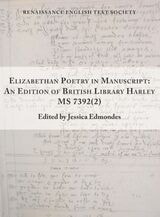
Elizabethan Poetry in Manuscript
An Edition of British Library Harley MS 7392(2)Edited by Jessica Edmondes
Iter Press, 2022
This edition preserves the appearance, spelling, and punctuation of the original manuscript while expanding antiquated contractions to provide an easily readable text. Textual notes appear on the page, and in-depth contextual notes and word glosses are provided in the commentary section. The analyses add to our knowledge of early modern manuscript culture and literary manuscript transmission, and a substantial introduction provides context for the compilation of the anthology.
Elizabethan Popular Culture
Leonard R. N. Ashley
University of Wisconsin Press, 1988

Elusion Aforethought
The Life and Writing of Anthony Berkeley CoxMalcolm J. Turnbull
University of Wisconsin Press, 1996
Empire And Imperialism
Peter Cain
St. Augustine's Press, 1999
The 1870s is a key decade in the evolution of British thinking about the nature, purpose, and future of empire. Increasing economic competition began to disturb the complacent assumption about Britain's leadership in technology and in the world economy. The growth of other countries, most notably the United States and Germany, put in question Britain's survival as a great power. These changes set in motion a reappraisal of Britain's empire and its importance to the motherland, and a heated debated as to whether colonialism and imperialism were a burden rather than a benefit to Britain. The discussion of the 1870s set the agenda for the debates of the next half-century. This volume documents the writing central to the debate; it includes contributions by such leading British thinkers and statesmen as J. A. Froude, Robert Lowe, Edward Dicey, Frederic Seebohm, Lord Carnarvon, Gladstone, Julius Vogel, and Lord Blachford.
Empire in Question
Reading, Writing, and Teaching British ImperialismAntoinette Burton
Duke University Press, 2011
Empire of Neglect
The West Indies in the Wake of British LiberalismChristopher Taylor
Duke University Press, 2018
Empire of Religion
Imperialism and Comparative ReligionDavid Chidester
University of Chicago Press, 2014
In developing a material history of the study of religion, Chidester documents the importance of African religion, the persistence of the divide between savagery and civilization, and the salience of mediations—imperial, colonial, and indigenous—in which knowledge about religions was produced. He then identifies the recurrence of these mediations in a number of case studies, including Friedrich Max Müller’s dependence on colonial experts, H. Rider Haggard and John Buchan’s fictional accounts of African religion, and W. E. B. Du Bois’s studies of African religion. By reclaiming these theorists for this history, Chidester shows that race, rather than theology, was formative in the emerging study of religion in Europe and North America. Sure to be controversial, Empire of Religion is a major contribution to the field of comparative religious studies.
Empire of Tea
The Asian Leaf that Conquered the WorldMarkman Ellis, Richard Coulton, and Matthew Mauger
Reaktion Books, 2015
This impressively detailed book offers a rich cultural history of tea, from its ancient origins in China to its spread around the world. The authors recount tea’s arrival in London and follow its increasing salability and import via the East India Company throughout the eighteenth century, inaugurating the first regular exchange—both commercial and cultural—between China and Britain. They look at European scientists’ struggles to understand tea’s history and medicinal properties, and they recount the ways its delicate flavor and exotic preparation have enchanted poets and artists. Exploring everything from its everyday use in social settings to the political and economic controversies it has stirred—such as the Boston Tea Party and the First Opium War—they offer a multilayered look at what was ultimately an imperial industry, a collusion—and often clash—between the world’s greatest powers over control of a simple beverage that has become an enduring pastime.
Empire's Endgame
Racism and the British StateGargi Bhattacharyya
Pluto Press, 2021
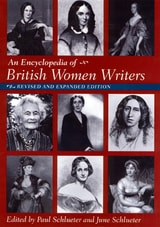
Encyclopedia of British Women Writers
Schlueter, Paul
Rutgers University Press, 1999
Paul Schlueter and June Schlueter have individually and jointly written and edited a number of critical and reference works, including The English Novel: Twentieth Century Criticism (Vol. 2: Twentieth Century Novelists) and Modern American Literature (Supplement 2). Paul Schlueter's books include The Novels of Doris Lessing and Shirley Ann Grau. June Schlueter, Provost, and Dana Professor of English at Lafayette College, has edited Feminist Readings of Modern American Drama and Modern American Drama: The Female Canon.

Energy without Conscience
Oil, Climate Change, and ComplicityDavid McDermott Hughes
Duke University Press, 2017

Engaging with Reality
Documentary and GlobalizationIb Bondebjerg
Intellect Books, 2014
Engaging with Reality is framed by theories of globalization and delves into the development of a new global media culture. It also deals with theories of documentary genres and their social and cultural functions. It discusses cosmopolitanism and the role and forms of documentary in a new digital and global media culture. It will be essential reading for those looking to better understand documentary and the new transnational approach to modern media culture.
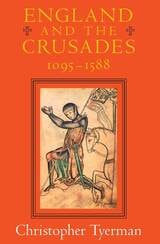
England and the Crusades, 1095-1588
Christopher Tyerman
University of Chicago Press, 1988
Drawing on a wide range of archival, chronicle, and literary evidence, Tyerman brings to life the royal personalities, foreign policy, political intrigue, taxation and fundraising, and the crusading ethos that gripped England for hundreds of years.
"An ambitious task to undertake. . . . Tyerman has done the job not only thoroughly but brilliantly. . . . A highly impressive study, deserving rich praise and wide readership."—Norman Housley, Times Literary Supplement
"Christopher Tyerman has written a wonderful book. . . . [He] manages to confront thorny issues in scholarship and to contribute new perspectives on them."—William Chester Jordan, American Historical Review
"Tyerman provides valuable insights into preaching, recruitment, and the funding and organisation of crusading expeditions. . . . Fascinating new perspectives on English history."—Edward Powell, Sunday Times
"Impressive. . . . Tyerman's research has yielded valuable evidence, and his admirably lucid argument sheds new light on a complex and bloody period in English history."—Virginia Quarterly Review

England in 1819
The Politics of Literary Culture and the Case of Romantic HistoricismJames Chandler
University of Chicago Press, 1998
"1819? At first sight, it might not seem a 'hot date'; but as James Chandler argues in his powerful book, it would be a mistake to overlook a year of such exceptional political conflagration and literary pyrotechnics in British history. Chandler's study is a wide-ranging, enormously ambitious, densely packed, closely argued work."—John Brewer, New Republic
"The book's largest argument, and the source of its considerable revelations, is that late twentieth-century practices of cultural history-writing have their roots in the peculiar Romantic historicism born in post-Waterloo Britain."—Jon Klancher, Times Literary Supplement
"A monumental work of scholarship."—Terry Eagleton, The Independent
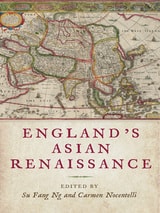
England's Asian Renaissance
Su Fang Ng
University of Delaware Press, 2022
Published by the University of Delaware Press. Distributed worldwide by Rutgers University Press.

England's Discontents
Political Cultures and National IdentitiesMike Wayne
Pluto Press, 2018
Examining five political ideologies at play in England—conservatism, liberalism, economic liberalism, social democracy, and socialism—Mike Wayne unearths the historical rationale for their relationship to cultural identities, including rural England, gentlemanly capitalism, industrialism, and Empire. By revealing how national identity, class, and political economy intersect, Wayne is able to elucidate England’s enduring attachment to the neoliberal economic system.
Grounding his cultural and material perspective in Gramscian and Marxist theory, Wayne illuminates the cultural dimensions of English political life in the last century.
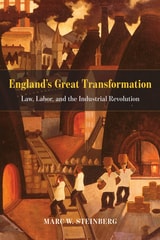
England's Great Transformation
Law, Labor, and the Industrial RevolutionMarc W. Steinberg
University of Chicago Press, 2016
Building his argument on three case studies—the Hanley pottery industry, Hull fisheries, and Redditch needlemakers—Steinberg employs both local and national analyses to emphasize the ways in which these master-servant laws allowed employers to use the criminal prosecutions of workers to maintain control of their labor force. Steinberg provides a fresh perspective on the dynamics of labor control and class power, integrating the complex pathways of Marxism, historical institutionalism, and feminism, and giving readers a subtle yet revelatory new understanding of workplace control and power during England’s Industrial Revolution.
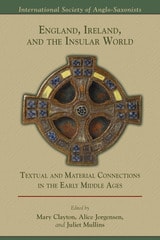
England, Ireland, and the Insular World
Textual and Material Connections in the Early Middle AgesMary Clayton
Arizona Center for Medieval and Renaissance Studies, 2017
ISAS Dublin 2013. England, Ireland and the Insular World: Textual and Material Connections in the Early Middle Ages is a collection of twelve essays related to the theme of the 2013 conference of the International Society of Anglo-Saxonists, ‘Insular Cultures’. Contributors cover a broad range of topics, from early medieval agriculture in Ireland and England, to sculpture, manuscript illumination and script, homilies, hagiography, aristocratic gift-giving, relics, calendars, Beowulf, and Anglo-Saxon perceptions of the Celtic peoples, considering connections, parallels and differences between Anglo-Saxon England and its insular neighbors. The volume will be of interest to all those working on Early Medieval history, literature, archaeology, liturgy, art, and manuscripts.
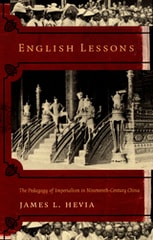
English Lessons
The Pedagogy of Imperialism in Nineteenth-Century ChinaJames L. Hevia
Duke University Press, 2003
Hevia analyzes British Foreign Office documents, diplomatic memoirs, auction house and museum records, nineteenth-century scholarly analyses of Chinese history and culture, campaign records, and photographs. He shows how Britain refigured its imperial project in
China as a cultural endeavor through examinations of the circulation of military loot in Europe, the creation of an art history of “things Chinese,” the construction of a field of knowledge about China, and the Great Game rivalry between Britain, Russia, and the Qing empire in Central Asia. In so doing, he illuminates the impact of these elements on the colonial project and the creation of a national consciousness in China.
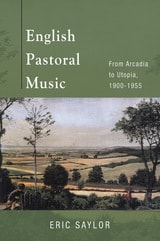
English Pastoral Music
From Arcadia to Utopia, 1900-1955Eric Saylor
University of Illinois Press, 2017
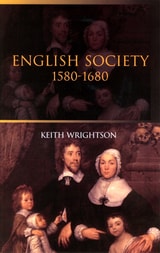
English Society
1580-1680Wrightson, Keith
Rutgers University Press, 2003
English in Print from Caxton to Shakespeare to Milton
Valerie Hotchkiss and Fred C. Robinson
University of Illinois Press, 2007
Entanglements of Empire
Missionaries, Maori, and the Question of the BodyTony Ballantyne
Duke University Press, 2015
Environmental Imaginaries of the Middle East and North Africa
Diana K. Davis
Ohio University Press, 2011
The landscapes of the Middle East have captured our imaginations throughout history. Images of endless golden dunes, camel caravans, isolated desert oases, and rivers lined with palm trees have often framed written and visual representations of the region. Embedded in these portrayals is the common belief that the environment, in most places, has been deforested and desertified by centuries of misuse. It is precisely such orientalist environmental imaginaries, increasingly undermined by contemporary ecological data, that the eleven authors in this volume question. This is the first volume to critically examine culturally constructed views of the environmental history of the Middle East and suggest that they have often benefitted elites at the expense of the ecologies and the peoples of the region. The contributors expose many of the questionable policies and practices born of these environmental imaginaries and related histories that have been utilized in the region since the colonial period. They further reveal how power, in the form of development programs, notions of nationalism, and hydrological maps, for instance, relates to environmental knowledge production.
Contributors: Samer Alatout, Edmund Burke III, Shaul Cohen, Diana K. Davis, Jennifer L. Derr, Leila M. Harris, Alan Mikhail, Timothy Mitchell, Priya Satia, Jeannie Sowers, and George R. Trumbull IV
Envisioning Brazil
A Guide to Brazilian Studies in the United StatesEdited by Marshall C. Eakin and Paulo Roberto de Almeida
University of Wisconsin Press, 2005
Envisioning Brazil is a comprehensive and sweeping assessment of Brazilian studies in the United States. Focusing on synthesis and interpretation and assessing trends and perspectives, this reference work provides an overview of the writings on Brazil by United States scholars since 1945.
"The Development of Brazilian Studies in the United States," provides an overview of Brazilian Studies in North American universities. "Perspectives from the Disciplines" surveys the various academic disciplines that cultivate Brazilian studies: Portuguese language studies, Brazilian literature, art, music, history, anthropology, Amazonian ethnology, economics, politics, and sociology. "Counterpoints: Brazilian Studies in Britain and France" places the contributions of U.S. scholars in an international perspective. "Bibliographic and Reference Sources" offers a chronology of key publications, an essay on the impact of the digital age on Brazilian sources, and a selective bibliography.