90 books match the query 'Growth' and 5 start with e
cover of Economic Factors in the Growth of Corporate Giving

Economic Factors in the Growth of Corporate Giving

Ralph Lowell Nelson

Russell Sage Foundation, 1970
Examines the dramatic changes in the philanthropic behavior of business corporations in their support of education, health, welfare, and the arts. This analysis shows how traditional patterns of corporate philanthropy have undergone changes across the years, and how, presently, a favorable attitude exists toward giving. The author traces these shifts through periods of depression, war, and peace. He examines economic and non-economic reasons for the growth of corporate giving, and treats the innovative role of company-sponsored foundations.
[more]
cover of Egalitarian Capitalism: Jobs, Incomes, and Growth in Affluent Countries

Egalitarian Capitalism

Jobs, Incomes, and Growth in Affluent Countries

Lane Kenworthy

Russell Sage Foundation, 2004
Declining participation in labor unions, the movement toward a service-based economy, and increased globalization have cast doubt on the extent to which welfare states can continue to stem inequality in market economies over the long-term. Does the new economy render existing models of social assistance obsolete? Do traditional welfare states hamper economic and employment growth, thereby worsening the plight of the poor? Lane Kenworthy offers a rigorous empirical analysis of these questions in Egalitarian Capitalism. The book examines sixteen industrialized countries in North America, Western Europe, and Scandinavia—each with different approaches to assisting the poor—to see how successful each has been in developing its economy and curbing inequality over the past twenty years. Kenworthy finds that inequality grew in almost all of these countries, from the most progressive to the least. Using simple but powerful statistical tests, he assesses the theory that inequality is necessary to improve economic growth and reduce poverty. He finds no necessary trade-off between equality and economic growth but discovers some evidence that high minimum wages dampen employment growth in private sector services. Kenworthy suggests that without greater private sector employment, public supports may be unable to adequately sustain living standards for the poor. An equitable growth strategy necessitates a balance of policy options: Creating jobs is aided by loose employment regulation, low payroll taxes, and, in some cases, lower real wages for workers at the bottom of the income spectrum. However, high employment is also facilitated by a system that "makes work pay" with earnings subsidies, workplace flexibilities, financial support for those who are between jobs or unable to work, and universal health and child care coverage. Kenworthy suggests that these strategies, though generally presented as mutually exclusive, could be effectively combined to create a robust, fair economy. Egalitarian Capitalism addresses fundamental questions of national policy with rigorous scholarship and a clarity that makes it accessible to any reader interested in the alleged trade-off between social equity and market efficiency. The book analyzes the viability of traditional welfare regimes and offers sustainable options that can promote egalitarian societies without hampering economic progress. A Volume in the American Sociological Association's Rose Series in Sociology
[more]
cover of Error and the Growth of Experimental Knowledge

Error and the Growth of Experimental Knowledge

Deborah G. Mayo

University of Chicago Press, 1996

We may learn from our mistakes, but Deborah Mayo argues that, where experimental knowledge is concerned, we haven't begun to learn enough. Error and the Growth of Experimental Knowledge launches a vigorous critique of the subjective Bayesian view of statistical inference, and proposes Mayo's own error-statistical approach as a more robust framework for the epistemology of experiment. Mayo genuinely addresses the needs of researchers who work with statistical analysis, and simultaneously engages the basic philosophical problems of objectivity and rationality.

Mayo has long argued for an account of learning from error that goes far beyond detecting logical inconsistencies. In this book, she presents her complete program for how we learn about the world by being "shrewd inquisitors of error, white gloves off." Her tough, practical approach will be important to philosophers, historians, and sociologists of science, and will be welcomed by researchers in the physical, biological, and social sciences whose work depends upon statistical analysis.

[more]
cover of Evidence of Editing: Growth and Change of Texts in the Hebrew Bible

Evidence of Editing

Growth and Change of Texts in the Hebrew Bible

Reinhard Müller

SBL Press, 2014

A new perspective on editorial activity in the Hebrew Bible for research and teaching

Evidence of Editing lays out the case for substantial and frequent editorial activity within the Hebrew Bible. The authors show how editors omitted, expanded, rewrote, and compiled both smaller and larger phrases and passages to address religious and political change. The book refines the exegetical method of literary and redaction criticism, and its results have important consequences for the future use of the Hebrew Bible in historical and theological studies.

Features:

  • Hebrew, Greek, and Aramaic examples of editorial activity
  • Clear explanations of the distinctions between textual, literary, and redaction criticism
  • Fifteen chapters attesting to continual editorial activity in the Torah, the Prophets, and the Writings
[more]
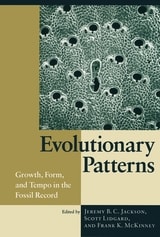
cover of Evolutionary Patterns: Growth, Form, and Tempo in the Fossil Record

Evolutionary Patterns

Growth, Form, and Tempo in the Fossil Record

Edited by Jeremy B. C. Jackson, Scott Lidgard, and Frank K. McKinney

University of Chicago Press, 2001

With all the recent advances in molecular and evolutionary biology, one could almost wonder why we need the fossil record. Molecular sequence data can resolve taxonomic relationships, experiments with fruit flies demonstrate evolution and development in real time, and field studies of Galapagos finches have provided the strongest evidence for natural selection ever measured in the wild. What, then, can fossils teach us that living organisms cannot?

Evolutionary Patterns demonstrates the rich variety of clues to evolution that can be gleaned from the fossil record. Chief among these are the major trends and anomalies in species development revealed only by "deep time," such as periodic mass extinctions and species that remain unchanged in form for millions of years. Contributors explore modes of development, the tempo of speciation and extinction, and macroevolutionary patterns and trends. The result is an important contribution to paleobiology and evolutionary biology, and a spirited defense of the fossil record as a crucial tool for understanding evolution and development.

The contributors are Ann F. Budd, Efstathia Bura, Leo W. Buss, Mike Foote, Jörn Geister, Stephen Jay Gould, Eckart Hâkansson, Jean-Georges Harmelin, Lee-Ann C. Hayek, Jeremy B. C. Jackson, Kenneth G. Johnson, Nancy Knowlton, Scott Lidgard, Frank K. McKinney, Daniel W. McShea, Ross H. Nehm, Beth Okamura, John M. Pandolfi, Paul D. Taylor, and Erik Thomsen.
[more]