Results by title
184 books match the query 'Hispanic Americans' and 8 start with e
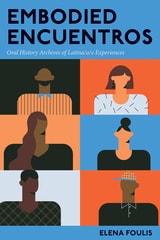
Embodied Encuentros
Oral History Archives of Latina/o/e ExperiencesElena Foulis
The Ohio State University Press, 2026
In Embodied Encuentros, Elena Foulis offers a practical guide for completing ethical fieldwork in Latina/o/e communities, emphasizing equitable and culturally sustaining practices for gathering oral histories. In her critical decolonial model, Foulis centers the agency of the people within these communities while considering the diversity and complexity of their experiences. In doing so, she advocates for the importance of building oral history archives that challenge our understandings of Latina/o/e peoples.
Foulis provides a conceptual framework for building on community knowledge that considers language, cultural practices, gender, and race. She suggests ways to involve students in ethical research; collect evolving oral histories; employ a language justice approach that acknowledges linguistic oppression, translanguaging, and bilingualism as essential aspects of this community; and consider the importance of digital archives for the creation of multimedia projects that foster community pláticas. Grounded in both theoretical approaches and a feminist ethics praxis, Embodied Encuentros ultimately outlines an important model for doing collaborative, ethical research—not only within Latina/o/e communities but within other minoritized communities as well.
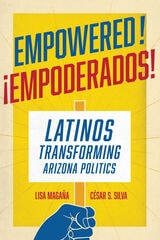
Empowered!
Latinos Transforming Arizona PoliticsLisa Magaña
University of Arizona Press, 2021
Empowered!examines Arizona’s recent political history and how it has been shaped and propelled by Latinos. It also provides a distilled reflection of U.S. politics more broadly, where the politics of exclusion and the desire for inclusion are forces of change.
Lisa Magaña and César S. Silva argue that the state of Arizona is more inclusive and progressive then it has ever been. Following in the footsteps of grassroots organizers in California and the southeastern states, Latinos in Arizona have struggled and succeeded to alter the anti-immigrant and racist policies that have been affecting Latinos in the state for many years. Draconian immigration policies have plagued Arizona’s political history. Empowered! shows innovative ways that Latinos have fought these policies.
Empowered! focuses on the legacy of Latino activism within politics. It raises important arguments about those who stand to profit financially and politically by stoking fear of immigrants and how resilient politicians and grassroots organizers have worked to counteract that fear mongering. Recognizing the long history of disenfranchisement and injustice surrounding minority communities in the United States, this book outlines the struggle to make Arizona a more just and equal place for Latinos to live.
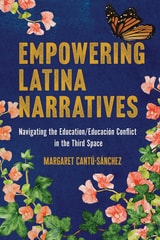
Empowering Latina Narratives
Navigating the Education/Educación Conflict in the Third SpaceMargaret Cantú-Sánchez
University of Arizona Press, 2025
In this groundbreaking book, author Margaret Cantú-Sánchez takes on the U.S. educational system. Cantú-Sánchez introduces the concept of the education/educación conflict, where Latinas navigate the clash between home and school epistemologies under Anglocentric, assimilationist pedagogies.
By analyzing literature, such as Barbara Renaud González’s Golondrina, Why Did You Leave Me?, and education testimonios from seminal works like This Bridge Called My Back and Telling to Live, Cantú-Sánchez reveals how Latina/Chicana protagonists and students negotiate this conflict through a mestizaje of epistemologies—blending elements of both home and school cultures within the third space of education.
Cantú-Sánchez utilizes an interdisciplinary approach, deploying critical race theory, Chicana third-space feminism, and other pedagogical theories like sentipensante (a sensing/thinking) pedagogy employed by education scholar Laura Rendon, among others. By providing pivotal insights and strategies, she demonstrates how educators can implement culturally relevant pedagogies in their classrooms from K–12 through higher education, fostering environments where Latina/Chicana students can thrive without forsaking their cultural identities.
Empowering Latina Narratives not only identifies the challenges Latina/Chicana students face but also offers a roadmap for overcoming them, making this book an essential resource for scholars, educators, and students committed to culturally inclusive education.
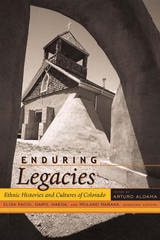
Enduring Legacies
Ethnic Histories and Cultures of ColoradoArturo J. Aldama
University Press of Colorado, 2011
Addressing the dearth of scholarship on the varied communities within Colorado-a zone in which collisions structured by forces of race, nation, class, gender, and sexuality inevitably lead to the transformation of cultures and the emergence of new identities-this volume is the first to bring together comparative scholarship on historical and contemporary issues that span groups from Chicanas and Chicanos to African Americans to Asian Americans.
This book will be relevant to students, academics, and general readers interested in Colorado history and ethnic studies.
Ethnic Cues
The Role of Shared Ethnicity in Latino Political ParticipationMatt A. Barreto
University of Michigan Press, 2010
Ethnic Labels, Latino Lives
Identity and the Politics of (Re) Presentation in the United StatesSuzanne Oboler
University of Minnesota Press, 1995
Hispanic or Latino? Mexican American or Chicano? Social labels often take on a life of their own beyond the control of those who coin them or to whom they are applied. In Ethnic Labels, Latino Lives, Suzanne Oboler explores the history and current use of the label “Hispanic” as she illustrates the complex meanings that ethnicity has acquired in shaping our lives and identities.
Exploding the myth of cultural and national homogeneity among people of Latin American descent, Oboler interviews members of diverse groups who have traditionally been labeled “Hispanic” and records the many different meanings and social values they attribute to this label. For example, a person of Mexican descent has a different historical relationship with the United States and a different cultural background than an individual of Puerto Rican or Brazilian descent. The different meanings and social values those interviewed attribute to the label "Hispanic" also correspond to their gender and social class position, including racial prejudices and values stemming from their countries of origin. Though we have witnessed in recent years the fading of the idealized image of U.S. society as a melting pot, we have also realized that the possibility of recasting it in multicultural terms is problematic. Oboler discusses the historical process of labeling groups of individuals, illustrating how labels affect the meaning of citizenship and the struggle for full social participation in the United States. Ethnic Labels, Latino Lives aims to understand the role ethnic labels play in our society and brings us closer toward actualizing a society that values cultural diversity.
Excited Delirium
Race, Police Violence, and the Invention of a DiseaseAisha M. Beliso-De Jesús
Duke University Press, 2024
Expressing New Mexico
Nuevomexicano Creativity, Ritual, and MemoryEdited by Phillip B. Gonzales
University of Arizona Press, 2007
Intertwined with the concept of expressive culture is that of “place” in relation to New Mexico itself. Place is addressed directly by four of the authors in this anthology and is present in some way and in varying degrees among the rest. Place figures prominently in Nuevomexicano “character,” contributors argue. They assert that Nuevomexicanos and Nuevomexicanas construct and develop a sense of self that is shaped by the geography and culture of the state as well as by their heritage.
Many of the articles deal with recent events or with recent reverberations of important historical events, which imbues the collection with a sense of immediacy. Rituals, traditions, community commemorations, self-concepts, and historical revisionism all play key roles. Contributors include both prominent and emerging scholars united by their interest in, and fascination with, the distinctiveness of Nuevomexicano culture.