Results by title
71 books match the query 'Historical Events' and 6 start with e
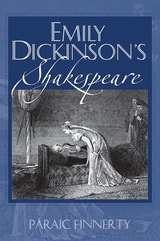
Emily Dickinson's Shakespeare
Paraic Finnerty
University of Massachusetts Press, 2006
Páraic Finnerty clarifies the essential role that Shakespeare had in Dickinson's life by locating her allusions to his writings within a nineteenth-century American context and by treating reading as a practice that is shaped, to a large extent, by culture. In the process, he throws new light on Shakespeare's multifaceted presence in Dickinson's world: in education, theater, newspapers, public lectures, reading clubs, and literary periodicals.
Through analysis of letters, journals, diaries, records, periodicals, newspapers, and marginalia, Finnerty juxtaposes Dickinson's engagement with Shakespeare with the responses of her contemporaries. Her Shakespeare emerges as an immoral dramatist and highly moral poet; a highbrow symbol of class and cultivation and a lowbrow popular entertainer; an impetus behind the emerging American theater criticism and an English author threatening American creativity; a writer culturally approved for women and yet one whose authority women often appropriated to critique their culture. Such a context allows the explication of Dickinson's specific references to Shakespeare and further conjecture about how she most likely read him.
Finnerty also examines those of Dickinson's responses to Shakespeare that deviated from what might have been expected and approved of by her culture. Imaginatively departing from the commonplace, Dickinson chose to admire three of Shakespeare's most powerful and transgressive female characters—Cleopatra, Queen Margaret, and Lady Macbeth—instead of his more worthy and virtuous heroines. More startling, although the poet found resonance for her own life in Hamlet, Romeo and Juliet, and Macbeth, she chose, in the racially charged atmosphere of nineteenth-century America, to identify with Shakespeare's most controversial character, Othello, thereby defying expectations once again.
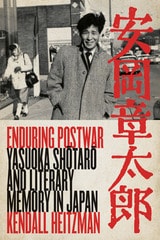
Enduring Postwar
Yasuoka Shotaro and Literary Memory in JapanKendall Heitzman
Vanderbilt University Press, 2019
For a long period, Yasuoka was at the center of the Japanese literary establishment, serving on prize committees and winning the major literary prizes of the era: the Akutagawa, the Noma, the Yomiuri, and the Kawabata. But what makes Yasuoka fascinating as a writer is the way that he consciously, deliberately resisted accepted narratives of modern Japanese history through his approach to personal and collective memory.
In Enduring Postwar, the first literary and biographical study of Yasuoka in English, Kendall Heitzman explores the element of memory in Yasuoka's work in the context of his life and evolving understanding of postwar Japan.
Enemies of All Humankind
Fictions of Legitimate ViolenceSonja Schillings
Dartmouth College Press, 2016
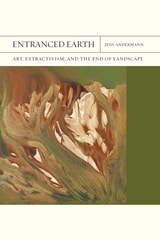
Entranced Earth
Art, Extractivism, and the End of LandscapeJens Andermann
Northwestern University Press, 2023
A sweeping analysis of the lasting effects of neocolonial extractivism in Latin American aesthetic modernity from 1920 to the present
Looking to the extractive frontier as a focal point of Latin American art, literature, music, and film, Jens Andermann asks what emerges at the other end of landscape. Art in the Global South has long represented and interrogated “insurgent nature”—organic and inorganic matter, human and nonhuman life, thrown into turmoil.
In Entranced Earth: Art, Extractivism, and the End of Landscape, Andermann traces the impact of despaisamiento—world-destroying un-landscaping—throughout the Latin American modernist archive. At the same time, he explores innovative, resilient modes of allyship forged between diverse actors through their shared experiences of destruction. From the literary regionalism of the 1930s to contemporary bio art, from modernist garden architecture to representations of migration and displacement in sound art and film, Entranced Earth tracks the crisis of landscape and environmental exhaustion beyond despair toward speculative, experimental forms of survival.
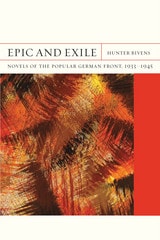
Epic and Exile
Novels of the German Popular Front, 1933-1945Hunter Bivens
Northwestern University Press, 2015
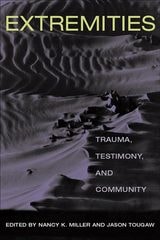
Extremities
Trauma, Testimony, and CommunityEdited by Nancy K. Miller and Jason Tougaw
University of Illinois Press, 2002
How do we come to terms with what can't be forgotten?
How do we bear witness to extreme experiences that challenge the limits of language? This remarkable volume explores the emotional, political, and aesthetic dimensions of testimonies to trauma as they translate private anguish into public space. Nancy K. Miller and Jason Tougaw have assembled a collection of essays that trace the legacy of the Holocaust and subsequent events that have shaped twentieth-century history and still haunt contemporary culture.
Extremities combines personal and scholarly approaches to a wide range of texts that bear witness to shocking and moving accounts of individual trauma: Toni Morrison's Beloved, Sylvia Plath's "Daddy" and "Lady Lazarus," Kathryn Harrison's The Kiss, Tatana Kellner's Holocaust art, Ruth Klüger's powerful memoir Still Alive, and Binjamin Wilkomirski's controversial narrative of concentration camp suffering Fragments. The book grapples with the cultural and social effects of historical crises, including the Montreal Massacre, the Warsaw Ghetto Uprising, and the medical catastrophes of HIV/AIDS and breast cancer.
Developing insights from autobiography, psychoanalysis, feminist theory and gender studies, the authors demonstrate that testimonies of troubling and taboo subjects do more than just add to the culture of confession–-they transform identities and help reimagine the boundaries of community. Extremities offers an original and timely interpretive guide to the growing field of trauma studies. The volume includes essays by Ross Chambers, Sandra M. Gilbert, Susan Gubar, Marianne Hirsch, Wayne Koestenbaum, Eve Kosofsky Sedgwick, and others.