Results by title
260 books match the query 'Human ecology' and 23 start with e

Earth Rising
David Oates
Oregon State University Press, 1989
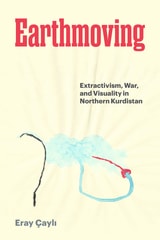
Earthmoving
Extractivism, War, and Visuality in Northern KurdistanEray Çayli
University of Texas Press, 2025
Focuses on contemporary art and media to examine the role of visuals in environmental violence and war in Northern Kurdistan.
Extractivism—exploiting the earth for resources—has long driven racial capitalism and colonialism. And yet, how does extractivism operate in a world where ecological and humanitarian sensibilities are unprecedentedly widespread? Eray Çaylı argues it does so by mobilizing these sensibilities in new ways. Extractivism is no longer only about moving the earth—displacing peoples, fossils, minerals, and waters—but also leaving those who witness this violent displacement sentimentally moved.
Earthmoving conceptualizes this duality. Derived from Çaylı’s years-long work in Northern Kurdistan, home to the world’s largest stateless nation—rendered stateless by colonial policies since the nineteenth century—Earthmoving focuses on the 2010s, a decade that began with peace talks between Turkey and the Kurdish liberation movement but ended with war. The decade saw extractivism intensify in the region and images of its harm proliferate across art and media. Together with contemporary artists, Çaylı shows that images challenge extractivism both by making its harm visible and by fostering self-reflexive and reciprocal collaboration that breaks with its valuation of the colonized and the racialized only in quantifiable and marketable terms.
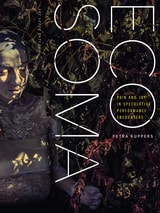
Eco Soma
Pain and Joy in Speculative Performance EncountersPetra Kuppers
University of Minnesota Press, 2022
Modeling a disability culture perspective on performance practice toward socially just futures
In Eco Soma, Petra Kuppers asks readers to be alert to their own embodied responses to art practice and to pay attention to themselves as active participants in a shared sociocultural world. Reading contemporary performance encounters and artful engagements, this book models a disability culture sensitivity to living in a shared world, oriented toward more socially just futures.
Eco soma methods mix and merge realities on the edges of lived experience and site-specific performance. Kuppers invites us to become moths, sprout gills, listen to our heart’s drum, and take starships into crip time. And fantasy is central to these engagements: feeling/sensing monsters, catastrophes, golden lines, heartbeats, injured sharks, dotted salamanders, kissing mammoths, and more. Kuppers illuminates ecopoetic disability culture perspectives, contending that disabled people and their co-conspirators make art to live in a changing world, in contact with feminist, queer, trans, racialized, and Indigenous art projects. By offering new ways to think, frame, and feel “environments,” Kuppers focuses on art-based methods of envisioning change and argues that disability can offer imaginative ways toward living well and with agency in change, unrest, and challenge.
Traditional somatics teach us how to fine-tune our introspective senses and to open up the world of our own bodies, while eco soma methods extend that attention toward the creative possibilities of the reach between self, others, and the land. Eco Soma proposes an art/life method of sensory tuning to the inside and the outside simultaneously, a method that allows for a wider opening toward ethical cohabitation with human and more-than-human others.

Ecofeminism
edited by Greta Gaard
Temple University Press, 1993
Drawing on the insights of ecology, feminism, and socialism, ecofeminism's basic premise is that the ideology that authorizes oppression based on race, class, gender, sexuality, physical abilities, and species is the same ideology that sanctions the oppression of nature. In this collection of essays, feminist scholars and activists discuss the relationships among human begins, the natural environment, and nonhuman animals. They reject the nature/culture dualism of patriarchal thought and locate animals and humans within nature. The goal of these twelve articles is to contribute to the evolving dialogue among feminists, ecofeminists, animal liberationists, deep ecologists, and social ecologists in an effort to create a sustainable lifestyle for all inhabitants of the earth.
Among the issues addressed are the conflicts between Green politics and ecofeminism, various applications of ecofeminist theory, the relationship of animal liberation to ecofeminism, harmful implications of the romanticized woman-nature association in Western culture, and cultural limitations of ecofeminism.
In the series Ethics and Action, edited by Tom Regan.
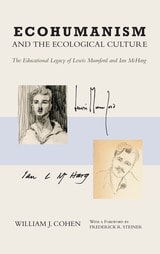
Ecohumanism and the Ecological Culture
The Educational Legacy of Lewis Mumford and Ian McHargWilliam J. Cohen
Temple University Press, 2019
Lewis Mumford, one of the most respected public intellectuals of the twentieth century, speaking at a conference on the future environments of North America, said, “In order to secure human survival we must transition from a technological culture to an ecological culture.” In Ecohumanism and the Ecological Culture, William Cohen shows how Mumford’s conception of an educational philosophy was enacted by Mumford’s mentee, Ian McHarg, the renowned landscape architect and regional planner at the University of Pennsylvania. McHarg advanced a new way to achieve an ecological culture―through an educational curriculum based on fusing ecohumanism to the planning and design disciplines.
Cohen explores Mumford’s important vision of ecohumanism—a synthesis of natural systems ecology with the myriad dimensions of human systems, or human ecology―and how McHarg actually formulated and made that vision happen. He considers the emergence of alternative energy systems and new approaches to planning and community development to achieve these goals.
The ecohumanism graduate curriculum should become the basis to train the next generation of planners and designers to lead us into the ecological culture, thereby securing the educational legacy of both Lewis Mumford and Ian McHarg.
Ecologies of a Storied Planet in the Anthropocene
Serpil Oppermann
West Virginia University Press, 2023
Ecologies of a Storied Planet in the Anthropocene is a tour de force. With transdisciplinarity and theoretical lucidity, it rethinks the Anthropocene from a material ecocritical perspective, envisioning innovative modes of knowledge for deeper understandings of Anthropocene ecologies. Focusing on nonhuman agencies, Serpil Oppermann shows in fascinating detail how to better imagine an ecological future on our storied planet that has suffered enormously from an anthropocentric mindset.
Ecology and the Sacred
Engaging the Anthropology of Roy A. RappaportEllen Messer and Michael Lambek, Editors
University of Michigan Press, 2001
At a time when anthropology is fractured by debates over whether it is a science or a humanistic tradition, theoretical or applied, this festschrift testifies that a unified anthropology is both possible and necessary for the understanding of humanity and global transformations. The volume will be of interest not only to anthropologists, but to geographers, sociologists, scholars in science-studies, historians, and experts and practitioners in religious studies, as well.
Ellen Messer is Visiting Associate Professor, Tufts University. Michael Lambek is Professor of Anthropology, University of Toronto.
Ecology of Pastoralism
P. Nick Kardulias
University Press of Colorado, 2015
In The Ecology of Pastoralism, diverse contributions from archaeologists and ethnographers address pastoralism’s significant impact on humanity’s basic subsistence and survival, focusing on the network of social, political, and religious institutions existing within various societies dependent on animal husbandry.
Pastoral peoples, both past and present, have organized their relationships with certain animals to maximize their ability to survive and adapt to a wide range of conditions over time. Contributors show that despite differences in landscape, environment, and administrative and political structures, these societies share a major characteristic—high flexibility. Based partially on the adaptability of various domestic animals to difficult environments and partially on the ability of people to establish networks allowing them to accommodate political, social, and economic needs, this flexibility is key to the survival of complex pastoral systems and serves as the connection among the varied cultures in the volume.
In The Ecology of Pastoralism, a variety of case studies from a broad geographic sampling uses archaeological and contemporary data and offers a new perspective on the study of pastoralism, making this volume a valuable contribution to current research in the area.
Ecospeak
Rhetoric and Environmental Politics in AmericaM. Jimmie Killingsworth and Jacqueline S. Palmer
Southern Illinois University Press, 1992
In this book, M. Jimmie Killingsworth and Jacqueline S. Palmer have a twofold purpose: to analyze the patterns of rhetoric used in written discourse about environmental politics and to make a practical contribution to the art of rhetorical criticism through the study of rhetoric in use.
The language, professional objectivity, and research programs of scientists insulate these best-informed citizens in enclaves of specialization, limiting access to crucial information and hindering effective reformative action. Science, the authors stress, is not merely a database to rely upon but a view of the world that must be broadened in order to affect social morality. Science-based activism must arise to ensure the care and future of the environment.
Killingsworth and Palmer argue that for grassroots activism to be tied to this globally conscious philosophy, a rhetoric of sustainability must be cultivated.
Ecoviews Too
Ecology for All SeasonsWhit Gibbons and Anne R. Gibbons
University of Alabama Press, 2017
Discover the wonders of ecology through the changing seasons of the natural world.
Whit Gibbons and Anne R. Gibbons’s Ecoviews Too: Ecology for All Seasons is based on the popular weekly column “Ecoviews,” published by numerous newspapers for more than thirty years. A follow-up to Ecoviews: Snakes, Snails and Environmental Tales, this lively and entertaining book provides a fascinating and thought-provoking look at the ecology of animals, plants, and their habitats, and promotes awareness of pressing environmental issues.
Because nature, in all its myriad and amazing manifestations, can be enjoyed all year round, this collection is conveniently divided into four sections paralleling the seasons and tracking the adaptations and responses of wildlife to the relentless changes that occur at any location over time. The ecological vignettes focus on seasonal happenings in the cycle of life. The authors not only draw parallels between the natural world and human activities but also highlight unique behaviors of various plant and animal species. They often use humor to get across their message regarding the need to protect our native species and the habitats they depend on for survival.
An intriguing and captivating publication, Ecoviews Too is comprised of fifty informative essays that address ecological topics such as camouflage and mimicry, hibernation and estivation, the human need to encounter scary animals, the mysteries of plant dormancy in winter, the comeback of the wild turkey coinciding with the decline of bobwhites, the chemistry behind the color change in fall leaves, and the top ten environmental problems facing the world today. Educating, entertaining, and delighting a general audience, especially those with an interest in nature, Ecoviews Too provides a useful resource for students and scientists alike.

Ecoviews
Snakes, Snails, and Environmental TalesWhit Gibbons and Anne R. Gibbons
University of Alabama Press, 1998
Discover the wonder of nature through stories that connect science, wildlife, and everyday life.
This lively and entertaining book provides a fascinating and thought-provoking look at the ecology of animals, plants, and their habitats and promotes awareness of pressing environmental issues. The eight informative chapters deliver effective environmental messages and supply compelling insight into the natural world and the ecologists who investigate its many mysteries.
From a concerned ecological stance, the authors show that human relationship with other organisms and the environment is always complex and can be exhilarating, inspiring, humorous, and irritating, depending on perspectives and circumstances. Writing truly to inform and delight, they give a captivating variety of examples from the natural world in hopes of making readers of all ages more compassionate, more tolerant, and more sensitive to other living organisms and their interrelationships. The book celebrates the intrinsic worth of all plants and animals in order to motivate people in a unified effort to preserve the Earth's rich array of life forms. The preservation of the integrity of our planet's biodiversity is, the authors illustrate, critical to our own survival.
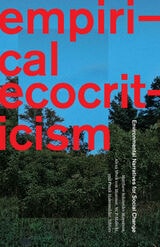
Empirical Ecocriticism
Environmental Narratives for Social ChangeMatthew Schneider-Mayerson
University of Minnesota Press, 2023
Finalist for the 2025 ASLE Ecocritical Book Award
A groundbreaking book that combines the environmental humanities and social sciences to study the impact of environmental stories
There is a growing consensus that environmental narratives can help catalyze the social change necessary to address today’s environmental crises; however, surprisingly little is known about their impact and effectiveness. In Empirical Ecocriticism, Matthew Schneider-Mayerson, Alexa Weik von Mossner, W. P. Malecki, and Frank Hakemulder combine an environmental humanities perspective with empirical methods derived from the social sciences to study the influence of environmental stories on our affects, attitudes, and actions.
Empirical Ecocriticism provides an approachable introduction to this growing field’s main methods and demonstrates their potential through case studies on topics ranging from the impact of climate fiction on readers’ willingness to engage in activism to the political empowerment that results from participating in environmental theater. Part manifesto, part toolkit, part proof of concept, and part dialogue, this introductory volume is divided into three sections: methods, case studies, and reflections. International in scope, it points toward a novel and fruitful synthesis of the environmental humanities and social sciences.
Contributors: Matthew Ballew, Yale U; Helena Bilandzic, U of Augsburg; Rebecca Dirksen, Indiana U; Greg Garrard, UBC Okanagan; Matthew H. Goldberg, Yale U; Abel Gustafson, U of Cincinnati; David I. Hanauer, Indiana U of Pennsylvania; Ursula K. Heise, UCLA; Jeremy Jimenez, SUNY Cortland; Anthony Leiserowitz, Yale U; David M. Markowitz, U of Oregon; Marcus Mayorga; Jessica Gall Myrick, Penn State U; Mary Beth Oliver, Penn State U; Yan Pang, Point Park U; Mark Pedelty, U of Minnesota; Seth A. Rosenthal, Yale U; Elja Roy, U of Memphis; Nicolai Skiveren, Aarhus U; Paul Slovic, U of Oregon; Scott Slovic, U of Idaho; Nicolette Sopcak, U of Alberta; Paul Sopcak, MacEwan U; Sara Warner, Cornell U.
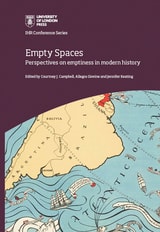
Empty Spaces
perspectives on emptiness in modern historyEdited by Courtney J. Campbell, Allegra Giovine, and Jennifer Keating
University of London Press, 2019

Encountering the Past in Nature
Essays in Environmental HistoryTimo Myllyntaus
Ohio University Press, 2000
The essays in Encountering the Past in Nature provide various approaches to the new discipline. Experts with diverse educational backgrounds tackle important issues in environmental history, ranging from the intellectual formation of environmental concepts to case studies of forest history and animal extinction. Most essays in the collection focus on the issue of wilderness and the various uses of forest resources. Encountering the Past in Nature also offers introductory essays on the historiography and methodology of this field of historical study.
Encountering the Past in Nature is a useful addition to the introductory texts currently available in the United States.
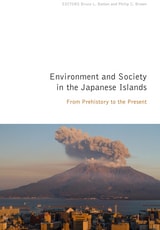
Environment and Society in the Japanese Islands
From Prehistory to the PresentBruce L. Batten
Oregon State University Press, 2015
Environment and Society in the Japanese Islands attempts to answer these questions through a series of case studies by leading Japanese and Western historians, geographers, archaeologists, and climatologists. These essays, on diverse topics from all periods of Japanese history and prehistory, are unified by their focus on the key concepts of “resilience” and “risk mitigation.” Taken as a whole, they place Japan’s experience in global context and call into question the commonly presumed division between pre-modern and modern environmental history.
Primarily intended for scholars and students in fields related to Japan or environmental history, these accessibly-written essays will be valuable to anyone wishing to learn about the historical roots of today’s environmental issues or the complex relationship between human society and the natural environment.

Environmental Change and Human Adaptation in the Ancient American Southwest
Doyel and Dean
University of Utah Press, 2006
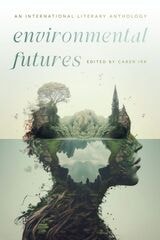
Environmental Futures
An International Literary AnthologyEdited by Caren Irr, et al.
Brandeis University Press, 2024
Featuring short stories, poetry, drama, and creative nonfiction from around the world, this anthology showcases contemporary literature to envision the future of the environment. While environmental literature written in English has been dominated by English and American men who make solo explorations into an unspoiled natural world, Environmental Futures emphasizes local and indigenous writers contending with global landscapes that are far from pristine. Their work opens up decolonial perspectives from Anglophone Africa, South Asia, India, China, South America, the peripheries of Europe, and BIPoC North America. Introducing many writers who will be unfamiliar to English-speaking readers, this collection explores resistance to the oil economy, the impact of storms and natural disasters, extinction, and relations between humans and animals, among other themes.
The pieces are organized by geographical area in five sections: Africa, Asia, Europe, Latin America, and North America. Expert scholars and translators—Kurt Cavender, Roberto Forns-Broggi, Cajetan Iheka, Upamanyu (Pablo) Mukherjee, Irina Sadovina, and Shaobo Xie—selected the works and provided critical introductions for each section.
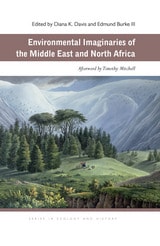
Environmental Imaginaries of the Middle East and North Africa
Diana K. Davis
Ohio University Press, 2011
The landscapes of the Middle East have captured our imaginations throughout history. Images of endless golden dunes, camel caravans, isolated desert oases, and rivers lined with palm trees have often framed written and visual representations of the region. Embedded in these portrayals is the common belief that the environment, in most places, has been deforested and desertified by centuries of misuse. It is precisely such orientalist environmental imaginaries, increasingly undermined by contemporary ecological data, that the eleven authors in this volume question. This is the first volume to critically examine culturally constructed views of the environmental history of the Middle East and suggest that they have often benefitted elites at the expense of the ecologies and the peoples of the region. The contributors expose many of the questionable policies and practices born of these environmental imaginaries and related histories that have been utilized in the region since the colonial period. They further reveal how power, in the form of development programs, notions of nationalism, and hydrological maps, for instance, relates to environmental knowledge production.
Contributors: Samer Alatout, Edmund Burke III, Shaul Cohen, Diana K. Davis, Jennifer L. Derr, Leila M. Harris, Alan Mikhail, Timothy Mitchell, Priya Satia, Jeannie Sowers, and George R. Trumbull IV
Ethnic Diversity and the Control of Natural Resources in Southeast Asia
A. Terry Rambo, Kathleen Gillogly, and Karl L. Hutterrer, Editors
University of Michigan Press, 1988
Ethnoecology
Situated Knowledge/Located LivesVirginia D. Nazarea
University of Arizona Press, 1999
1. Introduction. A View from a Point: Ethnoecology as Situated Knowledge, Virginia D. Nazarea
2. The Value of Subsistence for the Future of the World, Eugene S. Hunn
3. Practical and Religious Meanings of the Navajo Hogan, Lillie Lane
4. The Agronomy of Memory and the Memory of Agronomy: Ritual Conservation of Archaic Cultigens in Contemporary Farming Systems, Michael R. Dove
5. Ethnoecology Serving the Community: A Case Study from Zuni Pueblo, New Mexico, Richard I. Ford
6. Lenses and Latitudes in Landscapes and Lifescapes, Virginia D. Nazarea
7. Cultural Landscapes and Biodiversity: The Ethnoecology of an Upper R¡o Grande Watershed Commons, Devon G. Peña
8. Conserving Folk Crop Varieties: Different Agricultures, Different Goals, Daniela Soleri and Steven E. Smith
9. Plant Constituents and the Nutrition and Health of Indigenous Peoples, Timothy Johns
10. Sustainable Production and Harvest of Medicinal and Aromatic Herbs in the Sierras de C¢rdoba Region, Argentina, Marta Lagrotteria and James M. Affolter
11. Managing the Maya Commons: The Value of Local Knowledge, Scott Atran
12. Safeguarding Traditional Resource Rights of Indigenous Peoples, Darrell A. Posey
13. A Practical Primer on Intellectual Property Rights in a Contemporary Ethnoecological Context, David J. Stephenson, Jr.
14. Toward Compensation: Returning Benefits from Ethnobotanical Drug Discovery to Native Peoples, Katy Moran
15. Am I My Brother's Keeper?, Christine S. Kabuye
16. Epilogue. Quo Vadis? The Promise of Ethnoecology, Robert E. Rhoades and Jack Harlan
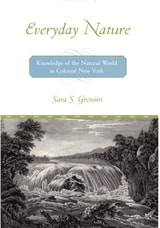
Everyday Nature
Knowledge of the Natural World in Colonial New YorkGronim, Sara S
Rutgers University Press, 2007
In the modern world, the public looks to scientists and scholars for their expertise on issues ranging from the effectiveness of vaccines to the causes of natural disasters. But for early Americans, whose relationship to nature was more intimate and perilous than our own, personal experience, political allegiances, and faith in God took precedence over the experiments of the learned.
In Everyday Nature, Sara Gronim shows how scientific advances were received in the early modern world, from the time Europeans settled in America until just before the American Revolution. Settlers approached a wide range of innovations, such as smallpox inoculation, maps and surveys, Copernican cosmology, and Ben Franklin’s experiments with electricity, with great skepticism. New Yorkers in particular were distrustful because of the chronic political and religious factionalism in the colony. Those discoveries that could be easily reconciled with existing beliefs about healing the sick, agricultural practices, and the revolution of the planets were more readily embraced.
A fascinating portrait of colonial life, this book traces a series of innovations that were disseminated throughout the Atlantic world during the Enlightenment, and shows how colonial New Yorkers integrated new knowledge into their lives.
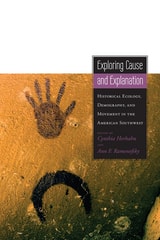
Exploring Cause and Explanation
Historical Ecology, Demography, and Movement in the American SouthwestCynthia L. Herhahn
University Press of Colorado, 2016
Each thematic section is introduced by an established author who sets the framework for the chapters that follow. Some contributors adopt regional perspectives in which both classical regions (the central San Juan or lower Chama basins) and peripheral zones (the Alamosa basin or the upper San Juan) are represented. Chapters are also broad temporally, ranging from the Younger Dryas Climatic interval (the Clovis-Folsom transition) to the Protohistoric Pueblo world and the eighteenth-century ethnogenesis of a unique Hispanic identity in northern New Mexico. Others consider methodological issues, including the burden of chronic health afflictions at the level of the community and advances in estimating absolute population size. Whether emphasizing time, space, or methodology, the authors address the processes, steps, and interactions that affect current understanding of change or stability of cultural traditions.
Exploring Cause and Explanation considers themes of perennial interest but demonstrates that archaeological knowledge in the Southwest continues to expand in directions that could not have been predicted fifty years ago.
Contributors: Kirk C. Anderson, Jesse A. M. Ballenger, Jeffery Clark, J. Andrew Darling, B. Sunday Eiselt, Mark D. Elson, Mostafa Fayek, Jeffrey R. Ferguson, Severin Fowles, Cynthia Herhahn, Vance T. Holliday, Sharon Hull, Deborah L. Huntley, Emily Lena Jones, Kathryn Kamp, Jeremy Kulisheck, Karl W. Laumbach, Toni S. Laumbach, Stephen H. Lekson, Virginia T. McLemore, Frances Joan Mathien, Michael H. Ort, Scott G. Ortman, Mary Ownby, Mary M. Prasciunas, Ann F. Ramenofsky, Erik Simpson, Ann L. W. Stodder, Ronald H. Towner
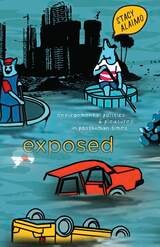
Exposed
Environmental Politics and Pleasures in Posthuman TimesStacy Alaimo
University of Minnesota Press, 2016
Opening with the statement “The anthropocene is no time to set things straight,” Stacy Alaimo puts forth potent arguments for a material feminist posthumanism in the chapters that follow.
From trans-species art and queer animals to naked protesting and scientific accounts of fishy humans, Exposed argues for feminist posthumanism immersed in strange agencies and scale-shifting ethics. Including such divergent topics as landscape art, ocean ecologies, and plastic activism, Alaimo explores our environmental predicaments to better understand feminist occupations of transcorporeal subjectivity.
She puts scientists, activists, artists, writers, and theorists in conversation, revealing that the state of the planet in the twenty-first century has radically transformed ethics, politics, and what it means to be human. Ultimately, Exposed calls for an environmental stance in which, rather than operating from an externalized perspective, we think, feel, and act as the very stuff of the world.