69 books match the query 'Images' and 4 start with e
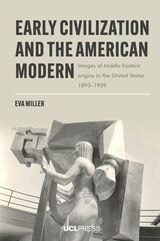
cover of Early Civilization and the American Modern: Images of Middle Eastern Origins in the United States, 1893–1939

Early Civilization and the American Modern

Images of Middle Eastern Origins in the United States, 1893–1939

Eva Miller

University College London, 2024

Articulates the significance of early Middle Eastern civilization in the construction of American modernity.

Early Civilization and the American Modern explores how the teleological narrative that civilization and its benefits—science, law, writing, art, and architecture—began in Egypt and Mesopotamia addressed anxieties about the United States’ unique role in the long march of progress. To tackle this phenomenon, author Eva Miller highlights central collaborators of the creation of progressive visual narratives in key institutions, world’s fairs, and popular media such as Orientalist James Henry Breasted, astronomer George Ellery Hale, architect Bertram Grosvenor Goodhue, and decorative artists Lee Lawrie and Hildreth Meière.
[more]
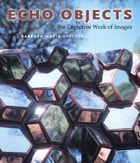
cover of Echo Objects: The Cognitive Work of Images

Echo Objects

The Cognitive Work of Images

Barbara Maria Stafford

University of Chicago Press, 2007

Barbara Maria Stafford is at the forefront of a growing movement that calls for the humanities to confront the brain’s material realities. In Echo Objects, she argues that humanists should seize upon the exciting neuroscientific discoveries that are illuminating the underpinnings of cultural objects. In turn, she contends, brain scientists could enrich their investigations of mental activity by incorporating phenomenological considerations—particularly the intricate ways that images focus intentional behavior and allow us to feel thought.
           
As a result, Echo Objects is a stunningly broad exploration of how complex images—or patterns that compress space and time—make visible the invisible ordering of human consciousness. Stafford demonstrates, for example, how the compound formats of emblems, symbols, collage, and electronic media reveal the brain’s grappling to construct mental objects that are redoubled by prior associations. In contrast, she shows that findings in evolutionary biology and the neurosciences are providing profound opportunities for understanding aesthetic conundrums such as the human urge to imitate and the role of narrative and nonnarrative representation.
           
 Ultimately, she makes an impassioned plea for a common purpose—for the acknowledgement that, at the most basic level, these separate projects belong to a single investigation.
 
“Heroic. . . . The larger message of Stafford’s intense, propulsive prose is unassailable. If we are to get much further in the great puzzle of ‘binding’—how the perception of an image, the will to act on intention, or the forging of consciousness is assembled from the tens of thousands of neurons firing at any one moment in time—then there needs to be action on all fronts.”—Science
[more]
cover of Eternally Eve: Images of Eve in the Hebrew Bible, Midrash, and Modern Jewish Poetry

Eternally Eve

Images of Eve in the Hebrew Bible, Midrash, and Modern Jewish Poetry

Anne Lapidus Lerner

University Press of New England, 2007
The biblical accounts of Eve's life are central to Western culture, occupying a privileged place in our literature and art, culture, and society. For both Judaism and Christianity, these stories involving Eve have for centuries been entangled with the religious and social construction of gender. The ambiguous biblical record of her life from the two versions of her creation, through her encounter with the forbidden fruit, to her expulsion from Eden, and followed by the tantalizing glimpses of her life in the real world has served through the ages as a mirror of commonly held views about women. For Jewish readers, Eve's role as metonym -- signifying womanhood, or Jewish womanhood, as a whole -- is of prime importance. By tracing the imagined character of Eve from ancient times to the present, Eternally Eve opens a window on the transmission and persistence of cultural and social values. Eternally Eve takes as its subject the many ways these stories can be read, interpreting the biblical narratives as well as their iteration by rabbinic midrashists and modern poets. Anne Lapidus Lerner argues that we must set aside, or at least rethink, a series of assumptions about Eve that have been dominant in Jewish thought for centuries and instead return to the original texts to rediscover meanings implicit in them. Using modern poetry about Eve as a touchstone for reinterpreting older texts, Lerner discovers that Genesis is often more open to contemporary values than are later rabbinic texts. Linking sacred texts to works of the classical and modern imagination, Lerner restores to her sources meanings suppressed or neglected over many years and demonstrates their power to speak today.
[more]
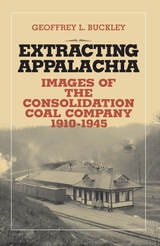
cover of Extracting Appalachia: Images of the Consolidation Coal Company, 1910–1945

Extracting Appalachia

Images of the Consolidation Coal Company, 1910–1945

Geoffrey L. Buckley

Ohio University Press, 2004

As a function of its corporate duties, the Consolidation Coal Company, one of the largest coal-mining operations in the United States during the first half of the twentieth century, had photographers take hundreds of pictures of nearly every facet of its operations. Whether for publicity images, safety procedures, or archival information, these photographs create a record that goes far beyond the purpose the company intended.

In Extracting Appalachia, geographer Geoffrey L. Buckley examines the company’s photograph collection housed at the Smithsonian Institution’s National Museum of American History. Included in the collection are images of mine openings, mining equipment, and mine accidents, as well as scenes of the company towns, including schools, churches, recreational facilities, holiday celebrations, and company stores.

Although the photographs in the collection provide us with valuable insights, they tell only part of the story. Using company records, state and federal government documents, contemporary newspaper accounts, and other archival materials, Professor Buckley shows that these photographs reveal much more than meets the eye.

Extracting Appalachia places these historic mining images in their social, cultural, and historical context, uncovering the true value and meaning of this rare documentary record.

[more]