Results by title
65 books match the query 'Imperialism in literature' and 7 start with e
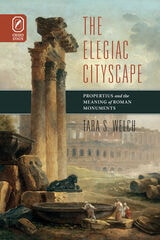
ELEGIAC CITYSCAPE
Propertius and the Meaning of Roman MonumentsTara S. Welch
The Ohio State University Press, 2005
The Elegiac Cityscape explores Propertius’ Rome and the various ways his poetry about the city illuminates the dynamic relationship between one individual and his environment. Combining the approaches of archaeology and literary criticism, Tara S. Welch examines how Propertius’ poems on Roman places scrutinize the monumentalization of various ideological positions in Rome, as they poke and prod Rome’s monuments to see what further meanings they might admit. The result is a poetic book rife with different perspectives on the eternal city, perspectives that often call into question any sleepy or complacent adherence to Rome’s traditional values.
Eastern Figures
Orient and Empire in British WritingDouglas Kerr
Hong Kong University Press, 2008
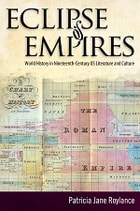
Eclipse of Empires
World History in Nineteenth-Century U.S. Literature and CulturePatricia Jane Roylance
University of Alabama Press, 2013
Patricia Jane Roylance’s central claim in Eclipse of Empires is that historical episodes of imperial eclipse, for example Incan Peru yielding to Spain or the Ojibway to the French, heightened the concerns of many American writers about specific intranational social problems plaguing the nation at the time—race, class, gender, religion, economics. Given the eventual dissolution of great civilizations previously plagued by these very same problems, many writers, unlike those who confidently emphasized U.S. exceptionalism, exhibited both an anxiety about the stability of American society and a consistent practice of self-scrutiny in identifying the national defects that they felt could precipitate America’s decline.
Roylance studies, among other texts, James Fenimore Cooper’s The Water-Witch (1830) and The Bravo (1831), which address the eclipse of Venice by New York City as a maritime power in the eighteenth century; William Hickling Prescott’s Conquest of Peru (1847), which responds to widespread anxiety about communist and abolitionist threats to the U.S. system of personal property by depicting Incan culture as a protocommunist society doomed to failure; and Henry Wadsworth Longfellow’s The Song of Hiawatha (1855), which resists the total eclipse of Ojibwa culture by incorporating Ojibway terms and stories into his poem and by depicting the land as permanently marked by their occupation.
Empire Islands
Castaways, Cannibals, and Fantasies of ConquestRebecca Weaver-Hightower
University of Minnesota Press, 2007
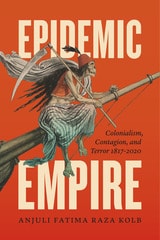
Epidemic Empire
Colonialism, Contagion, and Terror, 1817–2020Anjuli Fatima Raza Kolb
University of Chicago Press, 2021
Terrorism is a cancer, an infection, an epidemic, a plague. For more than a century, this metaphor has figured insurgent violence as contagion in order to contain its political energies. In Epidemic Empire, Anjuli Fatima Raza Kolb shows that this trope began in responses to the Indian Mutiny of 1857 and tracks its tenacious hold through 9/11 and beyond. The result is the first book-length study to approach the global War on Terror from a postcolonial literary perspective.
Raza Kolb assembles a diverse archive from colonial India, imperial Britain, French and independent Algeria, the postcolonial Islamic diaspora, and the neoimperial United States. Anchoring her book are studies of four major writers in the colonial-postcolonial canon: Rudyard Kipling, Bram Stoker, Albert Camus, and Salman Rushdie. Across these sources, she reveals the tendency to imagine anticolonial rebellion, and Muslim insurgency specifically, as a virulent form of social contagion. Exposing the long history of this broken but persistent narrative, Epidemic Empire is a major contribution to the rhetorical history of our present moment.
Exceptional State
Contemporary U.S. Culture and the New ImperialismAshley Dawson and Malini Johar Schueller, eds.
Duke University Press, 2007
The contributors address a range of topics, paying particular attention to the dynamics of gender and race. Their essays include a surprising reading of the ostensibly liberal movies Wag the Dog and Three Kings, an exploration of the rhetoric surrounding the plan to remake the military into a high-tech force less dependent on human bodies, a look at the significance of the popular Left Behind series of novels, and an interpretation of the Abu Ghraib prison photos. They scrutinize the national narrative created to justify the US invasions of Afghanistan and Iraq, the ways that women in those countries have responded to the invasions, the contradictions underlying calls for US humanitarian interventions, and the role of Africa in the US imperial imagination. The volume concludes on a hopeful note, with a look at an emerging anti-imperialist public sphere.
Contributors. Omar Dahbour, Ashley Dawson, Cynthia Enloe, Melani McAlister, Christian Parenti, Donald E. Pease, John Carlos Rowe, Malini Johar Schueller, Harilaos Stecopoulos
Experiments with Empire
Anthropology and Fiction in the French AtlanticJustin Izzo
Duke University Press, 2019