Results by title
220 books match the query 'Individual Artists' and 7 start with e
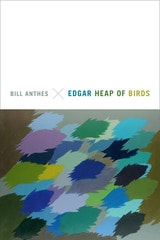
Edgar Heap of Birds
Bill Anthes
Duke University Press, 2015
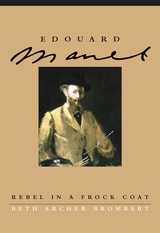
Edouard Manet
Rebel in a Frock CoatBeth Archer Brombert
University of Chicago Press, 1997
"One of the pleasures of reading her is to follow the way she weaves life, art and history into a smooth tapestry. The art emerges from the life, and in the broadest possible context: in terms of its creator's life and concerns and in terns of its historical and cultural setting."—Eric Gibson, The Washington Times Books
"Richly detailed and informative . . . [this biography] exposes the character of an artist who maintained a sharply defined duality between his public and private personas."—Edward J. Sozanski, Philadelphia Inquirer
"Brombert's reading of important canvasses . . . shine, as do her accounts of the changing social and political environment in which Manet worked. . . . Well researched, complexly conceived, and clearly written."—Kirkus Reviews
"Brilliant . . . [this book] grants us a far deeper understanding of why [Manet's] paintings outraged so many of his peers, and why these same masterpieces resonate so richly in our psyches a century later."—Booklist, starred review
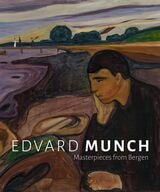
Edvard Munch
Masterpieces from BergenEdited by Barnaby Wright
Paul Holberton Publishing, 2022
This important publication accompanies a major exhibition at the Courtauld Gallery, London, of paintings by Edvard Munch (1863–1944). The catalog and accompanying exhibition showcase eighteen major works from the collection of KODE Art Museums in Bergen, one of the most important collections of Munch paintings in the world. The works span the most significant part of Munch’s artistic development and have never before been shown as a group outside of Scandinavia.
This book explores this group of remarkable works in detail and considers the important role of its collector, Rasmus Meyer. The exhibition and publication include seminal paintings from Munch’s early “realist” phase of the 1880s, such as Morning and Summer Night, pivotal works that show the artist’s move towards the expressive and psychologically charged work for which he became famous. These paintings launched Munch’s career and set the stage for his renowned, highly expressive paintings of the 1890s. Such works are a major feature of the exhibition that includes remarkable canvases from Munch’s famous Frieze of Life series, which address profound themes of human existence, from love to death. Munch’s powerful use of color and form marked him as one of the most radical painters at the turn of the twentieth century.
This fully illustrated publication includes a catalog of the works, with contributions by leading experts in their field from KODE and the Courtauld.
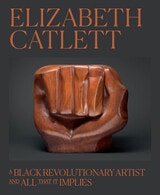
Elizabeth Catlett
A Black Revolutionary Artist and All That It ImpliesEdited by Dalila Scruggs
University of Chicago Press, 2024
Accomplished printmaker and sculptor, avowed feminist, and lifelong activist Elizabeth Catlett (1915–2012) built a remarkable career around intersecting passions for formal rigor and social justice. This book, accompanying a major traveling retrospective, offers a revelatory look at the artist and her nearly century-long life, highlighting overlooked works alongside iconic masterpieces.
Catlett’s activism and artistic expression were deeply connected, and she protested the injustices of her time throughout her life. Her work in printmaking and sculpture draws on organic abstraction, the modernism of the United States and Mexico, and African art to center the experiences of Black and Mexican women. Catlett attended Howard University, studied with the painter Grant Wood, joined the Harlem artistic community, and worked with a leftist graphics workshop in Mexico, where she lived in exile after the US accused her of communism and barred her re-entry into her home country.
The book’s essays address a range of topics, including Catlett’s early development as an artist-activist, the impact of political exile on her work, her pedagogical legacy, her achievement as a social realist printmaker, her work with the arts community of Chicago’s South Side, and the diverse influences that shaped her practice.
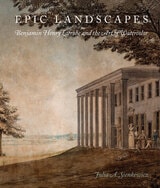
Epic Landscapes
Benjamin Henry Latrobe and the Art of WatercolorJulia Sienkewicz
University of Delaware Press, 2011
Published by University of Delaware Press. Distributed worldwide by Rutgers University Press.

Essay Film and Narrative Techniques
Screen-writing Non-fictionEdited by Romana Turina and Kiki Tianqi Yu
Intellect Books, 2025
Uniting filmmakers and practice-led researchers, Essay Film and Narrative Techniques: Screen-writing Non-fiction explores the evolving language of essay film through various methods of narration, including production diaries, self-critiques, interviews, and theoretical analyses. Including canonical works and unconventional approaches, this collection emphasizes how essay films blur the lines between personal expression and collective storytelling.
In this volume, renowned scholars and practitioners unpack the conceptual and contextual dimensions of screenwriting for essay film, considering its role as both a cinematic and research tool. Whether reflecting on the personal camera or hybrid creative methodologies, the essays provide invaluable insights into how essay films are written and realized.
With its interdisciplinary scope and innovative approach, this work is a beneficial resource for academics, filmmakers, and students of documentary and experimental cinema, offering a nuanced understanding of how screenwriting shapes nonfiction storytelling.
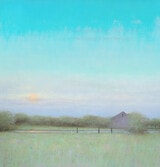
Every Hour of the Light
The Paintings of Mary Sipp GreenMary Sipp Green
The Artist Book Foundation, 2014
American landscape painter Mary Sipp Green, based in the bucolic Berkshire Hills of Massachusetts, has a superlative ability to engage the viewer in the emotive atmosphere of her landscapes and seascapes. The intensely saturated colors in her works evoke an immediate sense of place and a unique perspective on an intimate tableau. Sipp Green achieves an ethereal, nuanced quality in her paintings that imparts a refined and inimitable serenity. In Every Hour of the Light: The Paintings of mary Sipp Green, many of the subjects she paints—salt marshes, barns, meadows, rivers, and the occasional cityscape—are captured in the exquisite twilight of early evenings or a luminescent sunrise. The effect is dreamy yet grounded and familiar.
Sipp Green states, "While my preferred medium has always been oil on linen, my methods, techniques, and aesthetic aims have all undergone significant transformations since I first began. I learned my craft in the studio, painting still lifes and portraits, as well as landscapes drawn directly from nature. Over time, I became increasingly engaged with more abstract and spiritual aspects of the landscape form and I began to pursue a less representational, more expressive style." When describing her "diffuse quality of color," she explains, "I use many layers of paint, allowing each to dry before the next is applied. Along the way, the surface of the paint is often refigured in unpredictable ways, and there is much that has to be scraped, sanded, destroyed and reapplied before the essence of a place, its mood and atmosphere, finally emerges onto the canvas."