Results by title
65 books match the query 'Intercultural communication' and 2 start with e

Emergent Forms of Life and the Anthropological Voice
Michael M. J. Fischer
Duke University Press, 2003
A vigorous advocate of the anthropological voice and method, Fischer emphasizes the ethical dimension of cultural anthropology. Ethnography, he suggests, is uniquely situated to gather and convey observations fundamental to the creation of new social institutions for an evolving civil society. In Emergent Forms of Life and the Anthropological Voice Fischer considers a dazzling array of subjects—among them Iranian and Polish cinema, cyberspace, autobiographical and fictional narrative, and genomic biotechnologies—and, in the process, demonstrates a cultural anthropology for a highly networked world. He lays the groundwork for a renewed and powerful twenty-first-century anthropology characterized by a continued insistence on empirical fieldwork, engagements with other disciplines, and dialogue with interlocutors around the globe.
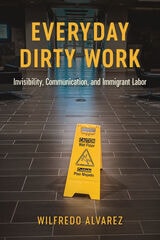
Everyday Dirty Work
Invisibility, Communication, and Immigrant LaborWilfredo Alvarez
The Ohio State University Press, 2022
Winner, 2023 NCA Ethnography Division Best Book Award
Wilfredo Alvarez’s Everyday Dirty Work: Invisibility, Communication, and Immigrant Labor is an exploration into co-cultural communication practices within the workplace. Specifically, Alvarez investigates how Latin American immigrant janitors communicate from their marginalized standpoints in a predominantly White academic organization. He examines how custodial workers perceive, interpret, and thematize routine messages regarding race, ethnicity, social class, immigrant status, and occupation, and how those messages and overall communicative experiences affect both their work and personal lives.
A Latin American immigrant himself, Alvarez relates his own experiences to those of the research participants. His positionality informs and enhances his research as he demonstrates how everyday interpersonal encounters create discursive spaces that welcome or disqualify people based on symbolic and social capital. Alvarez offers valuable insights into the lived experiences of critical––but often undervalued and invisible––organizational members. Through theoretical insights and research data, he provides practical recommendations for organizational leaders to improve how they can relate to and support all stakeholders.