Results by title
105 books match the query 'Iran' and 6 start with e
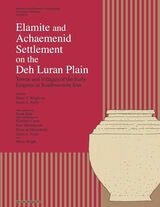
Elamite and Achaemenid Settlement on the Deh Luran Plain
Towns and Villages of the Early Empires in Southwestern IranEdited by Henry T. Wright and James A. Neely
University of Michigan Press, 2010
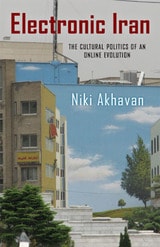
Electronic Iran
The Cultural Politics of an Online EvolutionAkhavan, Niki
Rutgers University Press, 2013
Electronic Iran introduces the concept of the Iranian Internet, a framework that captures interlinked, transnational networks of virtual and offline spaces.
Taking her cues from early Internet ethnographies that stress the importance of treating the Internet as both a site and product of cultural production, accounts in media studies that highlight the continuities between old and new media, and a range of works that have made critical interventions in the field of Iranian studies, Niki Akhavan traces key developments and confronts conventional wisdom about digital media in general, and contemporary Iranian culture and politics in particular.
Akhavan focuses largely on the years between 1998 and 2012 to reveal a diverse and combative virtual landscape where both geographically and ideologically dispersed individuals and groups deployed Internet technologies to variously construct, defend, and challenge narratives of Iranian national identity, society, and politics. While it tempers celebratory claims that have dominated assessments of the Iranian Internet, Electronic Iran is ultimately optimistic in its outlook. As it exposes and assesses overlooked aspects of the Iranian Internet, the book sketches a more complete map of its dynamic landscape, and suggests that the transformative powers of digital media can only be developed and understood if attention is paid to both the specificities of new technologies as well as the local and transnational contexts in which they appear.
Download open access ebook here.
Empires in Collision in Late Antiquity
G. W. Bowersock
Brandeis University Press, 2012
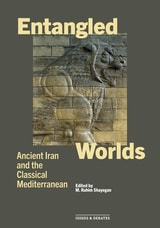
Entangled Worlds
Ancient Iran and the Classical MediterraneanM. Rahim Shayegan
J. Paul Getty Trust, The, 0
An exploration of the far-reaching exchanges between ancient Persia, Greece, and Rome, offering a bold new perspective on their interconnected cultural legacy.
For more than a millennium, ancient Persia and the classical Mediterranean were deeply intertwined—not merely through conflict but also through diplomacy, trade, and cultural exchange. From the rise of the Achaemenid Empire in the sixth century BCE to the fall of Rome in 476 CE and the twilight of Sasanian Persia in 651 CE, political, religious, and artistic exchanges shaped—and were shaped by—the dynamic interactions between ancient Persia, Greece, and Rome. These encounters fostered a complex web of cultural connectivity, challenging the notion of antiquity as a series of isolated civilizations and revealing its deep, enduring entanglements.
Bringing the disciplines of classics, Iranian studies, and global history into dialogue, this volume examines how successive Iranian empires—Achaemenid, Seleucid, Arsacid (Parthian), and Sasanian—engaged with their western (and occasionally eastern) neighbors. Essays on diplomacy, religion, art, and intellectual life offer fresh perspectives on ancient historiography, cross-cultural mythmaking, material and visual culture, and the political and religious dynamics of empire. Featuring more than 100 illustrations, Entangled Worlds is a compelling resource for scholars, students, and general readers interested in the shared legacies of the ancient world.
Exile and the Nation
The Parsi Community of India and the Making of Modern IranBy Afshin Marashi
University of Texas Press, 2020
Honorable Mention, Hamid Naficy Iranian Studies Book Award from the Association of Iranian Studies
In the aftermath of the seventh-century Islamic conquest of Iran, Zoroastrians departed for India. Known as the Parsis, they slowly lost contact with their ancestral land until the nineteenth century, when steam-powered sea travel, the increased circulation of Zoroastrian-themed books, and the philanthropic efforts of Parsi benefactors sparked a new era of interaction between the two groups.Tracing the cultural and intellectual exchange between Iranian nationalists and the Parsi community during the late nineteenth and early twentieth centuries, Exile and the Nation shows how this interchange led to the collective reimagining of Parsi and Iranian national identity—and the influence of antiquity on modern Iranian nationalism, which previously rested solely on European forms of thought. Iranian nationalism, Afshin Marashi argues, was also the byproduct of the complex history resulting from the demise of the early modern Persianate cultural system, as well as one of the many cultural heterodoxies produced within the Indian Ocean world. Crossing the boundaries of numerous fields of study, this book reframes Iranian nationalism within the context of the connected, transnational, and global history of the modern era.
Exiled Memories
Stories of Iranian DiasporaZohreh T. Sullivan
Temple University Press, 2001
These are the words of one Iranian emigre, driven from Tehran by the revolution of 1979. They are echoed time and again in this powerful portrayal of loss and survival. Impelled by these word and her own concerns about nationality and identity, Zohreh Sullivan has gathered together here the voices of sixty exiles and emigres. The speakers come from various ethnic and religious backgrounds and range in age from thirteen to eighty-eight. Although most are from the middle class, they work in a variety of occupations in the United States. But whatever their differences, here they engage in remembering the past, producing a discourse about their lives, and negotiating the troubled transitions from one culture to another.
Unlike man other Iranian oral history projects, Exiled Memories looks at the reconstruction of memory and identity through diasporic narratives, through a focus on the Americas rather than on Iran. The narratives included here reveal the complex ways in which events and places transform identities, how overnight radical s become conservatives, friends become enemies, the strong become weak. Indeed, the narratives themselves serve this function -- serving to transfer or transform power and establish credibility. They reveal a diverse group of people in the process of knitting the story of themselves with the story of the collective after it has been torn apart.