Results by title
220 books match the query 'Israel' and 3 start with e
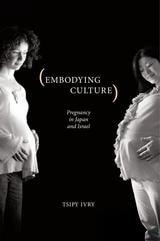
Embodying Culture
Pregnancy in Japan and IsraelIvry, Tsipy
Rutgers University Press, 2009
The ethnography pieces together the voices of pregnant Japanese and Israeli women, their doctors, their partners, the literature they read, and depicts various clinical encounters such as ultrasound scans, explanatory classes for amniocentesis, birthing classes, and special pregnancy events.
The emergent pictures suggest that although experiences of pregnancy in Japan and Israel differ, pregnancy in both cultures is an energy-consuming project of meaning-making— suggesting that the sense of biomedical technologies are not only in the technologies themselves but are assigned by those who practice and experience them.

Europe's Alliance with Israel
Aiding the OccupationDavid Cronin
Pluto Press, 2010
In carefully crafted official statements, the European Union presents itself as an honest broker in the Middle East. In reality, however, the EU’s 27 governments have been engaged in a long process of accommodating Israel’s occupation of Palestinian territories.
Journalist David Cronin interrogates the relationship and its outcomes. A recent agreement for 'more intense, more fruitful, more influential co-operation' between the EU and Israel has meant that Israel has become a member state of the Union in all but name. Cronin shows that rather than using this relationship to encourage Israeli restraint, the EU has legitimised actions such as the ill-treatment of prisoners and the Gaza invasion.
Concluding his revealing and shocking account, Cronin calls for a continuation and deepening of international activism and protest to halt the EU's slide into complicity.

Excavations at Tel Michal, Israel
Ze’ev Herzog, Ora Negbi, and George Rapp Jr., Editors
University of Minnesota Press, 1989
Excavations at Tel Michal, Israel was first published in 1989. Minnesota Archive Editions uses digital technology to make long-unavailable books once again accessible, and are published unaltered from the original University of Minnesota Press editions.
The archaeological site known today as Tel Michal lies north of Tel Aviv on Israel's coastal plain, high on a barren windswept cliff overlooking the Mediterranean. Lacking the arable soil that might have encouraged permanent settlement - most of the region is covered with sand dunes - Tel Michael was probably a maritime station for military or commercial use during its period of occupation, which extended intermittently from the Canaanite Period (Middle Bronze Age II, about 2000 B.C.) through the Early Arab Period (ninth century A.D.). The site's archaeological remains are not confined to a single ancient tel or mound but are dispersed over five hills, where, despite severe erosion, seventeen strata have been excavated, yielding particularly rich and extensive finds in the Persian period.
The excavations at Tel Michal were conducted over a period of four summers, from 1977 through 1980, by a consortium that included Tel Aviv University and the University of Minnesota. As the first phase in a much broader regional project, Tel Michal drew together a multinational group of scholars and students in a cooperative, interdisciplinary effort like that pioneered in Greek archaeology by the Minnesota Messenia Expedition. Experts in traditional archaeological fields—pottery, architecture, numismatics—were joined by geologists, metallurgists, botanists, zoologists, and materials scientists; 43 of these participants have contributed to this full report of the excavations.
The book first traces the historical geography and settlement patterns of Tel Michal and its environs, then covers the stratigraphy and architecture of its settlements during the Bronze and Iron ages and the Persian, Hellenistic, and Arab periods. Included in this historical section are chapters on pottery and on special finds like the Iran Age winepresses, the Persian cemetery, and the Roman fortress. Subsequent chapters deal with the region's geology and its botanical and skeletal remains; with computerized, petrographic, and chemical modes of analysis; and with metal and flint objects, numismatics, and small finds like seals, glass artifacts, beads and pendants. Illustrated throughout with line drawings and tables, by photographs of the excavation site and many of the artifacts found there.