185 books match the query 'Jazz' and 2 start with e
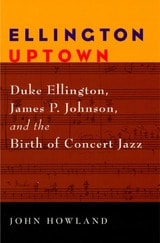
cover of Ellington Uptown: Duke Ellington, James P. Johnson, and the Birth of Concert Jazz

Ellington Uptown

Duke Ellington, James P. Johnson, and the Birth of Concert Jazz

John Howland

University of Michigan Press, 2009
During the early decades of the twentieth century symphonic jazz involved an expansive family of music that emulated, paralleled, and intersected the jazz tradition. Though now largely forgotten, symphonic jazz was both a popular music -- arranging tradition and a repertory of hybrid concert works, both of which reveled in the mildly irreverent interbreeding of white and black and high and low music. While the roots of symphonic jazz can be traced to certain black ragtime orchestras of the teens, the idiom came to maturation in the music of 1920s white dance bands. Through a close examination of the music of Duke Ellington and James P. Johnson, Ellington Uptown uncovers compositions that have usually fallen in the cracks between concert music, jazz, and popular music. It also places the concert works of these two iconic figures in context through an investigation both of related compositions by black and white peers and of symphonic jazz---style arrangements from a diverse number of early sound films, Broadway musicals, Harlem nightclub floor shows, and select interwar radio programs. Both Ellington and Johnson were part of a close-knit community of several generations of Harlem musicians. Older figures like Will Marion Cook, Will Vodery, W. C. Handy, and James Reese Europe were the generation of black musicians that initially broke New York entertainment's racial barriers in the first two decades of the century. By the 1920s, Cook, Vodery, and Handy had become mentors to Harlem's younger musicians. This generational connection is a key for understanding Johnson’s and Ellington's ambitions to use the success of Harlem's white-oriented entertainment trade as a springboard for establishing a black concert music tradition based on Harlem jazz and popular music.
[more]
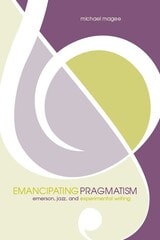
cover of Emancipating Pragmatism: Emerson, Jazz, and Experimental Writing

Emancipating Pragmatism

Emerson, Jazz, and Experimental Writing

Michael Magee

University of Alabama Press, 2004

A radical rereading of Emerson that posits African- American culture, literature, and jazz as the very continuation and embodiment of pragmatic thought and democratic tradition

Emancipating Pragmatism is a radical rereading of Emerson that posits African- American culture, literature, and jazz as the embodiment of pragmatic thought and democratic tradition. It traces Emerson's philosophical legacy through the 19th and 20th centuries to discover how Emersonian thought continues to inform issues of race, aesthetics, and poetic discourse.

Emerson’s pragmatism derives from his abolitionism, Michael Magee argues, and any pragmatic thought that aspires toward democracy cannot ignore and must reckon with its racial roots. Magee looks at the ties between pragmatism and African-American culture as they manifest themselves in key texts and movements, such as William Carlos Williams’s poetry; Ralph Ellison’s discourse in Invisible Man and Juneteenth and his essays on jazz; the poetic works of Robert Creeley, Amiri Baraka, and Frank O'Hara; as well as the “new jazz” being forged at clubs like The Five Spot in New York.

Ultimately, Magee calls into question traditional maps of pragmatist lineage and ties pragmatism to the avant-garde American tradition.
 

[more]