Results by title
187 books match the query 'Justice' and 10 start with e
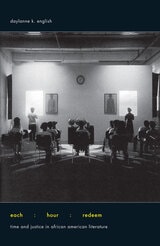
Each Hour Redeem
Time and Justice in African American LiteratureDaylanne K. English
University of Minnesota Press, 2013
Each Hour Redeem advances a major reinterpretation of African American literature from the late eighteenth century to the present by demonstrating how its authors are centrally concerned with racially different experiences of time. Daylanne K. English argues that, from Phillis Wheatley to Suzan-Lori Parks, African American writers have depicted distinctive forms of temporality to challenge racial injustices supported by dominant ideas of time. The first book to explore the representation of time throughout the African American literary canon, Each Hour Redeem illuminates how the pervasive and potent tropes of timekeeping provide the basis for an overarching new understanding of the tradition.
Combing literary, historical, legal, and philosophical approaches, Each Hour Redeem examines a wide range of genres, including poetry, fiction, drama, slave narratives, and other forms of nonfiction. English shows that much of African American literature is characterized by “strategic anachronism,” the use of prior literary forms to investigate contemporary political realities, as seen in Walter Mosley’s recent turn to hard-boiled detective fiction. By contrast, “strategic presentism” is exemplified in the Black Arts Movement and the Harlem Renaissance and their investment in contemporary political potentialities, for example, in Langston Hughes and Amiri Baraka’s adaptation of the jazz of their eras for poetic form and content. Overall, the book effectively demonstrates how African American writers have employed multiple and complex conceptions of time not only to trace racial injustice but also to help construct a powerful literary tradition across the centuries.
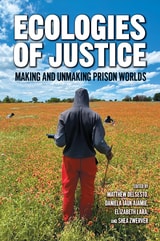
Ecologies of Justice
Making and Unmaking Prison WorldsMatthew DelSesto
Rutgers University Press, 2027
What is the role of multi-species ecologies in creating spaces that counteract the violence in carceral systems and environmental destruction? This book brings together, for the first time, contributions on issues related to prison, jail, and reentry programs, community-based interventions, environmental justice, and sustainability. Through rigorous analysis, detailed case studies, poetry, and personal reflections, the book offers ways of thinking and acting at the intersection of environmental issues and the carceral system. It gathers hard-earned wisdom and insight of researchers, activists, practitioners, and community leaders from within and beyond prison walls who have taken up their projects despite profound institutional constraints.
Approaches in the book range from reform to abolition, as authors detail both practical interventions and imaginative courses of action. More than a contribution to academic knowledge, the book also uniquely highlights voices of those who are incarcerated, survivors of crime, and institutional stakeholders. In addition to writing about the carceral system based on research and personal experience, authors describe practices that are creating transformative spaces of environmental education, building effective pipelines for green workforce development, and sustaining reciprocal relationships for eco-social healing.
Visit for more information: ecologiesofjustice.net
Education, Justice, and Democracy
Edited by Danielle Allen and Rob Reich
University of Chicago Press, 2013
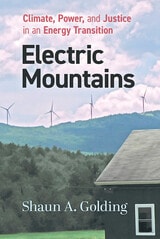
Electric Mountains
Climate, Power, and Justice in an Energy TransitionShaun A. Golding
Rutgers University Press, 2021
Committed environmentalists in one of North America’s most progressive regions desperately wanted energy policies that address the climate crisis. For many of them, wind turbines on Northern New England’s iconic ridgelines symbolize the energy transition that they have long hoped to see. For others, however, ridgeline wind takes on a very different meaning. When weighing its costs and benefits locally and globally, some wind opponents now see the graceful structures as symbols of corrupted energy politics.
This book derives from several years of research to make sense of how wind turbines have so starkly split a community of environmentalists, as well as several communities. In doing so, it casts a critical light on the roadmap for energy transition that Northern New England’s ridgeline wind projects demarcate. It outlines how ridgeline wind conforms to antiquated social structures propping up corporate energy interests, to the detriment of the swift de-carbonizing and equitable transformation that climate predictions warrant. It suggests, therefore, that the energy transition of which most of us are a part, is probably not the transition we would have designed ourselves, if we had been asked.
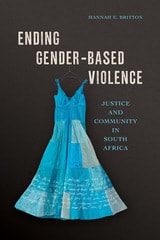
Ending Gender-Based Violence
Justice and Community in South AfricaHannah E. Britton
University of Illinois Press, 2020
Hannah E. Britton examines the reasons gendered violence persists in relationship to social inequalities even after women assume political power. Venturing into South African communities, Britton invites service providers, religious and traditional leaders, police officers, and medical professionals to address gender-based violence in their own words. Britton finds the recent turn toward carceral solutions—with a focus on arrests and prosecutions—fails to address the complexities of the problem and looks at how changing specific community dynamics can defuse interpersonal violence. She also examines how place and space affect the implementation of policy and suggests practical ways policymakers can support street level workers.
Clear-eyed and revealing, Ending Gender-Based Violence offers needed tools for breaking cycles of brutality and inequality around the world.
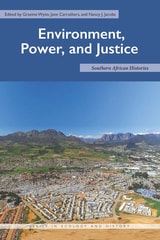
Environment, Power, and Justice
Southern African HistoriesGraeme Wynn
Ohio University Press, 2022
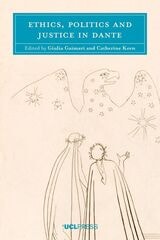
Ethics, Politics and Justice in Dante
Edited by Giulia Gaimari and Catherine Keen
University College London, 2019
Bringing together an international and interdisciplinary group of contributors, ranging across history, philology, classical studies, philosophy, and theology, Ethics, Politics and Justice in Dante presents new research on ethics, politics, and justice in the works of Dante Alighieri, including chapters on Dante’s conception of the afterlife. Contributors scrutinize the Divine Comedy and Dante’s other works in Italian and Latin, showing the evolution of his thought throughout his writing career, with chapters focusing especially on his early philosophical Convivio and on the two “Eclogues” of his final years. Other chapters tackle themes relating to judgment, justice, rhetoric, and literary ethics in the Divine Comedy, as well as the differing public reception and use of Dante’s work in Italy and Britain.
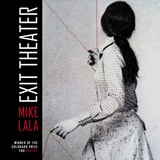
Exit Theater
Mike Lala
University Press of Colorado, 2016
Winner of the 2016 Colorado Prize for Poetry
Selected by Tyrone Williams for the 2016 Colorado Prize for Poetry, Exit Theater casts classical elegy, with dazzling formal innovation, into a staggering work of contemporary, political polyphony. Through monologues, performance scripts, and poems of exquisite prosody, Mike Lala examines the human figure—as subject and object, enemy and ally—in the context of a progressively defigured and hostile world. Catullus, Shakespeare, Cy Twombly, and Lydia Delectorskaya echo across engagements with Israeli generals, accused terrorists, State Department employees, nuclear scientists, Saturday Night Live actors, war criminals, malware, and a host of mythic, literary, and half-extant spectral characters. Amid the cacophony, Lala implicates every actor, including himself, in a web of shared culpability vis-à-vis consumerism, representation, speaking, writing, and making art against the backdrop of the endless, open wars of a post–Cold War, post-2001 era. Exit Theater is a debut of and against its time—a book about war, art, and what it means to make art in a time of war.
Experiments with Power
Obeah and the Remaking of Religion in TrinidadJ. Brent Crosson
University of Chicago Press, 2020
From eighteenth-century slave rebellions to contemporary responses to police brutality, Caribbean methods of problem-solving “spiritual work” have been criminalized under the label of “obeah.” Connected to a justice-making force, obeah remains a crime in many parts of the anglophone Caribbean. In Experiments with Power, J. Brent Crosson addresses the complex question of what obeah is. Redescribing obeah as “science” and “experiments,” Caribbean spiritual workers unsettle the moral and racial foundations of Western categories of religion. Based on more than a decade of conversations with spiritual workers during and after the state of emergency, this book shows how the reframing of religious practice as an experiment with power transforms conceptions of religion and law in modern nation-states.

Exploring the Nature of Law
Thomistic Juridical Realism and the Elements of Law's OntologyPetar Popovic
Catholic University of America Press, 2025