Results by title
74 books match the query 'Kenya' and 4 start with e

Economic & Social Origins of Mau Mau, 1945–1953
Eastern African StudiesDavid Throup
Ohio University Press, 1990
This story of Kenya in the decade before the outbreak of the Mau Mau emergency presents an integrated view of imperial government as well as examining the social and economic causes of the Kikuyu revolt. Dr. Throup combines traditional Imperial History with its emphasis on the high politics of “The Official Mind” in the Colonial Office or in Government House with the new African historiography that concentrates on the people themselves.
Sir Philip Mitchell was the proconsul chosen to reassert metropolitan authority. Under Kenyatta’s leadership the Kenya African Union mobilized a popular constituency among the peasantry. In Nairobi the Kikuyu street gangs linked up with the militant Kikuyu trade unions, led by Fred Kubai and Bildad Kaggia, to challenge Kenyatta’s leadership.
The Mau Mau movement, as it was called by the government, was an alliance between three groups of discontented Kikuyu: the urban unemployed and destitute, the dispossessed squatters from the White Highlands and the tenants and members of the junior clans in the Kikuyu reserves.
The revolt was a dominating factor in convincing the conservative imperial government that the cost of repression in the African colonies was not worth the troops and resources.
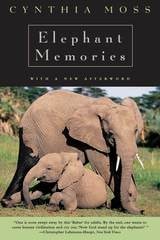
Elephant Memories
Thirteen Years in the Life of an Elephant FamilyCynthia J. Moss
University of Chicago Press, 2000
Cynthia Moss studied the elephants in Kenya's Amboseli National Park for decades, and her long-term research revealed much of what we now know about these complex and intelligent animals. In Elephant Memories she turns that knowledge in an accessible, engaging, even moving story of individual elephants and their complicated relationships. With Moss as our guide, we get to know a number of elephants who are in a family group that is led by matriarchs Teresia, Slit Ear, Torn Ear, Tania, and Tuskless. and we develop new understanding of what elephants do when allowed to live in the wild. An afterword offers a view of the the families from a few years later and addresses current conservation issues.
Empire State-Building
War and Welfare in Kenya, 1925–1952Joanna Lewis
Ohio University Press, 2001
This history of administrative thought and practice in colonial Kenya looks at the ways in which white people tried to engineer social change.
It asks four questions:
- Why was Kenya’s welfare operation so idiosyncratic and spartan compared with that of other British colonies?
- Why did a transformation from social welfare to community development produce further neglect of the very poor?
- Why was there no equivalent to the French tradition of community medicine?
- If there was a transformatory element of colonial rule that sought to address poverty, where and why did it fall down?
The answers offer revealing insight into the dynamics of rule in the late colonial period in Kenya.
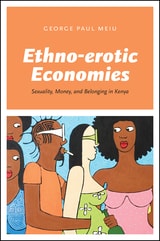
Ethno-erotic Economies
Sexuality, Money, and Belonging in KenyaGeorge Paul Meiu
University of Chicago Press, 2017
George Paul Meiu uses his deep familiarity with the communities these men come from to explore the long-term effects of markets of ethnic culture and sexuality on a wide range of aspects of life in rural Kenya, including kinship, ritual, gender, intimate affection, and conceptions of aging. What happens to these communities when young men return with such surprising wealth? And how do they use it to improve their social standing locally? By answering these questions, Ethno-erotic Economies offers a complex look at how intimacy and ethnicity come together to shape the pathways of global and local trade in the postcolonial world.