Results by title
372 books match the query 'Language' and 6 start with e
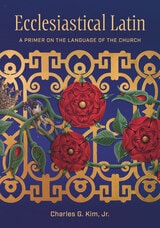
Ecclesiastical Latin
A Primer on the Language of the ChurchCharles G. Kim, Jr.
Catholic University of America Press, 2024
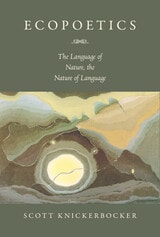
Ecopoetics
The Language of Nature, the Nature of LanguageScott Knickerbocker
University of Massachusetts Press, 2012
Ecopoetics probes the complex relationship between artifice and the natural world in the work of modern American poets—in particular Wallace Stevens, Elizabeth Bishop, Richard Wilbur, and Sylvia Plath. These poets relate to nature as a deep wellspring of meaning, although they all avoid using language the way most nature writers do, merely to reflect or refer directly to the world. Each of these poets, in his or her own distinct way, employs instead what Knickerbocker terms sensuous poesis, the process of rematerializing language through sound effects and other formal devices as a sophisticated response to nonhuman nature.
Rather than attempt to erase the artifice of their own poems, to make them seem more natural and thus supposedly closer to nature, the poets in this book unapologetically embrace artifice—not for its own sake but in order to perform and enact the natural world. Indeed, for them, artifice is natural. In examining their work, Knickerbocker charts a new direction for ecocriticism.
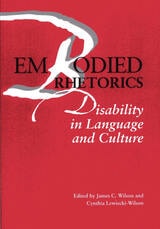
Embodied Rhetorics
Disability in Language and CultureEdited by James C. Wilson and Cynthia Lewiecki-Wilson
Southern Illinois University Press, 2001
Presenting thirteen essays, editors James C. Wilson and Cynthia Lewiecki-Wilson unite the fields of disability studies and rhetoric to examine connections between disability, education, language, and cultural practices. Bringing together theoretical and analytical perspectives from rhetorical studies and disability studies, these essays extend both the field of rhetoric and the newer field of disability studies.
The contributors span a range of academic fields including English, education, history, and sociology. Several contributors are themselves disabled or have disabled family members. While some essays included in this volume analyze the ways that representations of disability construct identity and attitudes toward the disabled, other essays use disability as a critical modality to rethink economic theory, educational practices, and everyday interactions. Among the disabilities discussed within these contexts are various physical disabilities, mental illness, learning disabilities, deafness, blindness, and diseases such as multiple sclerosis and AIDS.
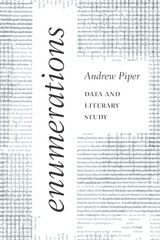
Enumerations
Data and Literary StudyAndrew Piper
University of Chicago Press, 2018
In Enumerations, Andrew Piper answers that question across a variety of domains fundamental to the study of literature. He focuses on the elementary particles of literature, from the role of punctuation in poetry, the matter of plot in novels, the study of topoi, and the behavior of characters, to the nature of fictional language and the shape of a poet’s career. How does quantity affect our understanding of these categories? What happens when we look at 3,388,230 punctuation marks, 1.4 billion words, or 650,000 fictional characters? Does this change how we think about poetry, the novel, fictionality, character, the commonplace, or the writer’s career? In the course of answering such questions, Piper introduces readers to the analytical building blocks of computational text analysis and brings them to bear on fundamental concerns of literary scholarship. This book will be essential reading for anyone interested in Digital Humanities and the future of literary study.
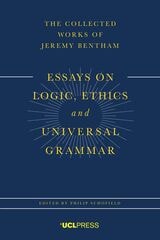
Essays on Logic, Ethics, and Universal Grammar
Edited by Philip Schofield
University College London, 2025
Best known as the founder of the ethical theory of utilitarianism, Bentham’s philosophical contributions spanned political economy, judicial administration, prison reform, policing, religion, and many more fields. This new addition to The Collected Works of Jeremy Bentham deals with his ideas about logic, language, ethics, and grammar. Distributed across four essays written between 1814 and 1816 and an appendix, it includes discussions of methodization, ontology, real and fictitious entities, and propositions as the fundamental components of language. In addition to constituting a major contribution to the history of logic and language, this collection establishes the philosophical basis for classical utilitarianism and Chrestomathia, Bentham’s major work outlining his materialist theory of language.
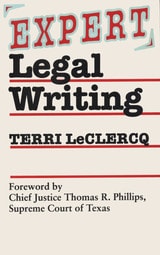
Expert Legal Writing
By Teresa Ross LeClercq
University of Texas Press, 1995
For many years, Terri LeClercq's "Legal Writing" column in the Texas Bar Journal helped polish the prose of lawyers and law students, judges and clerks, paralegals, writing instructors, and legal secretaries. This book collects all the advice she has given in her columns into one authoritative guide for expert legal writing. LeClercq covers everything a legal writer needs to know, from the mechanics of grammar and punctuation to the finer points of style, organization, and clarity of meaning. With her practical, readable, and often humorous advice, those who prepare legal documents can rid their prose of mind-numbing "legalese" and write with the clarity and precision that characterize the very best legal writing.