Results by title
642 books match the query 'Linguistics' and 19 start with e

Eating Is an English Word
Annemarie Mol
Duke University Press, 2024
Efficient Processing with Constraint-Logic Grammars Using Grammar
Guido Minnen
CSLI, 2001
This book investigates programs for automatic analysis and production of written human language. These specialized programs use knowledge about the structure and meaning of human language in the form of grammars. Various techniques are proposed which focus on solutions for practical problems in processing of constraint-logic grammars. The solutions are all based on the automatic adaptation or compilation of a grammar rather than a modification of the processing algorithm used. As such they allow the grammar writer to abstract over details of grammar processing and in many cases enable more efficient processing.
Elements of Acoustic Phonetics
Peter Ladefoged
University of Chicago Press, 1995
Like its predecessor, this edition of Elements of Acoustic Phonetics will serve as an invaluable textbook and reference for students and practitioners of linguistics and speech science, and for anyone who wants to understand the physics of speech.

Elements, Government and Licensing
Developments in PhonologyEdited by Florian Breit, Yuko Yoshida, and Connor Youngberg
University College London, 2023
Elements, Government and Licensing covers three principal domains of phonological representation: melody and segmental structure; tone, prosody, and prosodic structure; and phonological relations, empty categories, and vowel-zero alternations. Theoretical topics covered include the formalization of Element Theory, the hotly debated topic of structural recursion in phonology, and the empirical status of government.
In addition, a wealth of new analyses and empirical evidence sheds new light on empty categories in phonology, the analysis of certain consonantal sequences, phonological and non-phonological alternation, the elemental composition of segments, and many more. Taking up long-standing empirical and theoretical issues informed by the Government Phonology and Element Theory, this book provides theoretical advances while also bringing to light new empirical evidence and analysis challenging previous generalizations.
The insights offered here will be equally exciting for phonologists working on related issues inside and outside the Principles and Parameters program, such as researchers working in Optimality Theory or classical rule-based phonology.
Empirical Models of Phonological Networks and Their Growth in English
Eva Maria Luef
Karolinum Press, 2025
Network science has become increasingly popular in the cognitive sciences, including linguistics. Phonological Networks and Their Growth in Second Languages is the first to explore lexical networks in learners of English as a second language with a focus on the relationships between phonological word forms in the mental lexicon. It highlights the contributions that network science can make to the study of lexical organization of second languages.
Within the theoretical framework of evolving networks, lexical learning is seen as a process of network growth. The book models the lexicon as a growing phonological network that increases in size as language users advance through second language proficiency stages. As such, the analysis of specific growth algorithms (such as preferential attachment) accounts for observed mechanisms of lexical acquisition. Empirical models of evolving lexical networks can help shed light on the structural changes occurring as the second language lexicon expands.
Empirical and Experimental Methods in Cognitive/Functional Research
Edited by Sally Rice and John Newman
CSLI, 2010
Empirical and Experimental Methods in Cognitive/Functional Research consists of selected papers from the seventh meeting of the Conceptual Structure, Discourse, and Language Conference, held at the University of Alberta in October 2004. The papers fall into five main categories, reflecting the cognitive and functional orientation of the conference: reciprocity between lexis and syntax, semantic factors affecting form patterning, grammaticalization of basic verbs, form/meaning pairings in discourse, and experimental investigations of language/mind and language/use interactions. In addition, a plenary paper by Nick Evans on complex events, propositional overlay, and the special status of reciprocal clauses is included.

Empty Names, Fiction and the Puzzles of Non-Existence
Edited by Anthony Everett and Thomas Hofweber
CSLI, 2000
English Syntax
An IntroductionJon-Bok Kim and Peter Sells
CSLI, 2008
English Words Instructor's Manual
R. L. Cherry
University of Arizona Press, 1986
English Words from Latin and Greek Elements
Donald M. Ayers; Revised by Thomas D. Worthen
University of Arizona Press, 1986
Since its first publication in 1965, English Words from Latin and Greek Elements by Donald M. Ayers has empowered thousands of students to expand their vocabulary by uncovering the classical roots embedded in modern English. Now in its enduring second edition, this trusted resource proves that vocabulary is most effectively learned through understanding—not memorization.
Why dedicate an entire book to this approach? Because Ayers goes beyond the basics. Students are introduced to a broad spectrum of Latin and Greek roots, encounter new vocabulary in meaningful context, and reinforce their learning through targeted exercises. This method equips learners with lifelong tools to decode unfamiliar words and deepen their command of English.
Written for English learners—not classical language scholars—this book requires no prior knowledge of Latin or Greek. It’s proven effective across high school and college classrooms, and adaptable for both remedial and accelerated programs.

English in Today's Research World
A Writing GuideJohn M. Swales and Christine B. Feak
University of Michigan Press, 2000
In addition to instruction on writing for publication, English in Today's Research World provides needed advice on applications, recommendations, and requests--types of communications that are particularly vulnerable to influences from national cultural expectations and conventions and that, therefore, place the NNS writer at increased disadvantage.
The text is both a reference manual and a course book, so that researchers can continue to use the book after they have completed their formal education. New ESL/EFL teachers can use English in Today's Research World as a reference book for themselves or as a teaching aid in the classroom.

English on the Bonin (Ogasawara) Islands, Volume 81
Daniel Long
Duke University Press, 0
Epistemic Modality in Standard Spoken Tibetan
Epistemic Verbal Endings and CopulasZuzana Vokurková
Karolinum Press, 2017
Ergativity
Argument Structure and Grammatical RelationsChristopher D. Manning
CSLI, 1996
Essays in Linguistics
Dialectology, Grammar, and Lexicography in Honor of James B. McmillanJames C. Raymond
University of Alabama Press, 2004
"Raymond and Russell have fashioned a lively, useful volume. . . . The ability and integrity of the contributors make much of the difference, but the editors have given the book direction by soliciting state of the art essays in three fields . . . dialectology (the articles represent area linguistics at its best), grammar and usage (Algeo on usage shibboleths is particularly fine), and lexicography (a delight)."
—Choice
"These essays are quietly unassuming in tone but highly useful."
—Language in Society
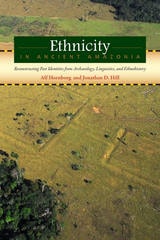
Ethnicity in Ancient Amazonia
Reconstructing Past Identities from Archaeology, Linguistics, and EthnohistoryAlf Hornborg
University Press of Colorado, 2011
Hornborg and Hill argue that the tendency to link language, culture, and biology--essentialist notions of ethnic identities--is a Eurocentric bias that has characterized largely inaccurate explanations of the distribution of ethnic groups and languages in Amazonia. The evidence, however, suggests a much more fluid relationship among geography, language use, ethnic identity, and genetics. In Ethnicity in Ancient Amazonia, leading linguists, ethnographers, ethnohistorians, and archaeologists interpret their research from a unique nonessentialist perspective to form a more accurate picture of the ethnolinguistic diversity in this area.
Revealing how ethnic identity construction is constantly in flux, contributors show how such processes can be traced through different ethnic markers such as pottery styles and languages. Scholars and students studying lowland South America will be especially interested, as will anthropologists intrigued by its cutting-edge, interdisciplinary approach.
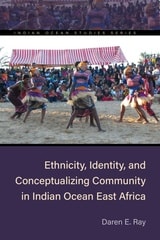
Ethnicity, Identity, and Conceptualizing Community in Indian Ocean East Africa
Daren E. Ray
Ohio University Press, 2023
Everything that Linguists have Always Wanted to Know about Logic . . . But Were Ashamed to Ask
James D. McCawley
University of Chicago Press, 1993
Extraordinary from the Ordinary
Personal Experience Narratives in American Sign LanguageKristin J. Mulrooney
Gallaudet University Press, 2009
Personal narratives are one way people code their experiences and convey them to others. Given that speakers can simultaneously express information and define a social situation, analyzing how and why people structure the telling of personal narratives can provide insight into the social dimensions of language use. In Extraordinary from the Ordinary: Personal Experience Narratives in American Sign Language, Kristin Jean Mulrooney shows that accounts by Deaf persons expressed in ASL possess the same characteristics and perform the same function as oral personal narratives.
Mulrooney analyses12 personal narratives by ASL signers to determine how they “tell” their stories. She examines the ASL form of textual narration to see how signers use lexical signs to grammatically encode information, and how they also convey perceived narration. In perceived narration, the presenter depicts a past occurrence in the immediate environment that allows the audience to partially witness and interpret the event. Mulrooney determined that ASL narratives reveal a patterned structure consisting of an introduction, a main events section for identifying and describing past events, and a conclusion. They also can include background information, an explication section in which the presenter expands or clarifies an event, and a section that allows the presenter to explain his or her feelings about what happened. Liberally illustrated with photographs from videotaped narratives, Extraordinary from the Ordinary offers an engrossing, expansive view of personal narratives embodying the unique linguistic elements of ASL.