Results by title
716 books match the query 'Literary Figures' and 36 start with e

E.A. Robinson - American Writers 17
University of Minnesota Pamphlets on American WritersLouis O. Coxe
University of Minnesota Press, 1962
E.A. Robinson - American Writers 17 was first published in 1962. Minnesota Archive Editions uses digital technology to make long-unavailable books once again accessible, and are published unaltered from the original University of Minnesota Press editions.
E.E. Cummings - American Writers 87
University of Minnesota Pamphlets on American WritersEve Triem
University of Minnesota Press, 1969
E.E. Cummings - American Writers 87 was first published in 1969. Minnesota Archive Editions uses digital technology to make long-unavailable books once again accessible, and are published unaltered from the original University of Minnesota Press editions.
Edgar Allan Poe - American Writers 89
University of Minnesota Pamphlets on American WritersRoger Asselineau
University of Minnesota Press, 1970
Edgar Allan Poe - American Writers 89 was first published in 1970. Minnesota Archive Editions uses digital technology to make long-unavailable books once again accessible, and are published unaltered from the original University of Minnesota Press editions.
Edith Wharton - American Writers 12
University of Minnesota Pamphlets on American WritersLouis Auchincloss
University of Minnesota Press, 1961
Edith Wharton - American Writers 12 was first published in 1961. Minnesota Archive Editions uses digital technology to make long-unavailable books once again accessible, and are published unaltered from the original University of Minnesota Press editions.
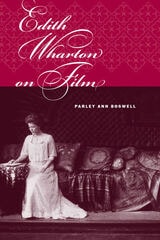
Edith Wharton on Film
Parley Ann Boswell
Southern Illinois University Press, 2007
Edith Wharton (1862–1937), who lived nearly half of her life during the cinema age when she published many of her well-known works, acknowledged that she disliked the movies, characterizing them as an enemy of the imagination. Yet her fiction often referenced film and popular Hollywood culture, and she even sold the rights to several of her novels to Hollywood studios.
Edith Wharton on Film explores these seeming contradictions and examines the relationships among Wharton’s writings, the popular culture in which she published them, and the subsequent film adaptations of her work (three from the 1930s and four from the 1990s). Author Parley Ann Boswell examines the texts in which Wharton referenced film and Hollywood culture and evaluates the extant films adapted from Wharton’s fiction.
The volume introduces Wharton’s use of cinema culture in her fiction through the 1917 novella Summer, written during the nation’s first wave of feminism, in which the heroine Charity Royall is moviegoer and new American woman, consumer and consumable. Boswell considers the source of this conformity and entrapment, especially for women. She discloses how Wharton struggled to write popular stories and then how she revealed her antipathy toward popular movie culture in two late novels.
Boswell describes Wharton’s financial dependence on the American movie industry, which fueled her antagonism toward Hollywood culture, her well-documented disdain for popular culture, and her struggles to publish in women’s magazines.
This first full-length study that examines the film adaptations of Wharton’s fiction covers seven films adapted from Wharton’s works between 1930 and 2000 and the fifty-year gap in Wharton film adaptations. The study also analyzes Sophy Viner in The Reef as pre-Hollywood ingénue, characters in Twilight Sleep and The Children and the real Hollywood figures who might have inspired them, and The Sheik and racial stereotypes.
Boswell traces the complicated relationship of fiction and narrative film, the adaptations and cinematic metaphors of Wharton’s work in the 1990s, and Wharton’s persona as an outsider. Wharton’s fiction on film corresponds in striking ways to American noir cinema, says Boswell, because contemporary filmmakers recognize and celebrate the subversive qualities of Wharton’s work.
Edith Wharton on Film, which includes eleven illustrations, enhances Wharton’s stature as a major American author and provides persuasive evidence that her fiction should be read as American noir literature.
Edmund Wilson - American Writers 67
University of Minnesota Pamphlets on American WritersWarner Berthoff
University of Minnesota Press, 1968
Edmund Wilson - American Writers 67 was first published in 1968. Minnesota Archive Editions uses digital technology to make long-unavailable books once again accessible, and are published unaltered from the original University of Minnesota Press editions.
Edna St. Vincent Millay
University of Minnesota Pamphlets on American WritersJames Gray
University of Minnesota Press, 1967
Edna St. Vincent Millay was first published in 1967. Minnesota Archive Editions uses digital technology to make long-unavailable books once again accessible, and are published unaltered from the original University of Minnesota Press editions.
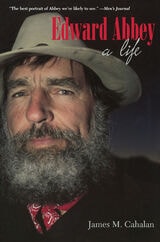
Edward Abbey
A LifeJames M. Cahalan
University of Arizona Press, 2001
It separates fact from fiction, showing that much of the myth surrounding Abbey—such as his birth in Home, Pennsylvania, and later residence in Oracle, Arizona—was self-created and self-perpetuated. It also shows that Abbey cultivated a persona both in his books and as a public speaker that contradicted his true nature: publicly racy and sardonic, he was privately reserved and somber. Author James Cahalan studied all of Abbey’s works and private papers and interviewed many people who knew him—including the models for characters in The Brave Cowboy and The Monkey Wrench Gang—to create a complete picture of the writer’s life. He examines Abbey’s childhood roots in the East and his love affair with the West, his personal relationships and tempestuous marriages, and his myriad jobs in continually shifting locations—including sixteen national parks and forests.
He also explores Abbey’s writing process, his broad intellectual interests, and the philosophical roots of his politics. For Abbey fans who assume that his “honest novel,” The Fool’s Progress, was factual or that his public statements were entirely off the cuff, Cahalan’s evenhanded treatment will be an eye-opener.
More than a biography, Edward Abbey: A Life is a corrective that stands the test of time, showing that Abbey was neither simply a countercultural cowboy hero nor an unprincipled troublemaker, but instead a complex and multifaceted person whose legacy continues to be appreciated. The book contains thirty photographs, capturing scenes ranging from Abbey’s childhood to his burial site.
Edward Albee - American Writers 77
University of Minnesota Pamphlets on American WritersRuby Cohn
University of Minnesota Press, 1969
Edward Albee - American Writers 77 was first published in 1969. Minnesota Archive Editions uses digital technology to make long-unavailable books once again accessible, and are published unaltered from the original University of Minnesota Press editions.
Edward Everett Hale
By Jean Holloway
University of Texas Press, 1956
Edward Everett Hale is remembered by millions as the author of The Man Without a Country. This popular and gifted nineteenth-century writer was an outstanding and prolific contributor to the fields of journalism, fiction, essay, and history. He wrote more than 150 books and pamphlets (one novel sold more than a million copies in his lifetime) and was intimately associated with the publication of many of the early American journals, among them the North American Review, Atlantic Monthly, and Christian Examiner. He served as editor of Old and New and was a frequent contributor to the foremost newspapers and periodicals of his time.
Yet the writings of this “journalist with a touch of genius” were only incidental to Hale’s Christian ministry in New England and in Washington, D.C., where he was for five years Chaplain of the Senate. His literary creed reflected that of his ministry, for Hale’s interpretation of the social gospel comprised an active concern with all phases of human affairs.
Confidant of poets and editors, friend to diplomats and statesmen, Hale helped mold public opinions in economics, sociology, history, and politics through three-quarters of what he called “a most extraordinary century in history.” In recounting Hale’s life and times, Holloway vividly portrays this fascinating and often turbulent era.
Edward Taylor - American Writers 52
University of Minnesota Pamphlets on American WritersDonald E. Stanford
University of Minnesota Press, 1965
Edward Taylor - American Writers 52 was first published in 1965. Minnesota Archive Editions uses digital technology to make long-unavailable books once again accessible, and are published unaltered from the original University of Minnesota Press editions.
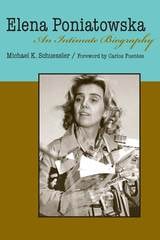
Elena Poniatowska
An Intimate BiographyMichael K. Schuessler; Foreword by Carlos Fuentes
University of Arizona Press, 2007
With his subject’s complete cooperation (she granted him access to fifty years of personal files), Michael Schuessler provides the first critical biography of Poniatowska’s life and work. She is perhaps best known outside of Mexico as the author of Massacre in Mexico (La noche de Tlatelolco) and Here’s to You, Jesusa! (Hasta no verte, Jesús mío). But her body of published books is vast, beginning with the 1954 publication of Lilus Kikus, a collection of short stories. And she is still writing today.
Schuessler, who befriended Poniatowska more than fifteen years ago, is a knowledgeable guide to her engrossing life and equally engaging work. As befits her, his portrait is itself a literary collage, a “living kaleidoscope” that is constantly shifting to include a multiplicity of voices—those of fellow writers, literary critics, her nanny, her mother, and the writer herself—easily accessible to general readers and essential to scholars.
Available in English for the first time, this insightful book includes 40 photographs and drawings and an annotated bibliography of Poniatowska’s works—those that have already been translated into English and those awaiting translation.
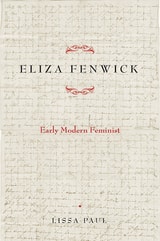
Eliza Fenwick
Early Modern FeministLissa Paul
University of Delaware Press, 2019
Lissa Paul brings to light Fenwick’s letters for the first time to reveal the relationships she developed with many key figures of her era, and to tell Fenwick’s story as depicted by the woman herself. Fenwick began as a writer in the radical London of the 1790s, a member of Mary Wollstonecraft’s circle, and when her marriage crumbled, she became a prolific author of children’s literature to support her family. Eventually Fenwick moved to Barbados, becoming the owner of a school while confronting the reality of slavery in the British colonies. She would go on to establish schools in numerous cities in the United States and Canada, all the while taking care of her daughter and grandchildren and maintaining her friendships through letters that, as presented here, tell the story of her life.
Published by the University of Delaware Press. Distributed worldwide by Rutgers University Press.
Ellen Glasgow - American Writers 33
University of Minnesota Pamphlets on American WritersLouis Auchincloss
University of Minnesota Press, 1964
Ellen Glasgow - American Writers 33 was first published in 1964. Minnesota Archive Editions uses digital technology to make long-unavailable books once again accessible, and are published unaltered from the original University of Minnesota Press editions.
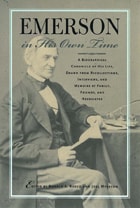
Emerson in His Own Time
A Biographical Chronicle of His Life, Drawn from Recollections, Interviews, and Memoirs by Family, FRonald A. & Joel Bosco & Myerson
University of Iowa Press, 2003
Remembrances from Elizabeth Peabody, Sophia Hawthorne, Oliver Wendell Holmes, Ralph Waldo Emerson, Bronson Alcott, Rebecca Harding Davis, and twenty others printed in Hawthorne in His Own Time follow him from his childhood in Salem, through his years of initial literary obscurity, his days in the Boston and Salem Custom Houses, his service as U.S. Consul to Liverpool and Manchester and his life in the Anglo-American communities at Rome and Florence, to his late years as the “Great Romancer.”
In their enlightening introduction, editors Ronald Bosco and Jillmarie Murphy assess the postmortem building of Hawthorne’s reputation as well as his relationship to the prominent Transcendentalists, spiritualists, Swedenborgians, and other personalities of his time. By clarifying the sentimental associations between Hawthorne’s writings and his actual personality and moving away from the critical review to the personal narrative, these artful and perceptive reminiscences tell the private and public story of a remarkable life.
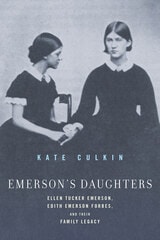
Emerson’s Daughters
Ellen Tucker Emerson, Edith Emerson Forbes, and Their Family LegacyKate Culkin
University of Massachusetts Press, 2025
Longlisted for the 2026 Plutarch Award
Ellen Tucker Emerson and Edith Emerson Forbes, the daughters of Lidian Jackson and Ralph Waldo Emerson, grew up in the heart of Concord, Massachusetts’s famed literary community. In a culture that celebrated self-reliance, Ellen and Edith formed a partnership that only strengthened as their paths diverged, with Ellen remaining in the family home and Edith marrying William Forbes, moving to Milton, Massachusetts, and having eight children. The partnership allowed them to tend to the demands and opportunities created by their father’s career, including serving as his secretaries and editors, and helped them shape his posthumous image. It also enabled them to adapt to historical developments stretching from the Civil War to American imperialism as well as personal ones, including Edith’s growing family and travel and study abroad, and inevitable ones brought on by the aging processes of their parents and themselves.
Emerson’s Daughters is a biography of a sisterhood, the first full-length study of Ellen’s and Edith’s lives. Building on archival research into the extensive correspondence between the sisters, it adds to the growing body of work on women’s contribution to Transcendentalism while opening a window onto the rich, and understudied, family life of the “Sage of Concord.”
Emily Dickinson - American Writers 81
University of Minnesota Pamphlets on American WritersDenis Donoghue
University of Minnesota Press, 1969
Emily Dickinson - American Writers 81 was first published in 1969. Minnesota Archive Editions uses digital technology to make long-unavailable books once again accessible, and are published unaltered from the original University of Minnesota Press editions.
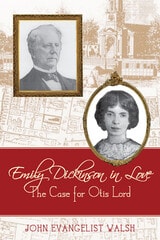
Emily Dickinson in Love
The Case for Otis LordWalsh, John Evangelist
Rutgers University Press, 2012
From the award-winning author of Poe the Detective: The Curious Circumstances Behind "The Mystery of Marie Roget" comes a compelling argument for the identity of Emily Dickinson’s true love
Proud of my broken heart
Since thou didst break it,
Proud of the pain I
Did not feel till thee . . .
Those words were written by Emily Dickinson to a married man. Who was he?
For a century or more the identity of Emily Dickinson’s mysterious “Master” has been eagerly sought, especially since three letters from her to him were found and published in 1955. In Emily Dickinson in Love, John Evangelist Walsh provides the first book-length treatment of this fascinating subject, offering a solution based wholly on documented facts and the poet’s own writings.
Crafting the affair as a love story of rare appeal, and writing with exquisite attention to detail, in Part I Walsh reveals and meticulously proves the Master to be Otis Lord, a friend of the poet’s father and a man of some reputation in law and politics. Part II portrays the full dimensions of their thirty-year romance, most of it clandestine, including a series of secret meetings in Boston.
After uncovering and confirming the Master’s identity, Walsh fits that information into known events of Emily’s life to make sense of facts long known but little understood—Emily’s decision to dress always in white, for instance, or her extreme withdrawal from a normal existence when she had previously been an active, outgoing friend to many men and women.
In a lengthy section of Notes and Sources, Walsh presents his proofs in abundant detail, demonstrating that the evidence favors one man so irresistibly that there is left no room for doubt. Each reader will decide if he has truly succeeded in making the case for Otis Lord.
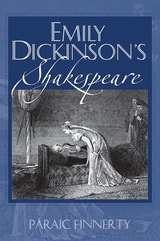
Emily Dickinson's Shakespeare
Paraic Finnerty
University of Massachusetts Press, 2006
Páraic Finnerty clarifies the essential role that Shakespeare had in Dickinson's life by locating her allusions to his writings within a nineteenth-century American context and by treating reading as a practice that is shaped, to a large extent, by culture. In the process, he throws new light on Shakespeare's multifaceted presence in Dickinson's world: in education, theater, newspapers, public lectures, reading clubs, and literary periodicals.
Through analysis of letters, journals, diaries, records, periodicals, newspapers, and marginalia, Finnerty juxtaposes Dickinson's engagement with Shakespeare with the responses of her contemporaries. Her Shakespeare emerges as an immoral dramatist and highly moral poet; a highbrow symbol of class and cultivation and a lowbrow popular entertainer; an impetus behind the emerging American theater criticism and an English author threatening American creativity; a writer culturally approved for women and yet one whose authority women often appropriated to critique their culture. Such a context allows the explication of Dickinson's specific references to Shakespeare and further conjecture about how she most likely read him.
Finnerty also examines those of Dickinson's responses to Shakespeare that deviated from what might have been expected and approved of by her culture. Imaginatively departing from the commonplace, Dickinson chose to admire three of Shakespeare's most powerful and transgressive female characters—Cleopatra, Queen Margaret, and Lady Macbeth—instead of his more worthy and virtuous heroines. More startling, although the poet found resonance for her own life in Hamlet, Romeo and Juliet, and Macbeth, she chose, in the racially charged atmosphere of nineteenth-century America, to identify with Shakespeare's most controversial character, Othello, thereby defying expectations once again.
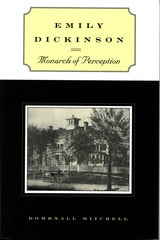
Emily Dickinson
Monarch of PerceptionDomhnall Mitchell
University of Massachusetts Press, 2000
Emily Dickinson has often been pictured as a sensitive but isolated poet—someone who published very little in her lifetime and limited herself to lyrics, considered to be the kind of poems most removed from social and political life. In recent years, scholars have challenged that view, and this book extends the discussion in valuable new directions.
Domhnall Mitchell begins by focusing on three historical phenomena—the railroad, the Dickinson homestead, and horticulture—and argues that poems about trains, home, and flowers engage with their meanings in ways that extend beyond the confines of the aesthetic. He shows how Dickinson's poems and letters reveal the full complexity of her position as a woman situated within a larger social and economic class.
In the second half of the book, Mitchell considers the ideological, textual, and editorial implications of Dickinson's strategic privatization of her art. He relates the particular forms of her manuscripts' appearance, distribution, and collation to aspects of her social as well as her literary consciousness. In a chapter that is certain to provoke debate, he explores what it means to read individual poems and letters in manuscript versions rather than in printed editions. By paying close attention to textual evidence, he makes the case that various features of the manuscripts are actually matters of accident or immediate convenience rather than the visual markers of a new aesthetic principle.
Mitchell closes by using the theories of Mikhail Bakhtin to explore the contradictions of a “private” poetry that engages verbally in multiple areas of nineteenth-century life and discourse. By attending to the contemporaneous particularities of recurrent words and images, he demonstrates that Dickinson could stay at home and still be at home in history, too.
Empire of Objects
Iurii Trifonov and the Material World of Soviet CultureBenjamin M. Sutcliffe
University of Wisconsin Press, 2023
Scholars have both neglected Trifonov in recent years and focused their limited attention on the author’s most famous works, produced in the 1960s through 1980s. Yet almost half of his output was written before then. In Empire of Objects, Benjamin Sutcliffe takes care to consider the author’s entire oeuvre. Trifonov’s work reflects the paradoxes of a culture that could neither honestly confront the past nor create a viable future, one that alternated between trying to address and attempting to obscure the trauma of Stalinism. He became increasingly incensed by what he perceived as the erosion of sincerity in public and private life, by the impact of technology, and by the state’s tacit support of greed and materialism. Trifonov’s work, though fictional, offers a compelling window into Soviet culture.
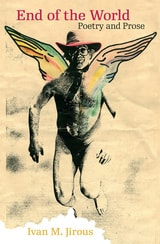
End of the World
Poetry and ProseIvan M. Jirous
Karolinum Press, 2020
End of the World is the first major collection in English of the works of this legendary Czech “madman.” Although nicknamed for his aggressive and rebellious behavior, Jirous’s writing reveal a refined, sophisticated, and even tender sensibility. Translated in part by Paul Wilson, an original member of the Plastic People, the book gathers his poems and letters from prison, as well as his book-length prose work, The True Story of the Plastic People, alongside critical essays on Jirous’s life and work. End of the World is an ideal introduction to the raucous writer who playwright Tom Stoppard referred to as one of the most interesting personalities in modern Czech history.
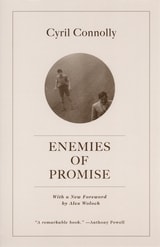
Enemies of Promise
Cyril Connolly
University of Chicago Press, 2008
“Whom the gods wish to destroy,” writes Cyril Connolly, “they first call promising.” First published in 1938 and long out of print, Enemies of Promise, an “inquiry into the problem of how to write a book that lasts ten years,” tests the boundaries of criticism, journalism, and autobiography with the blistering prose that became Connolly’s trademark. Connolly here confronts the evils of domesticity, politics, drink, and advertising as well as novelists such as Joyce, Proust, Hemingway, and Faulkner in essays that remain fresh and penetrating to this day.
“A fine critic, compulsive traveler, and candid autobiographer. . . . [Connolly] lays down the law for all writers who wanted to count. . . . He had imagination and decisive images flashed with the speed of wit in his mind.”—V. S. Pritchett, New York Review of Books
“Anyone who writes, or wants to write, will find something on just about every single page that either endorses a long-held prejudice or outrages, and that makes it a pretty compelling read. . . . You end up muttering back at just about every ornately constructed pensée that Connolly utters, but that’s one of the joys of this book.”—Nick Hornby, The Believer
“A remarkable book.”—Anthony Powell
Erika and Klaus Mann in New York
Escape from the Magic MountainAndrea Weiss
University of Chicago Press, 2008
Ernest Hemingway - American Writers 1
University of Minnesota Pamphlets on American WritersPhilip Young
University of Minnesota Press, 1959
Ernest Hemingway - American Writers 1 was first published in 1959. Minnesota Archive Editions uses digital technology to make long-unavailable books once again accessible, and are published unaltered from the original University of Minnesota Press editions.
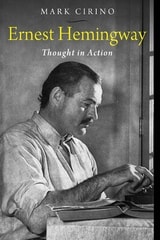
Ernest Hemingway
Thought in ActionMark Cirino
University of Wisconsin Press, 2012
In Cirino’s analysis of Hemingway’s work through this lens—including such celebrated classics as A Farewell to Arms, The Old Man and the Sea, and “Big Two-Hearted River” and less-appreciated works including Islands in the Stream and “Because I Think Deeper”—an entirely different Hemingway hero emerges: intelligent, introspective, and ruminative.
Erskine Caldwell - American Writers 78
University of Minnesota Pamphlets on American WritersJames Korges
University of Minnesota Press, 1969
Erskine Caldwell - American Writers 78 was first published in 1969. Minnesota Archive Editions uses digital technology to make long-unavailable books once again accessible, and are published unaltered from the original University of Minnesota Press editions.
This pamphlet series has been hailed by critics, teachers, and librarians as an ideals means of introducing both students and general readers to American writers of all periods. Choice has commented: "For the small library this series offers at small cost introductions by reputable critics o dozens of significant authors, and the larger the library the greater the number of undergraduate students looking for a place to start on some writer." The New York Times Book Review has called the pamphlets "extraordinarily good," pointing out that "they are just long enough (48 pages) to permit a real survey of an author's work and short enough to attract the casual reader, the anxiety-ridden student, and the professor desperate for the straight word on an unfamiliar writer."
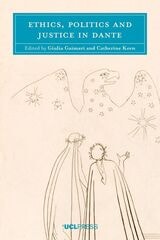
Ethics, Politics and Justice in Dante
Edited by Giulia Gaimari and Catherine Keen
University College London, 2019
Bringing together an international and interdisciplinary group of contributors, ranging across history, philology, classical studies, philosophy, and theology, Ethics, Politics and Justice in Dante presents new research on ethics, politics, and justice in the works of Dante Alighieri, including chapters on Dante’s conception of the afterlife. Contributors scrutinize the Divine Comedy and Dante’s other works in Italian and Latin, showing the evolution of his thought throughout his writing career, with chapters focusing especially on his early philosophical Convivio and on the two “Eclogues” of his final years. Other chapters tackle themes relating to judgment, justice, rhetoric, and literary ethics in the Divine Comedy, as well as the differing public reception and use of Dante’s work in Italy and Britain.
Eudora Welty - American Writers 66
University of Minnesota Pamphlets on American WritersJ.A. Bryant Jr.
University of Minnesota Press, 1968
Eudora Welty - American Writers 66 was first published in 1968. Minnesota Archive Editions uses digital technology to make long-unavailable books once again accessible, and are published unaltered from the original University of Minnesota Press editions.
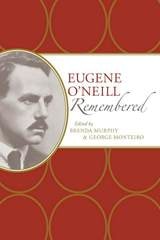
Eugene O'Neill Remembered
Edited by Brenda Murphy and George Monteiro
University of Alabama Press, 2017
A primary-source portrait of Eugene O’Neill through the voices that knew him.
Known principally as the author of some of the most significant plays in the American dramatic canon and as one of America’s Nobel Laureates in literature, O'Neill rarely gave interviews and offered few details about himself. As a consequence, his life has long been shrouded in myth. He also abetted some of the misconceptions about his youth by, for example, advocating the story that he was expelled from Princeton for throwing a rock through Woodrow Wilson's window or by exaggerating the amount of time he had spent at sea. The legend of the hard-drinking, tormented playwright with a grim view of life was further reinforced when Long Day's Journey into Night was produced in 1956, three years after his death instead of the twenty-five years he had insisted on.
The portrayal of O’Neill as a tragic figure has been solidified in a number of biographies. The purpose of this collection, however, is to present O'Neill as others saw him and described him in their first-person accounts. In the course of these reminiscences, many of the vast and various narrators conflict with and contradict each other. Unlike other accounts of O’Neill’s life, much of the focus is on impressions instead of facts. The result is a revealing composite portrait of a key figure in twentieth-century American literary history.
This extensive collection offers insights unavailable in any other book and will hold massive appeal for scholars and students interested in American literature, Eugene O’Neill, and theater history, as well as anyone keen to uncover intimate details of the life of one of America’s greatest writers.
Eugene O’Neill - American Writers 45
University of Minnesota Pamphlets on American WritersJohn Gassner
University of Minnesota Press, 1965
Eugene O'Neill - American Writers 45 was first published in 1965. Minnesota Archive Editions uses digital technology to make long-unavailable books once again accessible, and are published unaltered from the original University of Minnesota Press editions.
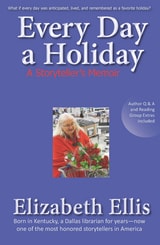
Every Day A Holiday
A storyteller's memoirElizabeth Ellis
Parkhurst Brothers, Inc., 2014
--Robin Bady, Storyteller, Arts Educator, Brooklyn, New York
Excellent Things in Women
A Memoir of Postcolonial PakistanSara Suleri Goodyear
University of Chicago Press, 1989
Sometimes, only the most heartbreaking memories possess the capacity—in their elegiac immediacy—to take our breath away. With Excellent Things in Women, Sara Suleri offers the reader a delicately wrought memoir of life in postcolonial Pakistan. Suleri intertwines the violent history of Pakistan's independence with her own intimate experiences—relating the tumult of growing up female during a time of fierce change in the Middle East in the 1960s and ’70s. In the two selections presented here, “Excellent Things in Women” and “Meatless Days,” we watch as Suleri re-encounters the relationships that inform her voyage from adolescence to womanhood—with her Welsh mother; her Pakistani father, prominent political journalist Z. A. Suleri; and her tenacious grandmother, Dadi, along with her five siblings—as she comes to terms with the difficulties of growing up and her own complicated passage to the West.
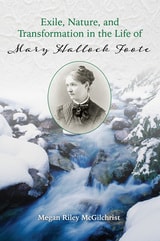
Exile, Nature, and Transformation in the Life of Mary Hallock Foote
Megan Riley McGilchrist
University of Nevada Press, 2021
Ezra Pound - American Writers 26
University of Minnesota Pamphlets on American WritersWilliam Van O’Connor
University of Minnesota Press, 1963
Ezra Pound - American Writers 26 was first published in 1963. Minnesota Archive Editions uses digital technology to make long-unavailable books once again accessible, and are published unaltered from the original University of Minnesota Press editions.

Ezra Pound and Margaret Cravens
A Tragic Friendship, 1910–1912Omar Pound and Robert Spoo, editors
Duke University Press, 1988
Pound was deeply affected by her death, as was the poet H. D., who had recently come to know her. Pound's letters to Cravens, extensively annotated, are published here for the first time; her suicide note to him is also included. Ezra Pound and Margaret Cravens contains photographs and previously unpublished material by Pound and H.D., as well as an excerpt from H.D.'s autobiographical novel Asphodel, in which Cravens figures prominently. This portrait of a friendship provides insight into the literary achievements of Pound and H.D. and tells the unknown story of Margaret Cravens's tragic life.