279 books match the query 'Management' and 10 start with e
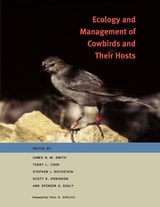
cover of Ecology and Management of Cowbirds and Their Hosts: Studies in the Conservation of North American Passerine Birds

Ecology and Management of Cowbirds and Their Hosts

Studies in the Conservation of North American Passerine Birds

By James N. M. Smith, Terry L. Cook, Stephen I. Rothstein, Scott K. Robinson, and Spencer G. Sealy

University of Texas Press, 2000

In the past two centuries, cowbirds have increased in numbers and extended their range across North America, while many of the native songbird species whose nests they parasitize to raise their young have declined. This timely book collects forty essays by most of the principal authorities on the biology and management of cowbirds. The book's goals are to explore the biology of cowbirds, the threats they pose to host species and populations, and the management programs that are being undertaken to minimize these threats.

The book is organized into five sections, each with an extended editors' introduction that places the contributions in a broad, up-to-date setting. The sections cover:

  • The changing abundance of cowbirds and the ways in which their numbers can be estimated.
  • Host choice by cowbirds, the negative effects of cowbirds on particular host species, and the daily patterns of cowbird behavior.
  • Behavioral interactions between cowbirds and specific host species.
  • Patterns of cowbird abundance and host use across varying landscapes.
  • Management programs designed to control cowbirds and protect threatened songbirds.
[more]
cover of Ecology and Management of North American Savannas

Ecology and Management of North American Savannas

Guy R. McPherson

University of Arizona Press, 1997

Savannas are ecosytems with a continuous grass layer and scattered trees or shrubs. These lands occupy nearly a third of the earth’s land surface and are an important resource not only in world economies but also as repositories of biodiversity. Because savannas are generally thought of as tropical ecosystems, most reviews of the literature have tended to disregard savannas found in temperate zones. Yet these ecosystems are both extensive and diverse in North America, ranging from longleaf pine habitats along the Atlantic coastal plain to xeric piñon-juniper communities of the Great Basin-ecosystems seemingly disparate, yet similar enough to merit study as savannas. This book provides an overview of the patterns and processes shared by these ecosystems and offers substantive ideas regarding future management and research efforts. It describes the composition geographic distribution, climate, soils, and uses of savannas throughout North America, summarizing and integrating a wide array of literature. While discussing these ecological patterns and processes. McPherson develops a framework for implementing management practices and safeguarding the future of these important wildland ecosystems. Ecology and Management of North American Savannas takes a major step toward establishing the science of savanna ecology for North America. It encourages constructive debate and relevant research on these important systems and will also serve as a useful resource in biogeography, plant ecology, and rangeland management.
[more]
cover of Ecology and Management of the North American Moose, Second Edition

Ecology and Management of the North American Moose, Second Edition

Charles C. Schwartz

University Press of Colorado, 2007

Back in print as a University Press of Colorado edition, this abundantly illustrated volume with field sketch illustrations by William D. Berry fully explains moose biology and ecology and assesses the increasingly complex enterprise of managing moose. Twenty-one of the world's authorities on the species discuss its taxonomy, reproduction and growth, feeding habits, behavior, population dynamics, relationships with predators, incidental mortality, seasonal migration patterns, and habitat and harvest management.

Contributors include Warren B. Ballard, Arnold H. Boer, Anthony B. Bubenik, M. E. Buss, Kenneth N. Child, Vincent F.J. Crichton, Albert W. Franzmann, Kris J. Hundertmark, Patrick D. Karns, Murray W. Lankester, Richard E. McCabe, James M. Peek, Henry M. Reeves, Wayne L. Regelin, Lyle A. Renecker, William M. Samuel, Charles C. Schwartz, Robert W. Stewart, Ian D. Thompson, H. R. Timmermann, and Victor Van Ballenberghe. A Wildlife Management Institute book

[more]
cover of Ecology of the Bay of Quinte: Health, Management and Global Implications

Ecology of the Bay of Quinte

Health, Management and Global Implications

C.K. Minns

Michigan State University Press, 2022

Project Quinte was a Canadian multi-agency collaborative initiative—launched in 1972 and lasting until 2018—that generated the longest ecosystem-based data set in the Great Lakes. The project produced a special bulletin of the Canadian Journal of Fisheries Science in 1986 and two special issues of Aquatic Ecosystem Health & Management more recently. This monograph provides a broad sweep of the many facets of aquatic ecosystem structure and function that were explored in efforts to define and solve the challenges to ecosystem health present in the Bay of Quinte ecosystem and to sustain it hopefully far into the future. Many papers provide a long-term perspective that highlights the need to maintain monitoring programs while increasing our basic knowledge. Long-term studies of ecosystems like Quinte continually reveal new questions and challenges beyond the scope of controlled laboratory experiments. The health of the Bay of Quinte is much improved as a result of the long-term participation of people, time, and resources reflected in this book. The monograph through its twenty-six in-depth chapters opens a wide panorama for exploration and application of the ecosystem approach and the resulting productivity, with much remaining to be done by those that follow in these footsteps. Approximately one hundred scientists have collectively participated toward the preparation of various chapters included in this meticulously peer-reviewed monograph.
[more]
cover of Enabling Creative Chaos: The Organization Behind the Burning Man Event

Enabling Creative Chaos

The Organization Behind the Burning Man Event

Katherine K. Chen

University of Chicago Press, 2009

In the summer of 2008, nearly fifty thousand people traveled to Nevada’s Black Rock Desert to participate in the countercultural arts event Burning Man. Founded on a commitment to expression and community, the annual weeklong festival presents unique challenges to its organizers. Over four years Katherine K. Chen regularly participated in organizing efforts to safely and successfully create a temporary community in the middle of the desert under the hot August sun.

Enabling Creative Chaos tracks how a small, underfunded group of organizers transformed into an unconventional corporation with a ten-million-dollar budget and two thousand volunteers. Over the years, Burning Man’s organizers have experimented with different management models; learned how to recruit, motivate, and retain volunteers; and developed strategies to handle regulatory agencies and respond to media coverage. This remarkable evolution, Chen reveals, offers important lessons for managers in any organization, particularly in uncertain times.

[more]
cover of Enabling Technologies for Sustainable Smart Cities: Design, development and management

Enabling Technologies for Sustainable Smart Cities

Design, development and management

Mohammad A. Matin

The Institution of Engineering and Technology, 2025
As populations rise and cities draw ever-larger populations, smart cities are emerging around the world to cater for the need for sustainable urban development. The exploration of recent advances in information and communication technology (ICT), sensing and energy engineering offers promising enablers for creating, implementing, and promoting sustainable development strategies to address the challenges of this expanding urbanization.
[more]
cover of Engineering Culture: Control and Commitment in a High-Tech Corporation

Engineering Culture

Control and Commitment in a High-Tech Corporation

Gideon Kunda

Temple University Press, 2006
Engineering Culture is an award-winning ethnography of the engineering division of a large American high-tech corporation. Now, this influential book—which has been translated into Japanese, Italian, and Hebrew—has been revised to bring it up to date. In Engineering Culture, Gideon Kunda offers a critical analysis of an American company's well-known and widely emulated "corporate culture." Kunda uses detailed descriptions of everyday interactions and rituals in which the culture is brought to life, excerpts from in-depth interviews and a wide variety of corporate texts to vividly portray managerial attempts to design and impose the culture and the ways in which it is experienced by members of the organization. The company's management, Kunda reveals, uses a variety of methods to promulgate what it claims is a non-authoritarian, informal, and flexible work environment that enhances and rewards individual commitment, initiative, and creativity while promoting personal growth. The author demonstrates, however, that these pervasive efforts mask an elaborate and subtle form of normative control in which the members' minds and hearts become the target of corporate influence. Kunda carefully dissects the impact this form of control has on employees' work behavior and on their sense of self. In the conclusion written especially for this edition, Kunda reviews the company's fortunes in the years that followed publication of the first edition, reevaluates the arguments in the book, and explores the relevance of corporate culture and its management today.
[more]
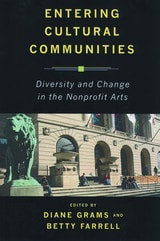
cover of Entering Cultural Communities: Diversity and Change in the Nonprofit Arts

Entering Cultural Communities

Diversity and Change in the Nonprofit Arts

Grams, Diane

Rutgers University Press, 2008

Arts organizations once sought patrons primarily from among the wealthy and well educated, but for many decades now they have revised their goals as they seek to broaden their audiences. Today, museums, orchestras, dance companies, theaters, and community cultural centers try to involve a variety of people in the arts. They strive to attract a more racially and ethnically diverse group of people, those from a broader range of economic backgrounds, new immigrants, families, and youth.

The chapters in this book draw on interviews with leaders, staff, volunteers, and audience members from eighty-five nonprofit cultural organizations to explore how they are trying to increase participation and the extent to which they have been successful. The insiders' accounts point to the opportunities and challenges involved in such efforts, from the reinvention of programs and creation of new activities, to the addition of new departments and staff dynamics, to partnerships with new groups. The authors differentiate between "relational" and "transactional" practices, the former term describing efforts to build connections with local communities and the latter describing efforts to create new consumer markets for cultural products. In both cases, arts leaders report that, although positive results are difficult to measure conclusively, long-term efforts bring better outcomes than short-term activities.

The organizations discussed include large, medium, and small nonprofits located in urban, suburban, and rural areas—from large institutions such as the Smithsonian, the Walker Art Center, the Museum of Fine Arts Houston, and the San Francisco Symphony to many cultural organizations that are smaller, but often known nationally for their innovative work, such as AS220, The Loft Literary Center, Armory Center for the Arts, Appalshop, and the Western Folklife Center.

[more]
cover of Ethics for Records and Information Management

Ethics for Records and Information Management

Norman A. Mooradian

American Library Association, 2018

The scope and reach of information, driven by the explosive growth of information technologies and content types, has expanded dramatically over the past 30 years. The consequences of these changes to records and information management (RIM) professionals are profound, necessitating not only specialized knowledge but added responsibilities. RIM professionals require a professional ethics to guide them in their daily practice and to form a basis for developing and implementing organizational policies, and Mooradian’s new book provides a rigorous outline of such an ethics. Taking an authoritative principles/rules based approach to the subject, this book comprehensively addresses

  • the structure of ethics, outlining principles, moral rules, judgements, and exceptions;
  • ethical reasoning, from meaning and logic to dilemmas and decision methods;
  • the ethical core of RIM, discussing key topics such as organizational context, the positive value of accountability, conflicts of interest, and confidentiality;
  • important ethical concerns like copyright and intellectual property, whistleblowing, information leaks, disclosure, and privacy; and
  • the relationship between RIM ethics and information governance.
[more]
cover of Exploring Discovery: The Front Door to Your Library's Licensed and Digitized Content

Exploring Discovery

The Front Door to Your Library's Licensed and Digitized Content

Kenneth J. Varnum

American Library Association, 2016

[more]