Results by title
1488 books match the query 'Media Studies' and 41 start with e
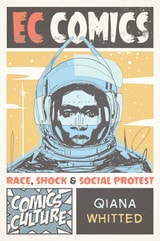
EC Comics
Race, Shock, and Social ProtestQiana Whitted
Rutgers University Press, 2019
Entertaining Comics Group (EC Comics) is perhaps best-known today for lurid horror comics like Tales from the Crypt and for a publication that long outlived the company’s other titles, Mad magazine. But during its heyday in the early 1950s, EC was also an early innovator in another genre of comics: the so-called “preachies,” socially conscious stories that boldly challenged the conservatism and conformity of Eisenhower-era America.
EC Comics examines a selection of these works—sensationally-titled comics such as “Hate!,” “The Guilty!,” and “Judgment Day!”—and explores how they grappled with the civil rights struggle, antisemitism, and other forms of prejudice in America. Putting these socially aware stories into conversation with EC’s better-known horror stories, Qiana Whitted discovers surprising similarities between their narrative, aesthetic, and marketing strategies. She also recounts the controversy that these stories inspired and the central role they played in congressional hearings about offensive content in comics.
The first serious critical study of EC’s social issues comics, this book will give readers a greater appreciation of their legacy. They not only served to inspire future comics creators, but also introduced a generation of young readers to provocative ideas and progressive ideals that pointed the way to a better America.
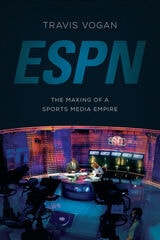
ESPN
The Making of a Sports Media EmpireTravis Vogan
University of Illinois Press, 2015
Travis Vogan teams archival research and interviews with an all-star cast to pen the definitive account of how ESPN turned X's and O's into billions of $$$. Vogan's institutional and cultural history focuses on the network since 1998, the year it launched a high-motor effort to craft its brand and grow audiences across media platforms. As he shows, innovative properties like SportsCentury, ESPN The Magazine, and 30 for 30 built the network's cultural caché. This credibility, in turn, propelled ESPN's transformation into an entity that lapped its run-of-the-mill competitors and helped fulfill its self-proclaimed status as the "Worldwide Leader in Sports."
Ambitious and long overdue, ESPN: The Making of a Sports Media Empire offers an inside look at how the network changed an industry and reshaped the very way we live as sports fans.

Easy Living
The Rise of the Home OfficeElizabeth A Patton
Rutgers University Press, 2020

Edited Clean Version
Technology and the Culture of ControlRaiford Guins
University of Minnesota Press, 2009
Where is censorship in the age of digital technology?
Not long ago it would have been an absurd idea to purchase a television, CD or MP3 or DVD player, computer software, or game console with the intention of limiting its capabilities. However, as Raiford Guins demonstrates in Edited Clean Version, today’s media technology is marketed and sold for what it does not contain and what it will not deliver.
TVs equipped with V-chips, Internet filters, editing DVD players, clean-version CDs and MP3s, and game consoles with parental control features can block out, monitor, disable, and filter information. As Guins argues in this provocative book, consumers now find themselves in new relationships with their everyday media in which they inscribe their viewing, listening, and playing experiences with self-prescribed and technologically enabled values and morals. Censorial practices are not so much enacted on media by regulatory bodies today as they are in our media technology.According to Guins, these new “control technologies” are designed to embody an ethos of neoliberal governance—through the very media that have been previously presumed to warrant management, legislation, and policing. Repositioned within a discourse of empowerment, security, and choice, the action of regulation, he reveals, has been relocated into the hands of users.
Editing and Special/Visual Effects
Keil, Charlie
Rutgers University Press, 2016

Effective Journalism
How the Information Ecosystem Works and What Journalists Should Do About ItJessica Roberts
Intellect Books, 2024
The central argument of this book is that journalists and audiences can no longer afford to pretend that all information is competing on an even playing field and that it is enough for journalists to simply publish “the facts.” Effective Journalism attempts to explain the reality, rather than the ideal, of how people seek and process information, and what journalists and their audiences can do to try to create an informed public in the face of that reality.
Electronic Elsewheres
Media, Technology, and the Experience of Social SpaceChris Berry
University of Minnesota Press, 2009
Media do not simply portray places that already exist; they actually produce them. In exploring how world populations experience "place" through media technologies, the essays included here examine how media construct the meanings of home, community, work, nation, and citizenship.
Tracing how media reconfigure the boundaries between public and private-and global and local-to create "electronic elsewheres," the essays investigate such spaces and identities as the avatars that women are creating on Web sites, analyze the role of satellite television in transforming Algerian neighborhoods, inquire into the roles of radio and television in Israel and India, and take a skeptical look at the purported novelty of the "new media home."
Contributors: Asu Aksoy, Istanbul Bilgi U; Charlotte Brunsdon, U of Warwick; Ratiba Hadj-Moussa, York U (Toronto); Tamar Liebes-Plesner, Hebrew U; David Morley, Goldsmiths, U of London; Lisa Nakamura, U of Illinois; Arvind Rajagopal, New York U; Kevin Robins, Goldsmiths, U of London; Jeffrey Sconce, Northwestern U; Marita Sturken, New York U; and Shunya Yoshimi, U of Tokyo.
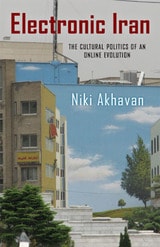
Electronic Iran
The Cultural Politics of an Online EvolutionAkhavan, Niki
Rutgers University Press, 2013
Electronic Iran introduces the concept of the Iranian Internet, a framework that captures interlinked, transnational networks of virtual and offline spaces.
Taking her cues from early Internet ethnographies that stress the importance of treating the Internet as both a site and product of cultural production, accounts in media studies that highlight the continuities between old and new media, and a range of works that have made critical interventions in the field of Iranian studies, Niki Akhavan traces key developments and confronts conventional wisdom about digital media in general, and contemporary Iranian culture and politics in particular.
Akhavan focuses largely on the years between 1998 and 2012 to reveal a diverse and combative virtual landscape where both geographically and ideologically dispersed individuals and groups deployed Internet technologies to variously construct, defend, and challenge narratives of Iranian national identity, society, and politics. While it tempers celebratory claims that have dominated assessments of the Iranian Internet, Electronic Iran is ultimately optimistic in its outlook. As it exposes and assesses overlooked aspects of the Iranian Internet, the book sketches a more complete map of its dynamic landscape, and suggests that the transformative powers of digital media can only be developed and understood if attention is paid to both the specificities of new technologies as well as the local and transnational contexts in which they appear.
Download open access ebook here.
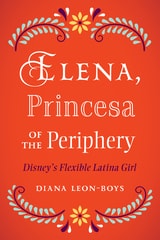
Elena, Princesa of the Periphery
Disney’s Flexible Latina GirlDiana Leon-Boys
Rutgers University Press, 2023
2024 National Communication Association's Critical and Cultural Communication Studies Division (CCSD) Book of the year award
2023 National Communication Association's Feminist and Gender Studies Division Bonnie Ritter Outstanding Feminist Book Award
In the summer of 2016, Disney introduced its first Latina princess, Elena of Avalor. Princesa of the Periphery explores this Disney property using multiple case studies to understand its approach to girlhood and Latinidad. Following the circuit of culture model, author Diana Leon-Boys teases out moments of complex negotiations by Disney, producers, and audiences as they navigate Elena’s circulation. Case studies highlight how a flexible Latinidad is deployed through corporate materials, social media pages, theme park experiences, and the television series to create a princess who is both marginal to Disney’s normative vision of princesshood and central to Disney’s claims of diversification. This multi-layered analysis of Disney’s mediated Latina girlhood interrogates the complex relationship between the U.S.’s largest ethnic minority and a global conglomerate that stands in for the U.S. on the global stage.

Embattled Memories
Contested Meanings in Korean War MemorialsSuhi Choi
University of Nevada Press, 2014

Emergency Broadcasting & 1930'S Am Radio
Edward Miller
Temple University Press, 2002
Empires of Entertainment
Media Industries and the Politics of Deregulation, 1980-1996Holt, Jennifer
Rutgers University Press, 2011
Empires of Entertainment integrates legal, regulatory, industrial, and political histories to chronicle the dramatic transformation within the media between 1980 and 1996. As film, broadcast, and cable grew from fundamentally separate industries to interconnected, synergistic components of global media conglomerates, the concepts of vertical and horizontal integration were redesigned. The parameters and boundaries of market concentration, consolidation, and government scrutiny began to shift as America's politics changed under the Reagan administration. Through the use of case studies that highlight key moments in this transformation, Jennifer Holt explores the politics of deregulation, the reinterpretation of antitrust law, and lasting modifications in the media landscape.
Holt skillfully expands the conventional models and boundaries of media history. A fundamental part of her argument is that these media industries have been intertwined for decades and, as such, cannot be considered separately. Instead, film, cable and broadcast must be understood in relation to one another, as critical components of a common history. Empires of Entertainment is a unique account of deregulation and its impact on political economy, industrial strategies, and media culture at the end of the twentieth century.

Empowered
Popular Feminism and Popular MisogynySarah Banet-Weiser
Duke University Press, 2018
Endless Intervals
Cinema, Psychology, and Semiotechnics around 1900Jeffrey West Kirkwood
University of Minnesota Press, 2022
Revealing cinema’s place in the coevolution of media technology and the human
Cinema did not die with the digital, it gave rise to it. According to Jeffrey West Kirkwood, the notion that digital technologies replaced analog obscures how the earliest cinema laid the technological and philosophical groundwork for the digital world. In Endless Intervals, he introduces a theory of semiotechnics that explains how discrete intervals of machines came to represent something like a mind—and why they were feared for their challenge to the uniqueness of human intelligence.
Examining histories of early cinematic machines, Kirkwood locates the foundations for a scientific vision of the psyche as well as the information age. He theorizes an epochal shift in the understanding of mechanical stops, breaks, and pauses that demonstrates how cinema engineered an entirely new model of the psyche—a model that was at once mechanical and semiotic, discrete and continuous, physiological and psychological, analog and digital.
Recovering largely forgotten and untranslated texts, Endless Intervals makes the case that cinema, rather than being a technology assaulting the psyche, is in fact the technology that produced the modern psyche. Kirkwood considers the ways machines can create meaning, offering a fascinating theory of how the discontinuous intervals of soulless mechanisms ultimately produced a rich continuous experience of inner life.

Endurance Media
Neta Alexander
University of Minnesota Press, 2027
How digital platforms profit from our inability to log off
Endurance Media explores how contemporary digital technologies extract value from our bodies by demanding sustained engagement that pushes us beyond, and even reconfigures, our limits. It introduces the concept of “endurance media”—systems, platforms, and practices that require users to align their bodily rhythms with relentless media temporalities, transforming exhaustion itself into a profitable resource and a cultural fantasy.
In Endurance Media leading media scholars explore the dark intersection of metabolic capitalism and algorithmic control. From exercise bikes that monetize heart rates and caloric expenditure, to gaming suits that deliver electric shocks for “haptic realism,” to energy drinks marketed as performance enhancers for marathon gaming sessions, Endurance Media reveals how digital platforms colonize rest time under the guise of pleasure, interactivity, and autonomy. This analysis extends from individual bodies to planetary infrastructure, connecting personal media habits to the environmental costs of server farms and AI resource extraction.
At stake is the possibility of recuperating endurance as a space for alternative modes of duration, relationality, and collective survival. To that end, this book offers a critical alternative through “anti-endurance media”—a disability-informed framework that values rest, refusal, and collective care over relentless individual optimization.
Retail e-book files for this title are screen-reader friendly with images accompanied by short alt text and/or extended descriptions.
Engaging with Reality
Documentary and GlobalizationIb Bondebjerg
Intellect Books, 2014
Engaging with Reality is framed by theories of globalization and delves into the development of a new global media culture. It also deals with theories of documentary genres and their social and cultural functions. It discusses cosmopolitanism and the role and forms of documentary in a new digital and global media culture. It will be essential reading for those looking to better understand documentary and the new transnational approach to modern media culture.
Envisioning Asia
On Location, Travel, and the Cinematic Geography of U.S. OrientalismJeanette Roan
University of Michigan Press, 2010
"Whereas some other scholars read selected films mainly to illustrate political arguments, Roan never loses sight of the particularities of film as a distinctive cultural form and practice. Her drive to see 'cinema as a mechanism of American orientalism' results in not just a textual analysis of these films, but also a history of their material production and distribution."
---Josephine Lee, University of Minnesota
"Envisioning Asia offers an exciting new contribution to our understandings of the historical developments of American Orientalism. Jeannette Roan deftly situates changing cinematic technologies within the context of U.S. imperial agendas in this richly nuanced analysis of 'shooting on location' in Asia in early 20th century American cinema."
---Wendy Kozol, Oberlin College
"Through her vivid illustration of the role of American cinema in the material, visual, and ideological production of Asia, Jeanette Roan takes the reader on a journey to Asia through a very different route from the virtual travel taken by the viewers of the films she discusses."
---Mari Yoshihara, University of Hawai'i at Manoa
The birth of cinema coincides with the beginnings of U.S. expansion overseas, and the classic Hollywood era coincides with the rise of the United States as a global superpower. In Envisioning Asia, Jeanette Roan argues that throughout this period, the cinema's function as a form of virtual travel, coupled with its purported "authenticity," served to advance America's shifting interests in Asia. Its ability to fulfill this imperial role depended, however, not only on the cinematic representations themselves but on the marketing of the films' production histories---and, in particular, their use of Asian locations. Roan demonstrates this point in relation to a wide range of productions, offering an engaging and useful survey of a largely neglected body of film. Not only that, by focusing on the material practices involved in shooting films on location---that is, the actual travels, negotiations, and labor of making a film---she moves beyond formal analysis to produce a richly detailed history of American interests, attitudes, and cultural practices during the first half of the twentieth century.
Jeanette Roan is Adjunct Professor of Visual Studies at California College of the Arts and author of "Exotic Explorations: Travels to Asia and the Pacific in Early Cinema" in Re/collecting Early Asian America: Essays in Cultural History (2002).
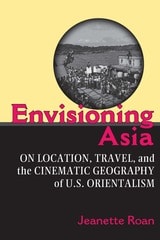
Cover art: Publicity still, Tokyo File 212 (Dorrell McGowan and Stuart McGowan, 1951). The accompanying text reads: "Hundreds of spectators gather on the sidelines as technicians prepare to photograph a parade scene in 'Tokyo File 212,' a Breakston-McGowan Production filmed in Japan for RKO Radio distribution." Courtesy of the Academy of Motion Picture Arts and Sciences.
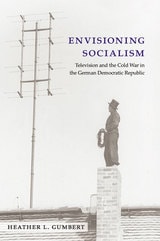
Envisioning Socialism
Television and the Cold War in the German Democratic RepublicHeather L. Gumbert
University of Michigan Press, 2014
Envisioning Socialism examines television and the power it exercised to define the East Germans’ view of socialism during the first decades of the German Democratic Republic. In the first book in English to examine this topic, Heather L. Gumbert traces how television became a medium prized for its communicative and entertainment value. She explores the difficulties GDR authorities had defining and executing a clear vision of the society they hoped to establish, and she explains how television helped to stabilize GDR society in a way that ultimately worked against the utopian vision the authorities thought they were cultivating.
Gumbert challenges those who would dismiss East German television as a tool of repression that couldn’t compete with the West or capture the imagination of East Germans. Instead, she shows how, by the early 1960s, television was a model of the kind of socialist realist art that could appeal to authorities and audiences. Ultimately, this socialist vision was overcome by the challenges that the international market in media products and technologies posed to nation-building in the postwar period.
A history of ideas and perceptions examining both real and mediated historical conditions, Envisioning Socialism considers television as a technology, an institution, and a medium of social relations and cultural knowledge. The book will be welcomed in undergraduate and graduate courses in German and media history, the history of postwar Socialism, and the history of science and technologies.

Essential Essays (Two-volume set)
Foundations of Cultural Studies & Identity and DiasporaStuart Hall
Duke University Press, 2018
From his arrival in Britain in the 1950s and involvement in the New Left, to founding the field of cultural studies and examining race and identity in the 1990s and early 2000s, Stuart Hall has been central to shaping many of the cultural and political debates of our time. Essential Essays—a landmark two volume set—brings together Stuart Hall's most influential and foundational works. Spanning the whole of his career, these volumes reflect the breadth and depth of his intellectual and political projects while demonstrating their continued vitality and importance.
Volume 1: Foundations of Cultural Studies focuses on the first half of Hall's career, when he wrestled with questions of culture, class, representation, and politics. This volume's stand-out essays include his field-defining “Cultural Studies and Its Theoretical Legacies;” the prescient “The Great Moving Right Show,” which first identified the emergent mode of authoritarian populism in British politics; and “Encoding and Decoding in the Television Discourse,” one of his most influential pieces of media criticism. As a whole, Volume 1 provides a panoramic view of Hall's fundamental contributions to cultural studies.
Volume 2: Identity and Diaspora draws from Hall's later essays, in which he investigated questions of colonialism, empire, and race. It opens with “Gramsci's Relevance for the Study of Race and Ethnicity,” which frames the volume and finds Hall rethinking received notions of racial essentialism. In addition to essays on multiculturalism and globalization, black popular culture, and Western modernity's racial underpinnings, Volume 2 contains three interviews with Hall, in which he reflects on his life to theorize his identity as a colonial and diasporic subject.

Essential Essays, Volume 1
Foundations of Cultural StudiesStuart Hall
Duke University Press, 2018
Volume 1: Foundations of Cultural Studies focuses on the first half of Hall's career, when he wrestled with questions of culture, class, representation, and politics. This volume's stand-out essays include his field-defining “Cultural Studies and Its Theoretical Legacies"; the prescient “The Great Moving Right Show,” which first identified the emergent mode of authoritarian populism in British politics; and “Encoding and Decoding in the Television Discourse,” one of his most influential pieces of media criticism. As a whole, Volume 1 provides a panoramic view of Hall's fundamental contributions to cultural studies.

Essential Essays, Volume 2
Identity and DiasporaStuart Hall
Duke University Press, 2018
Volume 2: Identity and Diaspora draws from Hall's later essays, in which he investigated questions of colonialism, empire, and race. It opens with “Gramsci's Relevance for the Study of Race and Ethnicity,” which frames the volume and finds Hall rethinking received notions of racial essentialism. In addition to essays on multiculturalism and globalization, black popular culture, and Western modernity's racial underpinnings, Volume 2 contains three interviews with Hall, in which he reflects on his life to theorize his identity as a colonial and diasporic subject.
Eternity in the Ether
A Mormon Media HistoryGavin Feller
University of Illinois Press, 2023
Intriguing and original, Eternity in the Ether blends communications history with a religious perspective to examine the crossroads where mass media met Mormonism in the twentieth century.
Ethical Programs
Hospitality and the Rhetorics of SoftwareJames J. Brown, Jr.
University of Michigan Press, 2015
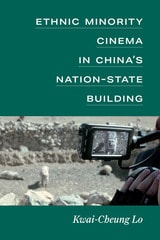
Ethnic Minority Cinema in China’s Nation-State Building
Kwai-Cheung Lo
University of Michigan Press, 2025
Lo understands these representations of ethnic minorities as part of a larger ecosystem and the cultures, values, and life practices of non-Han ethnic minorities as closely entwined with environmental issues and politics. This intertwining, Lo argues, suggests a crisis in “objectification and identification” of both people and the environment, that plays out in cinema featuring ethnic minorities. Lo traces these depictions of Chinese ethnic minority groups in films created by both Han-majority and non-Han filmmakers, examining how these representations became a site in which state authorities, Han and non-Han communities, and foreign agencies compete and interact under the larger context of building and imagining the Chinese nation-state.
Europe Faces Europe
Narratives from Its Eastern HalfEdited by Johan Fornäs
Intellect Books, 2017
European Culture and the Media
Edited by Ib Bondebjerg and Peter Golding
Intellect Books, 2004
European Journalism Education
Edited by Georgios Terzis
Intellect Books, 2009
This book is the first comprehensive directory of the journalism education and training offered in thirty-three European countries. The volume, organized by country, discusses the history of journalism education and includes an analysis of all the current university programs and training provided by private media and professional organizations in each location. In addition, each section includes a thorough examination of the historical, political, economic and social framework of journalism in each country that looks towards the future of journalism education and media in Europe. European Journalism Education will be an asset to scholars of international communication studies and to media policy makers around the world.
European Media Governance
National and Regional DimensionsGeorgios Terzis
Intellect Books, 2013
This impressive volume provides a detailed examination of all aspects of media governance, including media ownership structures, government policies, citizen’s organisations and union’s accountability systems, for 32 European countries. European Media Governance includes recent research into technological developments and provides sources for more information in each country. In addition to this incredibly diverse scale of research and analysis, the book provides a companion website with regular updates. Terzis’ European Media Governance addresses all aspects of media governance in Europe, reflecting contemporary developments in both the countries analysed and their media, creating a comprehensive and reliable source.
European Media Governance
The Brussels DimensionEdited by Georgios Terzis
Intellect Books, 2008
Everyman News
The Changing American Front PageMichele Weldon
University of Missouri Press, 2007
One need only look at the front pages of newspapers over the past few years to see that something has changed. Stories are more personal, more inclusive, less distant from readers’ experiences. Once called the first draft of history, news has become more of an anecdotal companion. The evidence is telling: stories use more unofficial sources than ever before; the “inverted pyramid” form of news writing is barely practiced; and, especially after 9/11, tragedy has become more humanized.
Scanning the crowded media landscape, Michele Weldon—a journalist passionate about her profession—takes a fresh look at how newspapers have carved out a narrative niche that reflects society’s fascination with personal stories and readers’ demands for diversity in content. Comparing some 850 stories, story approaches, and unofficial sourcing in twenty American newspapers for eight dates in 2001 and 2004—a total of 160 front pages—she shows a shift toward features over hard news, along with an increase in anecdotal or humanistic approaches to all stories.
Everyman News offers a provocative look at why American newspapers have become story papers, with their content and style saying as much about our culture as they do about the journalists and the readers. Weldon shows that a variety of forces both inside and outside journalism—blogs, citizen journalism, newsroom diversity, and other factors—have converged to remake the front page, and she unveils the content of “everyman news” as a commodity apart from the mode of delivery. Her assessment also incorporates more than fifty interviews with people connected to journalism about what these changes mean—revealing that not everyone in the industry believes they are for the better.
Is everyman news perhaps right for its time, or is it merely a symptom of what Weldon calls “Chicken Little journalism”? Weighing in on such matters as the New York Times’s “Portraits of Grief” series and the dangers of the blogosphere, she invites readers to make their own calls in this original and important contribution to the study of media. Everyman News is a book that will contribute to our understanding of newspapers in the new century—must reading for professionals and an eye-opener for anyone trying to comprehend the significant shifts in today’s front pages.
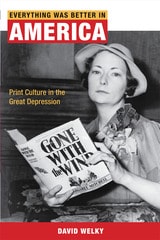
Everything Was Better in America
Print Culture in the Great DepressionDavid Welky
University of Illinois Press, 2007

Ex Ante
Power and Prediction in the Real-Time FutureJohn Cheney-Lippold
University of Chicago Press, 2027
An incisive framework for understanding how predictive AI has reshaped our relationship with time.
Ex Ante argues that AI systems draw us into a new experience of time, a continuous stream of machine-generated futures that reshapes our relationship to ourselves, to capitalism, and to infrastructure. Unlike other predictive tools that help us prepare for what might come, these projections—produced by algorithms and sourced by massive flows of data—calibrate our actions moment by moment, second by second.
In this book, John Cheney-Lippold offers a framework he calls the ex ante, Latin for “before the event,” as a way to consider how the future has become capitalism’s latest resource for exploitation. Through case studies spanning TikTok beauty filters that have fueled a surge in plastic surgery consultations, chess engines that redefine how the game is played, online sports betting platforms that commodify probability itself, hospital sepsis algorithms that transform the labor of nursing, and coordinated vehicle networks that collectively anticipate their surroundings to function, Ex Ante offers an exploration and powerful critique of our algorithmic present and the powers behind it.
Excommunication
Three Inquiries in Media and MediationAlexander R. Galloway, Eugene Thacker, and McKenzie Wark
University of Chicago Press, 2013

Expanding the American Mind
Books and the Popularization of KnowledgeBeth Luey
University of Massachusetts Press, 2010
Expanding the American Mind begins by comparing fiction and nonfiction—their relative respectability in the eyes of reading experts and in the opinions of readers themselves. It then traces the roots of popularization from the Middle Ages to the present, examining changes in literacy, education, and university politics. Focusing on the period since World War II, it examines the ways that curricular reform has increased interest in popularization as well as the impact of specialization and professionalization among the faculty. It looks at the motivations of academic authors and the risks and rewards that come from writing for a popular audience. It also explains how experts write for nonexperts—the rhetorical devices they use and the voices in which they communicate.
Beth Luey also looks at the readers of popularizations—their motivations for reading, the ways they evaluate nonfiction, and how they choose what to read. This is the first book to use surveys and online reader responses to study nonfiction reading. It also compares the experience of reading serious nonfiction with that of reading other genres.
Using publishers' archives and editor-author correspondence, Luey goes on to examine what editors, designers, and marketers in this very competitive business do to create and sell popularizations to the largest audience possible. In a brief afterword she discusses popularization and the Web. The result is a highly readable and engaging survey of this distinctive genre of writing.
Experimental Games
Critique, Play, and Design in the Age of GamificationPatrick Jagoda
University of Chicago Press, 2020
Drawing from his own experience as a game designer, Patrick Jagoda argues that games need not be synonymous with gamification. He studies experimental games that intervene in the neoliberal project from the inside out, examining a broad variety of mainstream and independent games, including StarCraft, Candy Crush Saga, Stardew Valley, Dys4ia, Braid, and Undertale. Beyond a diagnosis of gamification, Jagoda imagines ways that games can be experimental—not only in the sense of problem solving, but also the more nuanced notion of problem making that embraces the complexities of our digital present. The result is a game-changing book on the sociopolitical potential of this form of mass entertainment.
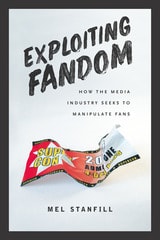
Exploiting Fandom
How the Media Industry Seeks to Manipulate FansMel Stanfill
University of Iowa Press, 2019
By bringing industry studies and fan studies into the conversation, Stanfill looks closely at just who exactly the industry considers “proper fans” in terms of race, gender, age, and sexuality, and interrogates how digital media have influenced consumption, ultimately finding that the invitation to participate is really an incitement to consume in circumscribed, industry-useful ways.
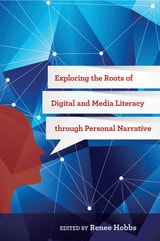
Exploring the Roots of Digital and Media Literacy through Personal Narrative
Renee Hobbs
Temple University Press, 2016
Exploring the Roots of Digital and Media Literacy through Personal Narrative provides a wide-ranging look at the origins, concepts, theories, and practices of the field. This unique, exciting collection of essays by a range of distinguished scholars and practitioners offers insights into the scholars and thinkers who fertilized the minds of those who helped shape the theory and practice of digital and media literacy education.
Each chapter describes an individual whom the author considers to be a type of “grandparent.” By weaving together two sets of personal stories—that of the contributing author and that of the key ideas and life history of the historical figure under their scrutiny—major concepts of digital media and learning emerge.
Exposing Vulnerability
Self-Mediation in Scandinavian Films By WomenAdriana Margareta Dancus
Intellect Books, 2019
Exposing the Film Apparatus
Global Laboratory PerspectivesGiovanna Fossati
Amsterdam University Press, 2026
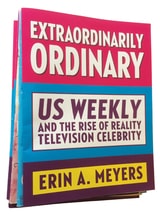
Extraordinarily Ordinary
Us Weekly and the Rise of Reality Television CelebrityErin A. Meyers
Rutgers University Press, 2020
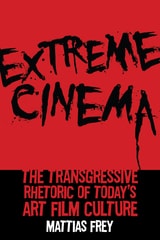
Extreme Cinema
The Transgressive Rhetoric of Today's Art Film CultureFrey, Mattias
Rutgers University Press, 2016
From Shortbus to Shame and from Oldboy to Irreversible, film festival premieres regularly make international headlines for their shockingly graphic depictions of sex and violence. Film critics and scholars alike often regard these movies as the work of visionary auteurs, hailing directors like Michael Haneke and Lars von Trier as heirs to a tradition of transgressive art. In this provocative new book, Mattias Frey offers a very different perspective on these films, exposing how they are also calculated products, designed to achieve global notoriety in a competitive marketplace.