164 books match the query 'Medical care' and 5 start with e
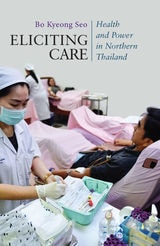
cover of Eliciting Care: Health and Power in Northern Thailand

Eliciting Care

Health and Power in Northern Thailand

Bo Kyeong Seo

University of Wisconsin Press, 2020

In 2001, Thailand introduced universal health care reforms that have become some of the most celebrated in the world, providing almost its entire population with health protection coverage. However, this remarkable implementation of health policy is not without its weaknesses. Drawing on two years of fieldwork at a district hospital in northern Thailand, Bo Kyeong Seo examines how people in marginal and dependent social positions negotiate the process of obtaining care.
Using the broader concept of elicitation, Seo analyzes the social encounters and forces that shape caregivers. These dynamics challenge dichotomies of subjugation and resistance, consent and coercion, and dependence and autonomy. The intimate and moving stories at the core of Eliciting Care from patients and providers draw attention to a broader, critically important phenomenon at the hospital level. Seo's poignant ethnography engages with feminist theory on the ethics of care, and in so doing, makes a significant contribution to emerging work in the field of health policy and politics.
[more]
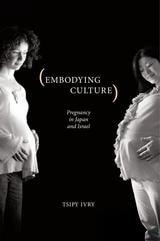
cover of Embodying Culture: Pregnancy in Japan and Israel

Embodying Culture

Pregnancy in Japan and Israel

Ivry, Tsipy

Rutgers University Press, 2009

Embodying Culture is an ethnographically grounded exploration of pregnancy in two different cultures—Japan and Israel—both of which medicalize pregnancy. Tsipy Ivry focuses on "low-risk" or "normal" pregnancies, using cultural comparison to explore the complex relations among ethnic ideas about procreation, local reproductive politics, medical models of pregnancy care, and local modes of maternal agency.

The ethnography pieces together the voices of pregnant Japanese and Israeli women, their doctors, their partners, the literature they read, and depicts various clinical encounters such as ultrasound scans, explanatory classes for amniocentesis, birthing classes, and special pregnancy events.

The emergent pictures suggest that although experiences of pregnancy in Japan and Israel differ, pregnancy in both cultures is an energy-consuming project of meaning-making— suggesting that the sense of biomedical technologies are not only in the technologies themselves but are assigned by those who practice and experience them.

[more]
cover of Envisioning African Intersex: Challenging Colonial and Racist Legacies in South African Medicine

Envisioning African Intersex

Challenging Colonial and Racist Legacies in South African Medicine

Amanda Lock Swarr

Duke University Press, 2023

Since the 1600s, travelers, scientists, and doctors have claimed that “hermaphroditism” and intersex are disproportionately common among black South Africans. In Envisioning African Intersex Amanda Lock Swarr debunks this claim by interrogating contemporary intersex medicine and demonstrating its indivisibility from colonial ideologies and scientific racism. Tracing the history of racialized research that underpins medical and scientific premises of gendered bodies, Swarr analyzes decolonial actions by intersex South Africans from the 1990s to the present, centering the work of organizers such as Sally Gross, the first openly intersex activist in Africa and a global pioneer of intersex legislation. Swarr also explores African social media activism that advocates for intersex justice and challenges the mistreatment of South African Olympian Caster Semenya. Throughout, Swarr shows how activists displace doctors’ impositions to fashion self-representation. By unseating colonial visions of gender, intersex South Africans are actively disrupting medical violence, decolonizing gender binaries, and inciting policy changes.

All author royalties from Envisioning African Intersex will be donated to Intersex South Africa.

[more]
cover of Every Last Breath: A Memoir of Two Illnesses

Every Last Breath

A Memoir of Two Illnesses

Joanne Jacobson

University of Utah Press, 2020
When Joanne Jacobson’s writing about her mother’s respiratory illness was interrupted by her own diagnosis with a rare blood disorder, she found her perspective profoundly altered. Every Last Breath follows these two chronic illnesses as they grow unexpectedly intertwined. Rejecting a fixed, retrospective point of view and the forward-moving trajectory of conventional memoir, Jacobson brings the reader to the emotionally raw present—where potentially fatal illness and “end of life” both remain, emphatically, life. As chronic illness blurs the distinction between illness and wellness, she discovers how a lifetime of relapse and remission can invite transformation. Written at the fluid, unsettling boundary between prose and poetry, these essays offer a narrative diagnosis of ongoing revision.
[more]
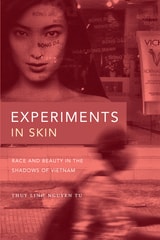
cover of Experiments in Skin: Race and Beauty in the Shadows of Vietnam

Experiments in Skin

Race and Beauty in the Shadows of Vietnam

Thuy Linh Nguyen Tu

Duke University Press, 2021

In Experiments in Skin Thuy Linh Nguyen Tu examines the ongoing influence of the Vietnam War on contemporary ideas about race and beauty. Framing skin as the site around which these ideas have been formed, Tu foregrounds the histories of militarism in the production of US biomedical knowledge and commercial cosmetics. She uncovers the efforts of wartime scientists in the US Military Dermatology Research Program to alleviate the environmental and chemical risks to soldiers' skin. These dermatologists sought relief for white soldiers while denying that African American soldiers and Vietnamese civilians were also vulnerable to harm. Their experiments led to the development of pharmaceutical cosmetics, now used by women in Ho Chi Minh City to tend to their skin, and to grapple with the damage caused by the war's lingering toxicity. In showing how the US military laid the foundations for contemporary Vietnamese consumption of cosmetics and practices of beauty, Tu shows how the intersecting histories of militarism, biomedicine, race, and aesthetics become materially and metaphorically visible on skin.
[more]