Results by title
941 books match the query 'Military' and 20 start with e
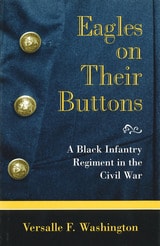
Eagles on Their Buttons
A Black Infantry Regiment in the Civil WarVersalle F. Washington
University of Missouri Press, 1999
Eagles on Their Buttons is a fascinating examination of the Fifth Regiment of Infantry, United States Colored Troops—the Union Army's first black regiment from Ohio. Although the Fifth USCT was one of more than 150 regiments of black troops making up more than 10 percent of the Union Army at the end of the war, it was unique. The majority of USCT regiments were made up of freed men who viewed the army as an escape from slavery and a chance to take up arms against their former masters. The men serving in the 5th USCT, however, were freemen who were raised in a northern state and saw serving in the army both as a way to gain equal rights under the law and as an opportunity to prove their worth as men.
Because historians have written little on this subject, many Americans believe that African Americans simply received their freedom with the Emancipation Proclamation. They know nothing about the struggles these courageous people endured to gain their independence. Now, by incorporating personal documents, letters, diaries, and official records, Eagles on Their Buttons sheds important new light on this unfamiliar aspect of the Civil War. Versalle Washington shows what caused the soldiers in the Fifth USCT to join their regiment, what sort of men they were, and how they fought and lived as African American soldiers under white officers. He discusses the regiment's service, addressing its role in the siege of Petersburg, the battle of Chapin's Farm, and the capture of Fort Fisher and the port of Wilmington. Washington also looks at what effects the soldiers' service had in terms of societal changes following the Civil War.
Eagles on Their Buttons is a fresh contribution to Civil War scholarship and will be welcomed by professional historians and amateur Civil War buffs alike.
This book is part of the University of Missouri Press' Shades of Blue and Gray series.
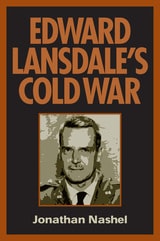
Edward Lansdale's Cold War
Jonathan Nashel
University of Massachusetts Press, 2005
The man widely believed to have been the model for Alden Pyle in Graham Greene's The Quiet American, Edward G. Lansdale (1908–1987) was a Cold War celebrity. A former advertising executive turned undercover CIA agent, he was credited during the 1950s with almost single-handedly preventing a communist takeover of the Philippines and with helping to install Ngo Dinh Diem as president of the American-backed government of South Vietnam. Adding to his notoriety, during the Kennedy administration Lansdale was put in charge of Operation Mongoose, the covert plot to overthrow the government of Cuba's Fidel Castro by assassination or other means.
In this book, Jonathan Nashel reexamines Lansdale's role as an agent of American Cold War foreign policy and takes into account both his actual activities and the myths that grew to surround him. In contrast to previous portraits, which tend to depict Lansdale either as the incarnation of U.S. imperialist ambitions or as a farsighted patriot dedicated to the spread of democracy abroad, Nashel offers a more complex and nuanced interpretation. At times we see Lansdale as the arrogant “ugly American,” full of confidence that he has every right to make the world in his own image and utterly blind to his own cultural condescension. This is the Lansdale who would use any conceivable gimmick to serve U.S. aims, from rigging elections to sugaring communist gas tanks. Elsewhere, however, he seems genuinely respectful of the cultures he encounters, open to differences and new possibilities, and willing to tailor American interests to Third World needs.
Rather than attempting to reconcile these apparently contradictory images of Lansdale, Nashel explores the ways in which they reflected a broader tension within the culture of Cold War America. The result is less a conventional biography than an analysis of the world in which Lansdale operated and the particular historical forces that shaped him—from the imperatives of anticommunist ideology and the assumptions of modernization theory to the techniques of advertising and the insights of anthropology.
Edward Stanly
Whiggerys Tarheel ConquerNorman Brown
University of Alabama Press, 1974
A Southern Whig, a Unionist firebrand—Edward Stanly’s fight for principle in a fractured nation.
This biography of Edward Stanly relates the major political events of his life: his emergence, while still in his twenties, as a fiery and controversial leader of the Whig Party in North Carolina, his role as one of the ablest champions of Whiggery in the United States House of Representatives, 1837–1843; his candidacy for governor of California on the Republican ticket in 1857; his appointment by President Abraham Lincoln as military governor of North Carolina in 1862; and his support in California of President Andrew Johnson’s Reconstruction policy.
Raised under the “Ancient Standard of Federalism,” Edward Stanly was a southern nationalist in the tradition of the two great Virginia Federalists, George Washington and John Marshall. An outspoken opponent of the nullification and secession doctrines of party of section in national politics.
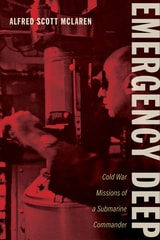
Emergency Deep
Cold War Missions of a Submarine CommanderAlfred Scott McLaren
University of Alabama Press, 2021
A compelling naval memoir of Arctic submarine duty—operations, engineering realities, and split‑second leadership choices in Emergency Deep.
Captain Alfred Scott McLaren served as commander of the USS Queenfish (SSN 651) from September 1969 to May 1973, the very height of the Cold War. As commander, McLaren led at least six major clandestine operations, including the first-ever exploration of the entire Siberian Continental Shelf: a perilous voyage detailed in his previous book Unknown Waters.
Emergency Deep: Cold War Missions of a Submarine Commander conveys the entire spectrum of Captain McLaren’s experiences commanding the USS Queenfish, mainly in the waters of the Russian Far East and also off Vietnam. McLaren offers a riveting and deeply human story that illuminates the intensity and pressures of commanding a nuclear attack submarine in some of the most difficult circumstances imaginable.
Relying on his own notes and records, as well as discussions with former officers and shipmates, McLaren focuses on operational matters both great and small. He recounts his unique perspectives on attack-submarine tactics and exploratory techniques in high-risk or uncharted areas, matters of leadership and team-building and the morale of his crews, and the innumerable and often unforeseen ways his philosophy of command played out on a day-to-day basis, with consequences that ran the gamut from the mundane to the dire and life-threatening.
Readers are also treated to significant new information and insight on submarine strategy, maneuvers, and culture. Such details illuminate and bring to life, with both great humor and gravitas, the intensity and pressures on those engaged in covert missions on nuclear attack submarines.

Empire and the Bomb
How the U.S. Uses Nuclear Weapons to Dominate the WorldJoseph Gerson
Pluto Press, 2007
Gerson reveals how and why the United States made more than twenty threats of nuclear attack during the Cold War---against Russia, China, Vietnam, and the Middle East. He shows how such threats continued under Presidents Bush, Clinton, and George W. Bush.
The book concludes with an appeal for the abolition of nuclear weapons and an overview of the history of the anti-nuclear movement. Drawing from a wide range of sources, including extensive government documents, this fascinating and timely account shows how the United States has used nuclear weapons to dominate the world.
Read a review of Empire and the Bomb:
http://www.jamesclayfuller.com/2007/09/terrifying-book-but-read-it-anyway.html
Empire of Defense
Race and the Cultural Politics of Permanent WarJoseph Darda
University of Chicago Press, 2019
From the formation of the DOD to the long wars of the twenty-first century, the United States rebranded war as the defense of Western liberalism from first communism, then crime, authoritarianism, and terrorism. Officials learned to frame state violence against Asians, Black and brown people, Arabs, and Muslims as the safeguarding of human rights from illiberal beliefs and behaviors. Through government documents, news media, and the writing and art of Joseph Heller, June Jordan, Trinh T. Minh-ha, I. F. Stone, and others, Darda shows how defense remade and sustained a weakened color line with new racial categories (the communist, the criminal, the authoritarian, the terrorist) that cast the state’s ideological enemies outside the human of human rights. Amid the rise of anticolonial and antiracist movements the world over, defense secured the future of war and white dominance.
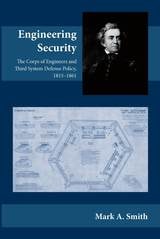
Engineering Security
The Corps of Engineers and Third System Defense Policy, 1815–1861Mark A. Smith
University of Alabama Press, 2009
Thorough examination of the antebellum fortifications that formed the backbone of U.S. military defense during the National Period
The system of coastal defenses built by the federal government after the War of 1812 was more than a series of forts standing guard over a watery frontier. It was an integrated and comprehensive plan of national defense developed by the US Army Corps of Engineers, and it represented the nation’s first peacetime defense policy.
Known as the Third System since it replaced two earlier attempts, it included coastal fortifications but also denoted the values of the society that created it. The governing defense policy was one that combined permanent fortifications to defend seaports, a national militia system, and a small regular army. The Third System remained the defense paradigm in the United States from 1816 to 1861, when the onset of the Civil War changed the standard. In addition to providing the country with military security, the system also provided the context for the ongoing discussion in Congress over national defense through annual congressional debates on military funding.
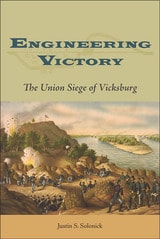
Engineering Victory
The Union Siege of VicksburgJustin S. Solonick
Southern Illinois University Press, 2015
On May 25, 1863, after driving the Confederate army into defensive lines surrounding Vicksburg, Mississippi, Union major general Ulysses S. Grant and his Army of the Tennessee laid siege to the fortress city. With no reinforcements and dwindling supplies, the Army of Vicksburg finally surrendered on July 4, yielding command of the Mississippi River to Union forces and effectively severing the Confederacy. In this illuminating volume, Justin S. Solonick offers the first detailed study of how Grant’s midwesterners serving in the Army of the Tennessee engineered the siege of Vicksburg, placing the event within the broader context of U.S. and European military history and nineteenth-century applied science in trench warfare and field fortifications. In doing so, he shatters the Lost Cause myth that Vicksburg’s Confederate garrison surrendered due to lack of provisions. Instead of being starved out, Solonick explains, the Confederates were dug out.
After opening with a sophisticated examination of nineteenth-century military engineering and the history of siege craft, Solonick discusses the stages of the Vicksburg siege and the implements and tactics Grant’s soldiers used to achieve victory. As Solonick shows, though Grant lacked sufficient professional engineers to organize a traditional siege—an offensive tactic characterized by cutting the enemy’s communication lines and digging forward-moving approach trenches—the few engineers available, when possible, gave Union troops a crash course in military engineering. Ingenious midwestern soldiers, in turn, creatively applied engineering maxims to the situation at Vicksburg, demonstrating a remarkable ability to adapt in the face of adversity. When instruction and oversight were not possible, the common soldiers improvised. Solonick concludes with a description of the surrender of Vicksburg, an analysis of the siege’s effect on the outcome of the Civil War, and a discussion of its significance in western military history.
Solonick’s study of the Vicksburg siege focuses on how the American Civil War was a transitional one with its own distinct nature, not the last Napoleonic war or the herald of modern warfare. At Vicksburg, he reveals, a melding of traditional siege craft with the soldiers’ own inventiveness resulted in Union victory during the largest, most successful siege in American history.
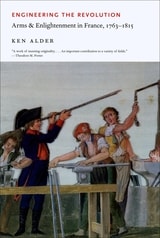
Engineering the Revolution
Arms and Enlightenment in France, 1763-1815Ken Alder
University of Chicago Press, 2010
Engineering the Revolution documents the forging of a new relationship between technology and politics in Revolutionary France, and the inauguration of a distinctively modern form of the “technological life.” Here, Ken Alder rewrites the history of the eighteenth century as the total history of one particular artifact—the gun—by offering a novel and historical account of how material artifacts emerge as the outcome of political struggle. By expanding the “political” to include conflict over material objects, this volume rethinks the nature of engineering rationality, the origins of mass production, the rise of meritocracy, and our interpretation of the Enlightenment and the French Revolution.
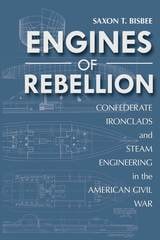
Engines of Rebellion
Confederate Ironclads and Steam Engineering in the American Civil WarSaxon T. Bisbee
University of Alabama Press, 2018
The development of steam propulsion machinery in warships during the nineteenth century, in conjunction with iron armor and shell guns, resulted in a technological revolution in the world’s navies. Warships utilizing all of these technologies were built in France and Great Britain in the 1850s, but it was during the American Civil War that large numbers of ironclads powered solely by steam proved themselves to be quite capable warships.
Historians have given little attention to the engineering of Confederate ironclads, although the Confederacy was often quite creative in building and obtaining marine power plants. Engines of Rebellion: Confederate Ironclads and Steam Engineering in the American Civil War focuses exclusively on ships with American built machinery, offering a detailed look at marine steam-engineering practices in both northern and southern industry prior to and during the Civil War.
Beginning with a contextual naval history of the Civil War, the creation of the ironclad program, and the advent of various technologies, Saxon T. Bisbee analyzes the armored warships built by the Confederate States of America that represented a style adapted to scarce industrial resources and facilities. This unique historical and archaeological investigation consolidates and expands on the scattered existing information about Confederate ironclad steam engines, boilers, and propulsion systems.
Through analysis of steam machinery development during the Civil War, Bisbee assesses steam plants of twenty-seven ironclads by source, type, and performance, among other factors. The wartime role of each vessel is discussed, as well as the stories of the people and establishments that contributed to its completion and operation. Rare engineering diagrams never before published or gathered in one place are included here as a complement to the text.
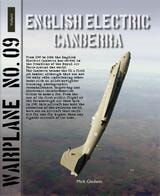
English Electric Canberra
Mick Gladwin
Amsterdam University Press, 2023
The story of the Canberra came to a close for the RAF on the 22nd June 2006 when the last remaining Canberra PR.9s retiring from service life after returning from operational duties. The author had the honour to serve with them in their twilight days of their careers.
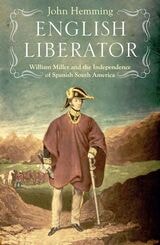
English Liberator
William Miller and the Independence of Spanish South AmericaJohn Hemming
Haus Publishing, 2025
During Admiral Thomas Cochrane’s demolition of imperial Spain’s naval presence in the Pacific amid the revolutionary wars for Spanish South America, all the raids were carried out by his marines under a young officer called William Miller. One of three sons of a baker in a small village in Kent, with no family influence, money, or even secondary education, he came from nowhere, but he went on to have a meteoric rise in the armies that liberated the nations of Chile and Peru. By the time of Ayacucho in 1824, the large battle that ended Spanish rule in South America, there were seven generals in the royalist Spanish army and five on the patriot side. Eleven of these generals were Hispanic; Miller was the only foreigner.
Set in the context of the great European powers’ weakening grip over their global empires and the ensuing wars of independence in Spanish South America, John Hemming’s gripping narrative spans Miller’s time as a teenage soldier in Wellington’s Peninsular War, his contribution to the liberation of the new nations Chile and Peru, and his years in diplomacy thereafter. Drawing on written accounts by many of Miller’s contemporaries in addition to a wealth of modern research, Hemming casts the anti-imperialist, anti-slavery soldier as highly regarded by all the leaders of independence and popular with ordinary people and peasant farmers due to his own humble origins—a legacy evidenced by his burial in the Pantheon of founding fathers of Peru decades after the battles in which he made his name.
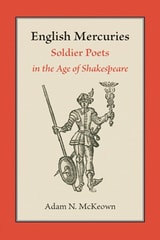
English Mercuries
Soldier Poets in the Age of ShakespeareAdam N. McKeown
Vanderbilt University Press, 2009
These misgivings are a powerful undercurrent in much of the literature of the period, even the most ostensibly patriotic works, but it is in the writings on war by soldier poets where they are most clearly pronounced. Fashioning themselves as servants of both Mars and Mercury (the god of war and the god of writing), Elizabethan soldier poets focused their war stories on the gritty realities of military campaigning, the price individuals paid for serving the state, and the difficulties of returning to civilian life. The book reconsiders some familiar writers like John Donne and Ben Jonson in the context of their military experiences and provides comprehensive studies of some important but underappreciated soldier poets like Thomas Churchyard, George Gascoigne, and John Harington.
Erasing Iraq
The Human Costs of CarnageMichael Otterman, Richard Hil, Paul Wilson, and Dahr Jamail
Pluto Press, 2010
For nearly two decades, the US and its allies have prosecuted war and aggression in Iraq. Erasing Iraq shows in unparalleled detail the devastating human cost of the war in Iraq.
Western governments and the mainstream media continue to ignore or play down the human costs of the war on Iraqi citizens This has allowed them to present their role as the benign guardians of Iraqi interests. The authors deconstruct this narrative by presenting a portrait of the total carnage in Iraq today. From Iraqi refugees in Syria, Jordan and the West, to civilians left behind, and other witnesses, this the story of the war told by those who experienced it firsthand.
Eric Warburg
A Transatlantic LifeJeanette Erazo Heufelder
Haus Publishing, 2025
In Eric Warburg, Jeanette Erazo Heufelder tells the story of the nephew of the art historian Aby Warburg, whose world-famous library Eric saved from the Nazis. He was a Jew, a banker, a helper of escapees, an intelligence officer in the US Army, a transatlantic bridge builder, and a Cold Warrior. With the help of the cooperation channels he set up, West German and US social groups were aligned with the West amidst the turmoil of postwar Europe.
The history of the transatlantic partnership has become highly topical; since the Russian invasion of Ukraine on February 24, 2022, it has been invoked in Europe as a key reassurance. Eric Warburg’s life, and that of Aby Warburg’s library, tells the story of Europe's twentieth century, the legacy of which continues to inform and inspire the transatlantic partnership today.
Errand into the Wilderness of Mirrors
Religion and the History of the CIAMichael Graziano
University of Chicago Press, 2021
Michael Graziano’s intriguing book fuses two landmark titles in American history: Perry Miller’s Errand into the Wilderness (1956), about the religious worldview of the early Massachusetts colonists, and David Martin’s Wilderness of Mirrors (1980), about the dangers and delusions inherent to the Central Intelligence Agency. Fittingly, Errand into the Wilderness of Mirrors investigates the dangers and delusions that ensued from the religious worldview of the early molders of the Central Intelligence Agency. Graziano argues that the religious approach to intelligence by key OSS and CIA figures like “Wild” Bill Donovan and Edward Lansdale was an essential, and overlooked, factor in establishing the agency’s concerns, methods, and understandings of the world. In a practical sense, this was because the Roman Catholic Church already had global networks of people and safe places that American agents could use to their advantage. But more tellingly, Graziano shows, American intelligence officers were overly inclined to view powerful religions and religious figures through the frameworks of Catholicism. As Graziano makes clear, these misconceptions often led to tragedy and disaster on an international scale. By braiding the development of the modern intelligence agency with the story of postwar American religion, Errand into the Wilderness of Mirrors delivers a provocative new look at a secret driver of one of the major engines of American power.
Evans Carlson, Marine Raider
The Man Who Commanded America's First Special ForcesDuane Schultz
Westholme Publishing, 2014
In Evans Carlson, Marine Raider: The Man Who Commanded America’s First Special Forces, psychologist and acclaimed history writer Duane Schultz presents a fascinating and absorbing portrait of this complex officer. Son of a Congregational preacher, Carlson left home at an early age, and when he was just seventeen, the tall, lanky underage teenager bluffed his way into the army. He began his eventful military career against Pancho Villa, and continued through World War I and the unrest in Central America and in China. Despite Carlson’s personal bravery, loyalty, and long service, Schultz reveals that his active career was cut short by the Marine command who were envious of the attention he and his men received from the press and public; foreshadowing the paranoia of the McCarthy era, he was also rumored to be a communist. His raiders remained staunchly loyal to their former commander, and when he died in 1947, they ensured he would be buried in Arlington National Cemetery. Famed army and political cartoonist Bill Mauldin said, “There were only two brass hats whom ordinary GIs respected: Dwight Eisenhower and Evans Carlson.” This is Carlson’s story.
Every Home a Fortress
Cold War Fatherhood and the Family Fallout ShelterThomas Bishop
University of Massachusetts Press, 2020
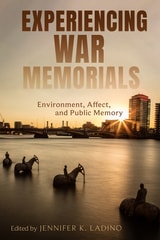
Experiencing War Memorials
Environment, Affect, and Public MemoryEdited by Jennifer K. Ladino
University of Alabama Press, 2026
Examines the emotional, formal, and environmental dimensions of war commemoration
Experiencing War Memorials is a compelling edited collection of essays that examines how war is commemorated through public memorials and the powerful emotions and ideologies these sites generate. Drawing on fields such as war studies, affect studies, public memory studies, and the environmental humanities, the volume demonstrates that commemoration is not only an intellectual act but an embodied, affective experience.
Through diverse case studies, contributors analyze how memorials shape public feelings about fast and slow violence, including battles, massacres, and incarceration. The essays reveal how materials, landscapes, narrative conventions, and innovative memorial forms guide emotional responses such as grief, pride, ambivalence, and outrage while making injustice perceptible. Against the backdrop of ongoing debates over heritage and violence, the collection insists on the importance of attending to the messy and disordered emotional dimensions of public memory. Some essays explore varied human and animal experiences, including military working dogs; scrutinize unsettling sites such as Confederate monuments and overlooked Holocaust locations; and consider digital, ecological, and pandemic-era memorials that expand the boundaries of commemoration.
Edited by Jennifer K. Ladino, Experiencing War Memorials offers nuanced insights into how memorial practices shape national identities, ethical understanding, and the possibilities for social change, illuminating the profound ways public remembrance influences how societies feel, remember, and reckon with violence in all its forms. This volume will appeal to scholars and students of memory studies, war and cultural studies, environmental humanities, and American studies, as well as museum professionals, artists, and readers interested in the politics and emotions of public commemoration.

Export Controls in Transition
Perspectives, Problems, and ProspectsGary K. Bertsch and Steven Elliott-Gower, eds.
Duke University Press, 1992
The contributors discuss the role and function of export control policies from a variety of perspectives—security, commerce, diplomacy, the European region, and that of the newly industrialized countries. Among the topics covered are the problems the United States and the Western export regime will face in the 1990s in light of changing international political alliances and dependencies, in defining strategic exports, in enforcing export controls, and the role of the Coordinating Committee for Multilateral Export Controls.
Contributors. Sumner Benson, Beverly Crawford, Richard t. Cupitt, Dorinda G. Dallmeyer, Paul Freedenberg, Martin J. Hillenbrand, Hanns-Dieter Jacobsen, Bruce W. Jentleson, Kevin J. Lasher, William J. Long, Janne Haaland Matlary, Jere W. Morehead, Henry R. Nau, Han S. Park, Kevin F. F. Quigley, Alen B. Sherr, Christine Westbrook