Results by title
225 books match the query 'Modernism' and 7 start with e
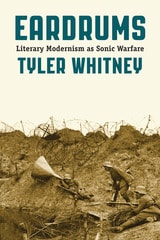
Eardrums
Literary Modernism as Sonic WarfareTyler Whitney
Northwestern University Press, 2019
Eardrums is the first book-length study to explore the relationship between acoustical modernity and German modernism, charting a literary and cultural history written in and around the eardrum. The result is not only a new way of understanding the sonic impulses behind key literary texts from the period. It also outlines an entirely new approach to the study of literature as as the interaction of text and sonic practice, voice and noise, which will be of interest to scholars across literary studies, media theory, sound studies, and the history of science.

Economic Engagements with Art, Volume 31
Craufurd D. W. Goodwin and Neil de Marchi, eds.
Duke University Press, 0
This volume, which deals mostly with painting, is divided into three sections that consider the interplay between art and economics from different perspectives. In the first section, Art and Economic Theory, economists clarify the need to construct a framework for understanding the roles of taste and fashion in art valuation. A historical view is considered in a piece about the teacher of Velasquez and artistic adviser to the Inquisition in Seville, who took into account not only market factors, like demand, but also the "truth" and the nobility of the artist’s profession and of the painting itself. Also in this section is an essay on Rousseau’s perspective on the worth of a painting based on its envy value in social circles; other contributions focus on William Stanley Jevons, a nineteenth century British political economist, whose problems with art stemmed from the uniqueness of each work, rendering definitive market and economic terms irrelevant. The second section of the book, Art and Economic Policy, looks at broader policy issues with regard to the historical role of art. Essays consider policy with respect to art exports and imports and federal patronage of the arts during theDepression; Lionel Robbins and the political economy of art; and the interplay among economy, architecture, and politics as shown in certain postwar Hilton hotels. In the final section, The Business of Art, a variety of perspectives are considered: the economics of art in early modern times, discussed in the context of both humanist and scholastic approaches; the pricing of pictures based on a study of the Smith-Reynolds connection; and the relationships between Otto Nuerath, graphic art, and the social order.
The first collaborative and historical treatment of the connection between art and economics, Economic Engagements with Art will appeal to people across, from history and economics to art history.
Contributors. Márcia Balisciano, William J. Barber, Neil de Marchi, Bertil Fridén, Crauford D. Goodwin, Guido Guerzoni, Robert J. Leonard, Harro Maas, Ernest Mathijs, Steven G. Medema, Bert Mosselmans, Zarinés Negrón, Marcia Pointon, Helen Rees, Toon van Houdt, Annabel Wharton, Sara Zablotney
Economic Engagements with Art, Volume 31
Craufurd D. W. Goodwin and Neil de Marchi, eds.
Duke University Press, 0
This volume, which deals mostly with painting, is divided into three sections that consider the interplay between art and economics from different perspectives. In the first section, Art and Economic Theory, economists clarify the need to construct a framework for understanding the roles of taste and fashion in art valuation. A historical view is considered in a piece about the teacher of Velasquez and artistic adviser to the Inquisition in Seville, who took into account not only market factors, like demand, but also the "truth" and the nobility of the artist’s profession and of the painting itself. Also in this section is an essay on Rousseau’s perspective on the worth of a painting based on its envy value in social circles; other contributions focus on William Stanley Jevons, a nineteenth century British political economist, whose problems with art stemmed from the uniqueness of each work, rendering definitive market and economic terms irrelevant. The second section of the book, Art and Economic Policy, looks at broader policy issues with regard to the historical role of art. Essays consider policy with respect to art exports and imports and federal patronage of the arts during theDepression; Lionel Robbins and the political economy of art; and the interplay among economy, architecture, and politics as shown in certain postwar Hilton hotels. In the final section, The Business of Art, a variety of perspectives are considered: the economics of art in early modern times, discussed in the context of both humanist and scholastic approaches; the pricing of pictures based on a study of the Smith-Reynolds connection; and the relationships between Otto Nuerath, graphic art, and the social order.
The first collaborative and historical treatment of the connection between art and economics, Economic Engagements with Art will appeal to people across, from history and economics to art history.
Contributors. Márcia Balisciano, William J. Barber, Neil de Marchi, Bertil Fridén, Crauford D. Goodwin, Guido Guerzoni, Robert J. Leonard, Harro Maas, Ernest Mathijs, Steven G. Medema, Bert Mosselmans, Zarinés Negrón, Marcia Pointon, Helen Rees, Toon van Houdt, Annabel Wharton, Sara Zablotney
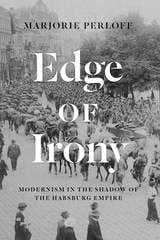
Edge of Irony
Modernism in the Shadow of the Habsburg EmpireMarjorie Perloff
University of Chicago Press, 2016
Perloff explores works ranging from Karl Kraus’s drama The Last Days of Mankind and Elias Canetti’s memoir The Tongue Set Free to Ludwig Wittgenstein’s notebooks and Paul Celan’s lyric poetry. Throughout, she shows that Austro-Modernist literature is characterized less by the formal and technical inventions of a modernism familiar to us in the work of Joyce and Pound, Dada and Futurism, than by a radical irony beneath a seemingly conventional surface, an acute sense of exile, and a sensibility more erotic and quixotic than that of its German contemporaries. Skeptical and disillusioned, Austro-Modernism prefers to ask questions rather than formulate answers.
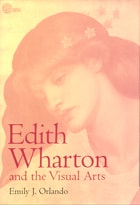
Edith Wharton and the Visual Arts
Emily J. Orlando
University of Alabama Press, 2008
An insightful look at representations of women’s bodies and female authority.
This work explores Edith Wharton's career-long concern with a 19th-century visual culture that limited female artistic agency and expression. Wharton repeatedly invoked the visual arts--especially painting—as a medium for revealing the ways that women's bodies have been represented (as passive, sexualized, infantalized, sickly, dead). Well-versed in the Italian masters, Wharton made special use of the art of the Pre-Raphaelite Brotherhood, particularly its penchant for producing not portraits of individual women but instead icons onto whose bodies male desire is superimposed.
Emily Orlando contends that while Wharton's early work presents women enshrined by men through art, the middle and later fiction shifts the seat of power to women. From Lily Bart in The House of Mirth to Undine Spragg in The Custom of the Country and Ellen Olenska in The Age of Innocence, women evolve from victims to vital agents, securing for themselves a more empowering and satisfying relationship to art and to their own identities.
Orlando also studies the lesser-known short stories and novels, revealing Wharton’s re-workings of texts by Browning, Poe, Balzac, George Eliot, Sir Joshua Reynolds, and, most significantly, Dante Gabriel Rossetti. Edith Wharton and the Visual Arts is the first extended study to examine the presence in Wharton's fiction of the Pre-Raphaelite poetry and painting of Rossetti and his muses, notably Elizabeth Siddall and Jane Morris. Wharton emerges as one of American literature's most gifted inter-textual realists, providing a vivid lens through which to view issues of power, resistance, and social change as they surface in American literature and culture.
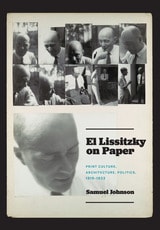
El Lissitzky on Paper
Print Culture, Architecture, Politics, 1919–1933Samuel Johnson
University of Chicago Press, 2024
Russian artist El Lissitzky’s work spans painting, photography, theatrical and exhibition design, architecture, graphic design, typography, and literature. He was active in the Jewish cultural renaissance, formed an artists’ collective with Kazimir Malevich, was a key figure in the dissemination of early Soviet art in Western Europe, and designed propaganda for the Stalin regime. With such a varied history and body of work, scholars have often struggled to identify the core principles that tied his diverse oeuvre together.
In El Lissitzky on Paper, Samuel Johnson argues that Lissitzky’s commitment to creating works on paper is a constant that unites his endeavors. Paper played a key role in the utopian projects that informed Lissitzky’s work, and the artist held a commitment to print as the premier medium of immediate public exchange. Johnson analyzes and contextualizes this idea against the USSR’s strict management of this essential resource and the growth of new media communications, including the telephone, telegraph, and film.
With this book, Johnson presents a significant contribution to scholarship on this major artist, revealing new connections between Lissitzky’s work in architecture and visual art and bringing to light sources from largely unstudied Russian archives.
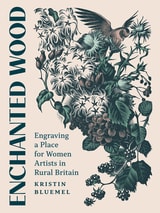
Enchanted Wood
Engraving a Place for Women Artists in Rural BritainKristin Bluemel
University of Minnesota Press, 2025
How women wood engravers helped reshape the visual and literary landscape of modern Britain
Amid the austerities of Depression-era publishing in Britain, urban editors and women artists recognized a unique opportunity to make and sell popular books illustrated with wood engravings. Enchanted Wood focuses on four of these artists—Gwen Raverat, Agnes Miller Parker, Clare Leighton, and Joan Hassall—weaving together their lives and work to tell a compelling and little-known story about a modern art that transformed the lives of both urban and rural women.
In this richly illustrated book, Kristin Bluemel demonstrates how women engravers used wood engraving to redraw professional and personal boundaries for themselves and other women. Depicting realistic scenes of country life, these illustrations are reminiscent of the aesthetic of eighteenth-century artist, naturalist, and print innovator Thomas Bewick even as they present distinctly modern reflections on gender, age, marriage, and motherhood. Reproducing and analyzing white-line engravings, pen and ink drawings, and rare color engravings from these four artists’ books for children and adults, Enchanted Wood reveals the magnified power and meaning of gentle arts for everyday people and for national patterns of work and play.
Integrating vignettes from Bewick’s natural history with formal, thematic, and cultural analysis of the women’s art as she recovers their medium, oeuvres, and stories, Bluemel shows how wood engraving led Raverat, Miller Parker, Leighton, and Hassall to achieve professional stature, public affirmation, and personal independence. A visually rich history of collective achievement, Enchanted Wood establishes these women engravers as important modern artists and literary figures in their own right.
Retail e-book files for this title are screen-reader friendly with images accompanied by short alt text and/or extended descriptions.