Results by title
100 books match the query 'Monographs' and 5 start with e
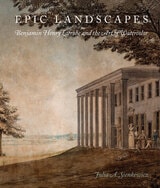
Epic Landscapes
Benjamin Henry Latrobe and the Art of WatercolorJulia Sienkewicz
University of Delaware Press, 2011
Published by University of Delaware Press. Distributed worldwide by Rutgers University Press.

Every Hour of the Light
The Paintings of Mary Sipp GreenMary Sipp Green
The Artist Book Foundation, 2014
American landscape painter Mary Sipp Green, based in the bucolic Berkshire Hills of Massachusetts, has a superlative ability to engage the viewer in the emotive atmosphere of her landscapes and seascapes. The intensely saturated colors in her works evoke an immediate sense of place and a unique perspective on an intimate tableau. Sipp Green achieves an ethereal, nuanced quality in her paintings that imparts a refined and inimitable serenity. In Every Hour of the Light: The Paintings of mary Sipp Green, many of the subjects she paints—salt marshes, barns, meadows, rivers, and the occasional cityscape—are captured in the exquisite twilight of early evenings or a luminescent sunrise. The effect is dreamy yet grounded and familiar.
Sipp Green states, "While my preferred medium has always been oil on linen, my methods, techniques, and aesthetic aims have all undergone significant transformations since I first began. I learned my craft in the studio, painting still lifes and portraits, as well as landscapes drawn directly from nature. Over time, I became increasingly engaged with more abstract and spiritual aspects of the landscape form and I began to pursue a less representational, more expressive style." When describing her "diffuse quality of color," she explains, "I use many layers of paint, allowing each to dry before the next is applied. Along the way, the surface of the paint is often refigured in unpredictable ways, and there is much that has to be scraped, sanded, destroyed and reapplied before the essence of a place, its mood and atmosphere, finally emerges onto the canvas."

Evoking Newark
Fifty YearsCamilo José Vergara
Rutgers University Press, 2027
Evoking Newark is a systematic photographic documentation of Newark, NJ, from 1977-2024. This project creates a flexible framework for tracing Newark’s evolution. In this ambitious volume, award-winning photographer Camilo José Vergara creates an indelible record of the city, beginning along its most important commercial thoroughfares, such as Broad, Market, Springfield Ave., Clinton Ave., Central Ave., and MLK Jr. Blvd. He also takes a closer look at landmarks as well as more modest buildings whose folksy character caught his eye. As an urban documentary photographer, Vergara frequently returned to re-photograph Newark in order to track changes over time. For almost fifty years, he identified multiple street intersections that were particularly revealing settings for charting developments in the city.
Vergara examines in particular the slow renewal of these main thoroughfares, the demolition of high-rise housing projects, the ruination and clearing of industrial sites, the building of multi-family houses in once-vacant lots, and the construction of skyscrapers and cultural institutions. To complete the project, he added photos of graffiti and murals that comment on local and national events celebrating African American and Hispanic heroes and heroines and memorials remembering the dead. With these efforts at careful documentation, Brick City demonstrates the usefulness of a time-based documentary approach to the study of post-industrial urban areas. The photographs are accompanied by detailed captions about the locations portrayed, and in many cases by Vergara's own observations and transcripts of his interviews with local people as well as overheard conversations. The photos and captions are one way of telling us that “this happened,” and a means of refreshing the memories of viewers who have experienced Newark generations ago--recollections that contribute to their sense of identity.
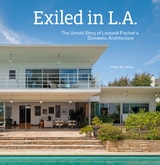
Exiled in L.A.
The Untold Story of Leopold Fischer’s Domestic ArchitectureVolker M. Welter
J. Paul Getty Trust, The, 0
In 1936, Leopold Fischer (1901–1975), in exile from Nazi Germany, arrived in California, where he created a small but distinct oeuvre of mostly domestic architecture. In contrast to his famous peers Rudolph Schindler and Richard Neutra, immigrants whose Southern California buildings are frequently examined—and who, like Fischer, studied with the modernist architect Adolf Loos—Fischer and his California structures have, until now, escaped the attention of architectural history.
Exiled in L.A. examines Fischer’s important, yet overlooked, contributions to Southern California architecture. As the whereabouts of Fischer’s archives remain unknown, Volker M. Welter grounds the designer’s California works in comparison with his pre-exile projects and the compositions of fellow architects in California. In the 1920s, Fischer created experimental working-class housing estates in Germany that pioneered ecological construction and living practices. Comparable to their predecessors, Fischer's California buildings revolve around the “functioning, the organization of a home,” as he defined domestic architecture in 1926. Featuring new photography and detailed architectural plans, this book is an original contribution to the literature on Southern California’s built heritage.
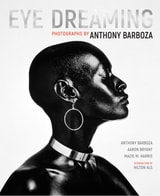
Eye Dreaming
Photographs by Anthony BarbozaAnthony Barboza
J. Paul Getty Trust, The, 2022
Anthony Barboza (b. 1944) is a celebrated artist and writer who has made thousands of photographs in the studio and on the street since 1963. A member of the Kamoinge collective of photographers in New York, Barboza is largely self-taught and has an inimitable, highly intuitive vision that he refers to as “eye dreaming,” or “a state of mind that’s almost like meditation.” Throughout the years he has made countless commercial images, including celebrity portraits, advertisements, and album covers. His personal photographic projects illuminate his deep investment in the art and concerns of Black communities, not only in the United States but also around the globe.
This lavishly illustrated volume follows Barboza’s prolific career from his youth in New Bedford, Massachusetts, to his formative years in New York in the 1960s, to the present day. An introduction by renowned author and critic Hilton Als underscores Barboza’s importance and impact. An essay by curator Aaron Bryant contextualizes Barboza’s life and career as they map against major civil rights events in the United States. In an intimate interview between the artist and curator Mazie M. Harris, Barboza offers astute, humorous, and intimate musings on his long career, foundational influences, and artistic legacy. This monograph, the first on the artist, will appeal to aficionados of photography and Black art and culture.