121 books match the query 'Motion picture industry' and 5 start with e
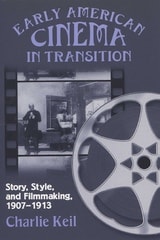
cover of Early American Cinema in Transition: Story, Style, and Filmmaking, 1907–1913

Early American Cinema in Transition

Story, Style, and Filmmaking, 1907–1913

Charlie Keil

University of Wisconsin Press, 2001

The period 1907–1913 marks a crucial transitional moment in American cinema. As moving picture shows changed from mere novelty to an increasingly popular entertainment, fledgling studios responded with longer running times and more complex storytelling. A growing trade press and changing production procedures also influenced filmmaking. In Early American Cinema in Transition, Charlie Keil looks at a broad cross-section of fiction films to examine the formal changes in cinema of this period and the ways that filmmakers developed narrative techniques to suit the fifteen-minute, one-reel format.
    Keil outlines the kinds of narratives that proved most suitable for a single reel’s duration, the particular demands that time and space exerted on this early form of film narration, and the ways filmmakers employed the unique features of a primarily visual medium to craft stories that would appeal to an audience numbering in the millions. He underscores his analysis with a detailed look at six films: The Boy Detective; The Forgotten Watch; Rose O’Salem-Town; Cupid’s Monkey Wrench; Belle Boyd, A Confederate Spy; and Suspense.
[more]
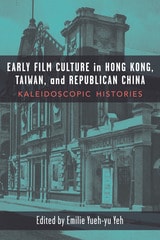
cover of Early Film Culture in Hong Kong, Taiwan, and Republican China: Kaleidoscopic Histories

Early Film Culture in Hong Kong, Taiwan, and Republican China

Kaleidoscopic Histories

Emilie Yueh-yu Yeh, Editor

University of Michigan Press, 2018
This volume features new work on cinema in early twentieth-century Hong Kong, Taiwan, and Republican China. Looking beyond relatively well-studied cities like Shanghai, these essays foreground cinema’s relationship with imperialism and colonialism and emphasize the rapid development of cinema as a sociocultural institution. These essays examine where films were screened; how cinema-going as a social activity adapted from and integrated with existing social norms and practices; the extent to which Cantonese opera and other regional performance traditions were models for the development of cinematic conventions; the role foreign films played in the development of cinema as an industry in the Republican era; and much more.
[more]
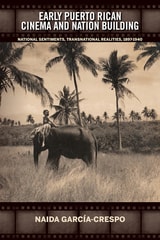
cover of Early Puerto Rican Cinema and Nation Building: National Sentiments, Transnational Realities, 1897-1940

Early Puerto Rican Cinema and Nation Building

National Sentiments, Transnational Realities, 1897-1940

Naida García-Crespo

Bucknell University Press, 2019

Early Puerto Rican Cinema and Nation Building focuses on the processes of Puerto Rican national identity formation as seen through the historical development of cinema on the island between 1897 and 1940. Anchoring her work in archival sources in film technology, economy, and education, Naida García-Crespo argues that Puerto Rico’s position as a stateless nation allows for a fresh understanding of national cinema based on perceptions of productive cultural contributions rather than on citizenship or state structures. This book aims to contribute to recently expanding discussions of cultural networks by analyzing how Puerto Rican cinema navigates the problems arising from the connection and/or disjunction between nation and state. The author argues that Puerto Rico’s position as a stateless nation puts pressure on traditional conceptions of national cinema, which tend to rely on assumptions of state support or a bounded nation-state. She also contends that the cultural and business practices associated with early cinema reveal that transnationalism is an integral part of national identities and their development. García-Crespo shows throughout this book that the development and circulation of cinema in Puerto Rico illustrate how the “national” is built from transnational connections.  

Published by Bucknell University Press. Distributed worldwide by Rutgers University Press.
[more]
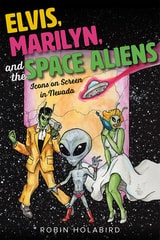
cover of Elvis, Marilyn, and the Space Aliens: Icons on Screen in Nevada

Elvis, Marilyn, and the Space Aliens

Icons on Screen in Nevada

Robin Holabird

University of Nevada Press, 2017

Elvis Presley, Marilyn Monroe, and space aliens like the Transformers share a surprising connection along with James Bond, Indiana Jones, and Rocky Balboa. These beloved icons played active roles in movie and television projects set in the state of Nevada. Long time state film commissioner and movie reviewer Holabird explores the blending of icons and Nevada, along with her personal experiences of watching movies, talking with famous people, and showing off a diverse range of stunning and iconic locations like Las Vegas, Reno, Lake Tahoe, and Area 51.

Holabird shows how Nevada’s flash, flair, and fostering of the forbidden provided magic for singers, sexpots, and strange creatures from other worlds. She also gives readers an insider’s look into moviemaking in Nevada by drawing on her extensive experience as a film commissioner. This is a unique take on film history and culture, and Holabird explores eighteen film genres populated by one-of-a-kind characters with ties to Nevada. Along with being a film history of the state of Nevada written by a consummate insider, the book is a fun mixture of research, personal experiences, and analysis about how Nevada became the location of choice for a broad spectrum of well-known films and characters.
[more]
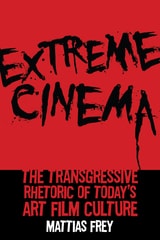
cover of Extreme Cinema: The Transgressive Rhetoric of Today's Art Film Culture

Extreme Cinema

The Transgressive Rhetoric of Today's Art Film Culture

Frey, Mattias

Rutgers University Press, 2016

Honorable mention, 2017 Best Monograph Award from the British Association of Film, Television and Screen Studies (BAFTSS)​

From Shortbus to Shame and from Oldboy to Irreversible, film festival premieres regularly make international headlines for their shockingly graphic depictions of sex and violence. Film critics and scholars alike often regard these movies as the work of visionary auteurs, hailing directors like Michael Haneke and Lars von Trier as heirs to a tradition of transgressive art. In this provocative new book, Mattias Frey offers a very different perspective on these films, exposing how they are also calculated products, designed to achieve global notoriety in a competitive marketplace. 
 
Paying close attention to the discourses employed by film critics, distributors, and filmmakers themselves, Extreme Cinema examines the various tightropes that must be walked when selling transgressive art films to discerning audiences, distinguishing them from generic horror, pornography, and Hollywood product while simultaneously hyping their salacious content. Deftly tracing the links between the local and the global, Frey also shows how the directors and distributors of extreme art house fare from both Europe and East Asia have significant incentives to exaggerate the exotic elements that would differentiate them from Anglo-American product. 
 
Extreme Cinema also includes original interviews with the programmers of several leading international film festivals and with niche distributors and exhibitors, giving readers a revealing look at how these institutions enjoy a symbiotic relationship with the “taboo-breakers” of art house cinema. Frey also demonstrates how these apparently transgressive films actually operate within a strict set of codes and conventions, carefully calibrated to perpetuate a media industry that fuels itself on provocation. 
 
[more]