Results by title
184 books match the query 'Murder' and 5 start with e
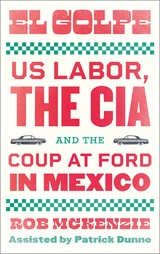
El Golpe
US Labor, the CIA, and the Coup at Ford in MexicoRob McKenzie
Pluto Press, 2022
'Early in my research, a friend with excellent knowledge of the United Auto Workers internal operations told me, "Don't give up. They are hiding something"…'
It's 1990, and US labor is being outsourced to Mexico. Rumors of a violent confrontation at the Mexican Ford Assembly plant on January 8 reach the United Auto Workers (UAW) union in the US: nine employees had been shot by a group of drunken thugs and gangsters, in an act of political repression which changed the course of Mexican and US workers' rights forever.
Rob McKenzie was working at the Ford Twin Cities Assembly plant in Minnesota when he heard of the attack. He didn't believe the official story, and began a years-long investigation to uncover the truth. His findings took him further than he expected - all the way to the doors of the CIA.
Virtually unknown outside of Mexico, the full story of 'El Golpe', or 'The Coup', is a dark tale of political intrigue that still resonates today.
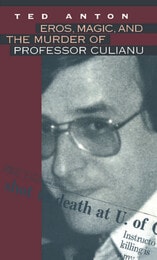
Eros, Magic, and the Murder of Professor Culianu
Ted Anton
Northwestern University Press, 1996
Winner of 1997 Carl Sandburg Award
On May 21, 1991, University of Chicago professor Ioan Culianu was murdered execution-style on campus. The crime stunned the school, terrified students, and mystified the FBI. The case remains unsolved. In Eros, Magic, and the Murder of Professor Culianu, award-winning investigative reporter Ted Anton shows that the murder is what Culianu's friends suspected all along: the first political assassination of a professor on American soil.
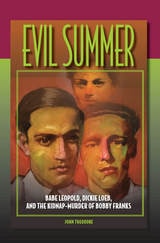
Evil Summer
Babe Leopold, Dickie Loeb, and the Kidnap-Murder of Bobby FranksJohn Theodore
Southern Illinois University Press, 2007
In 1924, fourteen-year-old Bobby Franks was abducted while walking home from school, killed by a chisel blow to his head, and later found stuffed in a culvert in a marshy wasteland at the Illinois-Indiana state line. Acid had been poured over his naked body. Evil Summer examines the shocking kidnapping and murder of Franks by two University of Chicago students, Nathan “Babe” Leopold and Richard “Dickie” Loeb, both from families of privilege.
In this new examination of the crime, author John Theodore takes readers into the minds of the two criminals as he focuses on three months in 1924. Theodore covers the killing, the confessions, the defense, and the sentencing surrounding the horrific murder, placing the killers’ actions and Clarence Darrow’s historic defense into the context of 1920s Chicago.
Theodore deftly investigates the psychological dimensions of the crime, revealing the murderers’ fantasies, relationships, sexuality, and motives. The author examines the killers’ past, outlining Loeb’s obsession with detective fiction and crime and his editorial on random killing—written at age nine—and Leopold’s nightly master-slave fantasies and fascination with Nietzsche.
Evil Summer, which includes twenty-three illustrations, meticulously traces the murder from inception to confession, including such details as the special-delivery ransom letter sent to Jacob Franks and the discovery of Leopold’s horn-rimmed eyeglasses lying on a railroad embankment near Bobby’s dead body. Theodore re-creates such scenes as the convergence of hundreds of people in front of the Franks home, Bobby’s body lying in a small white casket in the library, and Loeb being voyeuristically drawn to the home while Bobby’s classmates carry the casket to the hearse.
Worldwide press coverage reflected the public fascination with the case in what was then called “the trial of the century.” The story became a media circus: Chicago’s six daily newspapers battled vigorously for readers, two Daily News cub reporters became part of the story, and the Chicago Tribune carried a voting ballot asking readers whether radio station WGN should broadcast the courtroom spectacle. The changing drama was delivered to Chicagoans every morning and evening, and the public feasted on every press run.
More than a crime story, Evil Summer illuminates the dark side of American life in the 1920s, including the excesses of privileged youth, the troubled childhoods, the random victimization, the anti-Semitism, and the sexuality.
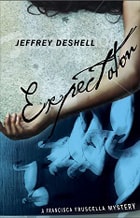
Expectation
A Francesca Fruscella MysteryJeffrey DeShell
University of Alabama Press, 2013
In his newest novel, Jeffrey DeShell draws on the musical innovations of Arnold Schoenberg—by turns traditional, serial, and atonal—to inform his grammar and language. Moving progressively through specific Schoenberg compositions, DeShell complicates the surface of his text into lyrical derivatives, all the while drawing us into a murder mystery like no other as Detective Francisca Fruscella pursues both the killer and her own complicated personal history.
By turns rapturous, rigorous, and gripping, Expectation is a thriller of another kind—and a bold venture to the limits of the mystery genre and language itself.
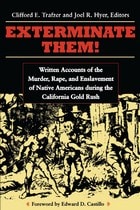
Exterminate Them
Written Accounts of the Murder, Rape, and Enslavement of Native Americans during the California Gold RushClifford E. Trafzer
Michigan State University Press, 1999
Popular media depict miners as a rough-and-tumble lot who diligently worked the placers along scenic rushing rivers while living in roaring mining camps in the foothills of the Sierra Nevada Mountains. Trafzer and Hyer destroy this mythic image by offering a collection of original newspaper articles that describe in detail the murder, rape, and enslavement perpetrated by those who participated in the infamous gold rush. "It is a mercy to the Red Devils," wrote an editor of the Chico Courier, "to exterminate them." Newspaper accounts of the era depict both the barbarity and the nobility in human nature, but while some protested the inhumane treatment of Native Americans, they were not able to end the violence. Native Americans fought back, resisting the invasion, but they could not stop the tide of white miners and settlers. They became "strangers in a stolen land."