130 books match the query 'Philosophers' and 5 start with e

cover of Edith Stein: Philosopher and Mystic

Edith Stein

Philosopher and Mystic

Josephine Koeppel O.C.D.

University of Scranton Press, 2007

The twentieth anniversary of the beatification of Edith Stein (1891–1942), the accomplished Jewish philosopher who made a spiritual journey from atheism to agnosticism before eventually converting to Catholicism, will be celebrated in 2007. In Edith Stein: Philosopher and Mystic, Josephine Koeppel chronicles the life of this influential saint from her secular youth and entrance into a German monastery to her tragic death at Auschwitz. This accessible work will reward readers of all faiths interested in the life of a remarkable woman who changed the modern conception of sainthood.
 

[more]
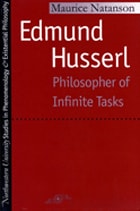
cover of Edmund Husserl: Philosopher of Infinite Tasks

Edmund Husserl

Philosopher of Infinite Tasks

Maurice Natanson

Northwestern University Press, 1973

Winner of the 1974 National Book Award

The product of many years of reflection on phenomenology, this book is a comprehensive and creative introduction to the philosophy of Edmund Husserl. Natanson uses Husserl's later work as a clue to the meaning of his entire intellectual career, showing how his earlier methodological work evolved into the search for transcendental roots and developed into a philosophy of the life-world. Phenomenology, for Natanson, emerges as a philosophy of origin, a transcendental discipline concerned with consciousness, history, and world rather than with introspection and traditional metaphysical warfare.

[more]
cover of Encounters and Dialogues with Martin Heidegger, 1929-1976

Encounters and Dialogues with Martin Heidegger, 1929-1976

Heinrich Wiegand Petzet

University of Chicago Press, 1993

Despite his predominance in twentieth-century philosophy, no intellectual biography of Martin Heidegger has yet appeared. This account of Heidegger's personal relations, originally published in German and extensively corrected by the author for this translation, enlarges our understanding of a complex figure.

A well-known art historian and an intimate friend of Heidegger's, Heinrich Wiegand Petzet provides a rich portrait of Heidegger that is part memoir, part biography, and part cultural history. By recounting chronologically a series of encounters between the two friends from their meeting in 1929 until the philosopher's death in 1976, as well as between Heidegger and other contemporaries, Petzet reveals not only new aspects of Heidegger's thought and attitudes toward the historical and intellectual events of his time but also the greater cultural and social context in which he articulated his thought.

[more]
cover of Ethical Excellence: Philosophers, Psychologists, and Real-Life Exemplars Show Us How to Achieve It

Ethical Excellence

Philosophers, Psychologists, and Real-Life Exemplars Show Us How to Achieve It

Heidi M. Giebel

Catholic University of America Press, 2021
Why do some people achieve ethical excellence while others fail? For example, how did Gloria Lewis overcome a lifetime of difficulty and go on to found a non-profit focused on feeding the homeless while Danny Starrett, despite a seemingly ideal childhood, became a rapist and murderer? Why did some Germans rescue their Jewish neighbors while others stood by? One recent study found that four personal variables, taken together, differentiated Nazi-era bystanders from rescuers with startling 96.1% accuracy: social responsibility, altruistic moral reasoning, empathic concern, and risk-taking—traits related to ethical excellences (virtues) like justice, benevolence, and courage. Drawing from the combined wisdom of classical Socratic and Confucian philosophy, recent work in psychology, and the lived experience of recognized moral heroes, the book focuses on how each of us can work toward ethical excellence, becoming more like Lewis and neighbor-rescuers than like Starrett and Nazi-era bystanders. The ancient Socratic and Confucian philosophical traditions offer surprisingly sophisticated advice regarding moral education. Because research in psychology helps us assess the feasibility of cultivating virtue in ourselves and those we influence, Ethical Excellence focuses on combining sound philosophical analysis of ethical virtue and related concepts with relevant empirical research on how these concepts are manifested and developed in everyday practice. Willpower, for example, contributes to development of temperance or moderation, grit relates to perseverance, and empathy is connected to benevolence. Finally, the study of ethically exceptional people—moral heroes or exemplars—serves as living proof that ethical excellence is possible, and exemplars can provide inspiration to attempt it ourselves and guidance regarding how to do so successfully. Relevant stories and excerpts from the author’s own interviews with award-winning ethical exemplars complement the use of philosophical virtue theory and psychological research on virtue-relevant practice. Together, these three approaches—philosophy, psychology, and biography—help to triangulate” ethical excellence and its achievement, presenting a much clearer and more complete picture than we can get from any one of these methods alone.
[more]
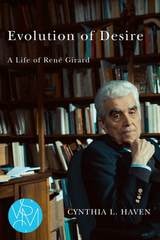
cover of Evolution of Desire: A Life of René Girard

Evolution of Desire

A Life of René Girard

Cynthia L Haven

Michigan State University Press, 2018

René Girard (1923–2015) was one of the leading thinkers of our era—a provocative sage who bypassed prevailing orthodoxies to offer a bold, sweeping vision of human nature, human history, and human destiny. His oeuvre, offering a “mimetic theory” of cultural origins and human behavior, inspired such writers as Milan Kundera and J. M. Coetzee, and earned him a place among the forty “immortals” of the Académie Française. Too often, however, his work is considered only within various academic specializations. This first-ever biographical study takes a wider view. Cynthia L. Haven traces the evolution of Girard’s thought in parallel with his life and times. She recounts his formative years in France and his arrival in a country torn by racial division, and reveals his insights into the collective delusions of our technological world and the changing nature of warfare. Drawing on interviews with Girard and his colleagues, Evolution of Desire: A Life of René Girard provides an essential introduction to one of the twentieth century’s most controversial and original minds.
[more]