Results by title
103 books match the query 'Philosophy, Modern' and 4 start with e
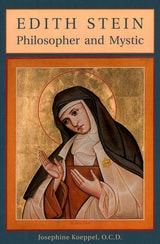
Edith Stein
Philosopher and MysticJosephine Koeppel O.C.D.
University of Scranton Press, 2007
The twentieth anniversary of the beatification of Edith Stein (1891–1942), the accomplished Jewish philosopher who made a spiritual journey from atheism to agnosticism before eventually converting to Catholicism, will be celebrated in 2007. In Edith Stein: Philosopher and Mystic, Josephine Koeppel chronicles the life of this influential saint from her secular youth and entrance into a German monastery to her tragic death at Auschwitz. This accessible work will reward readers of all faiths interested in the life of a remarkable woman who changed the modern conception of sainthood.
Excursions
Michael Jackson
Duke University Press, 2007
Focusing on the struggles and quandaries of everyday life, Jackson touches on matters at the core of anthropology—the state, violence, exile and belonging, labor, indigenous rights, narrative, power, home, and history. He is particularly interested in the gaps that characterize human existence, such as those between insularity and openness, between the things over which we have some control and the things over which we have none, and between ourselves and others as we talk past each other, missing each others’ meanings. Urging a recognition of the limits to which human existence can be explained in terms of cause and effect, he suggests that knowing why things happen may ultimately be less important than trying to understand how people endure in the face of hardship.

Exploring Phenomenology
A Guide to the Field & Its LiteratureDavid Stewart
Ohio University Press, 1990
Existential philosophy has perhaps captured the public imagination more completely than any other philosophical movement in the twentieth century. But less is known about the phenomenological method lying behind existentialism. In this solid introduction to phenomenological philosophy, authors David Stewart and Algis Mickunas show that phenomenology is neither new nor bizarre but is a contemporary way of raising afresh the major problems of philosophy that have dominated the traditions of Western thought. The authors carefully lead the reader trough the maze of terminology, explaining the major problems phenomenology has treated and showing how these are a consistent extension of the traditional concerns of philosophy.
In concise, uncluttered, and straightforward terms, the history, development, and contemporary status of phenomenology is explained with a copiously annotated bibliography following each chapter. Nothing in print combines the extensive introductory materials with a guide to the massive literature that has been produced by phenomenological and existential studies.
Exploring the World of Human Practice
Readings in and about the Philosophy of Aurel KolnaiZoltán Balázs
Central European University Press, 2005