Results by title
572 books match the query 'Photography' and 19 start with e
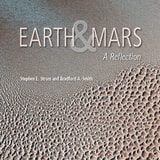
Earth and Mars
A ReflectionStephen E. Strom and Bradford A. Smith
University of Arizona Press, 2015
Earth and Mars is a fusion of art and science, a blend of images and essays celebrating the successful creation of our life-sustaining planet and the beauty and mystery of Mars. Through images of terrestrial landscapes and photographs selected from recent NASA and European Space Agency missions to Mars, Earth and Mars reveals the profound beauty resulting from the action of volcanism, wind, and water. The accompanying text provides a context for appreciating the role of these elemental forces in shaping the surfaces of each planet, as well as the divergent evolutionary paths that led to an Earth that is teeming with life, and Mars that is seemingly lifeless.
Earth and Mars inspires reflection on the extraordinarily delicate balance of forces that has resulted in our good fortune: to be alive and sentient on a bountiful blue world.
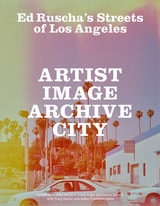
Ed Ruscha's Streets of Los Angeles
Artist, Image, Archive, CityAndrew Perchuk
J. Paul Getty Trust, The, 2025
In 1966, Ed Ruscha drove a car rigged with a motorized camera to capture Los Angeles’ most iconic street: Sunset Boulevard. He created a time capsule of its famed facades, beginning a sixty-year-long commitment to documenting the changing urban landscape of postwar Los Angeles. The Streets of Los Angeles project that comprises these photographs is likely the most comprehensive artistic record of any city, with over 900,000 images of major thoroughfares. Ruscha’s photographs constitute an unparalleled visual chronicle of both iconic and everyday sites in L.A., including popular music venues, neighborhood restaurants, and billboards promoting Hollywood’s latest blockbusters.
In this volume, scholars from disciplines such as urban planning, cultural geography, architecture, art history, and musicology explore the Streets of Los Angeles Archive as a rich repository for analyzing Ruscha’s practice and the city’s visual culture. Using his photographs and new data visualizations, the authors consider what it means to interpret an archive mostly accessible through digital technologies, and they demonstrate how histories of art have been indelibly reshaped since the advent of the information age in the 1960s.
This publication was created using Quire™, a multiformat publishing tool from Getty. The free online edition of this open-access publication is available at www.getty.edu/publications/ruscha/ and includes video, data visualizations, and zoomable illustrations. Free PDF and EPUB downloads of the book are also available.
Editing and Special/Visual Effects
Keil, Charlie
Rutgers University Press, 2016
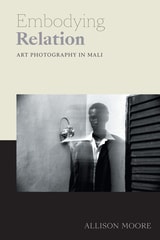
Embodying Relation
Art Photography in MaliAllison Moore
Duke University Press, 2020
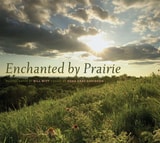
Enchanted by Prairie
Bill Witt
University of Iowa Press, 2009
Witt gives us close-ups of pasque flower shoots covered with ice in spring, coneflowers dancing in a summer breeze, and prairie dropseed in its autumn colors as well as such prairie companions as sandhill cranes, northern harriers, and bison. His panoramic visions of prairie landscapes in all seasons focus on the personal pleasure and spiritual sustenance that connecting with prairies, even small and neglected ones, can bring us. Osha Davidson’s essay compares today’s prairie remnants with yesterday’s expanses and calls for us to restore balance to this damaged landscape. Altogether, Enchanted by Prairie celebrates today’s prairie landscape and encourages us, in Davidson’s words, to restore its “beauty and scents and textures and sounds.”
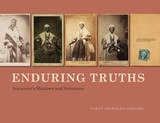
Enduring Truths
Sojourner's Shadows and SubstanceDarcy Grimaldo Grigsby
University of Chicago Press, 2015
Featuring the largest collection of Truth’s photographs ever published, Enduring Truths is the first book to explore how she used her image, the press, the postal service, and copyright laws to support her activism and herself. Darcy Grimaldo Grigsby establishes a range of important contexts for Truth’s portraits, including the strategic role of photography and copyright for an illiterate former slave; the shared politics of Truth’s cartes de visite and federal banknotes, which were both created to fund the Union cause; and the ways that photochemical limitations complicated the portrayal of different skin tones. Insightful and powerful, Enduring Truths shows how Truth made her photographic portrait worth money in order to end slavery—and also became the strategic author of her public self.
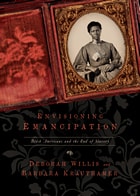
Envisioning Emancipation
Black Americans and the End of SlaveryDeborah Willis
Temple University Press, 2017
The Emancipation Proclamation is one of the most important documents in American history. As we commemorate its 150th anniversary, what do we really know about those who experienced slavery?
In their pioneering book, Envisioning Emancipation, renowned photographic historian Deborah Willis and historian of slavery Barbara Krauthamer have amassed 150 photographs—some never before published—from the antebellum days of the 1850s through the New Deal era of the 1930s. The authors vividly display the seismic impact of emancipation on African Americans born before and after the Proclamation, providing a perspective on freedom and slavery and a way to understand the photos as documents of engagement, action, struggle, and aspiration.
Envisioning Emancipation illustrates what freedom looked like for black Americans in the Civil War era. From photos of the enslaved on plantations and African American soldiers and camp workers in the Union Army to Juneteenth celebrations, slave reunions, and portraits of black families and workers in the American South, the images in this book challenge perceptions of slavery. They show not only what the subjects emphasized about themselves but also the ways Americans of all colors and genders opposed slavery and marked its end.
Filled with powerful images of lives too often ignored or erased from historical records, Envisioning Emancipation provides a new perspective on American culture.
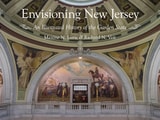
Envisioning New Jersey
An Illustrated History of the Garden StateLurie, Maxine N
Rutgers University Press, 2016
Winner of the 2017 New Jersey Studies Academic Alliance Author Award
See New Jersey history as you read about it! Envisioning New Jersey brings together 650 spectacular images that illuminate the course of the state’s history, from prehistoric times to the present. Readers may think they know New Jersey’s history—the state’s increasing diversity, industrialization, and suburbanization—but the visual record presented here dramatically deepens and enriches that knowledge.
Compiled by the authors of New Jersey: A History of the Garden State, this volume is intended as an illustrated companion to that earlier volume. Envisioning New Jersey also stands on its own because essays synthesizing each era accompany the illustrations. A fascinating gold mine of images from the state’s past, Envisioning New Jersey is the first illustrated book on the Garden State that covers its complete history, capturing the amazing transformation of New Jersey over time.
View sample pages (http://issuu.com/rutgersuniversitypress/docs/lurie_veit_envisioning_sample)
Thanks to the New Jersey Historical Commission, the New Jersey Council for the Humanities, and generous individual donors for making this project possible.
Errant Modernism
The Ethos of Photography in Mexico and BrazilEsther Gabara
Duke University Press, 2008
Gabara argues that Brazilian and Mexican modernists deliberately made photography err: they made this privileged medium of modern representation simultaneously wander and work against its apparent perfection. They flouted the conventions of mainstream modernism so that their aesthetics registered an ethical dimension. Their photographic modernism strayed, dragging along the baggage of modernity lived in a postcolonial site. Through their “errant modernism,” avant-garde writers and photographers critiqued the colonial history of Latin America and its twentieth-century formations.
Everyday Modernism
Architecture and Society in SingaporeJiat-Hwee Chang and Justin Zhuang
National University of Singapore Press, 2022
A richly illustrated account of the development of Singapore’s modern built environment.
Everyday Modernism is the first comprehensive documentation of Singapore’s modern built environment. Through a lens of social, cultural, and architectural histories, the book uncovers the many untold stories of the Southeast Asian city-state’s modernization, from the rise of heroic skyscrapers, such as the Pearl Bank Apartments, to the spread of typical utilitarian buildings like the multistory parking garage. It investigates how modernism, through both form and function, radically transformed Singapore and made its inhabitants into modern citizens. The most intensive period of such change, the author shows, happened in the 1960s and 1970s under the rise of a developmental state that sought to safeguard its new-found independence. The book also looks both earlier and later, however, ranging from the 1930s to the 1980s to cover a wider range of histories, building types, and architectural styles, expanding from the International Style and Brutalism into Art Deco and even a touch of Postmodernism. The book’s essays are richly illustrated with hundreds of archival images and illustrations, as well as contemporary photos by architectural photographer Darren Soh. By examining the evolution of the once exceptional into the typical and by learning how abstract spaces become lived places, the book traces how modernism has become part of everyday life in Singapore.
Evidence of My Existence
Jim Lo Scalzo
Ohio University Press, 2007
From a leper colony in India to an American research station on the Antarctic Peninsula, from the back rooms of the White House to the battlefields of Iraq and Afghanistan, Evidence of My Existence tells a unique and riveting story of seventeen years spent racing from one photo assignment to the next. It is also a story of photojournalism and theconsequences of obsessive wanderlust.
When the book opens, Jim Lo Scalzo is a blur to his wife, her remarkable tolerance wearing thin. She is heading to the hospital with her second miscarriage, and Jim is heading to Baghdad to cover the American invasion of Iraq. He hates himself for this—for not giving her a child, for deserting her when she soobviously needs him, for being consumed by his job—but how to stop moving? Sure, there have been some tough trips. He’s been spit on by Mennonites in Missouri, by heroin addicts in Pakistan, and by the KKK in South Carolina. He’s contracted hepatitis on the Navajo Nation, endured two bouts of amoebic dysentery in India and Burma and four cases of giardia in Nepal, Peru, Afghanistan, and Cuba. He’s been shot with rubber bullets in Seattle, knocked to the ground by a water cannon in Quebec, and sprayed with more teargas than he cares to recall. But photojournalism is his career, and travel is his compulsivecraving.
We follow Lo Scalzo through the maze of airports and crowds and countries as he chases the career he has always wanted, struggles with his family problems, and reveals the pleasures of a life singularly focused. For him, as for so many photojournalists, it is always about the going.

Evoking Newark
Fifty YearsCamilo José Vergara
Rutgers University Press, 2027
Evoking Newark is a systematic photographic documentation of Newark, NJ, from 1977-2024. This project creates a flexible framework for tracing Newark’s evolution. In this ambitious volume, award-winning photographer Camilo José Vergara creates an indelible record of the city, beginning along its most important commercial thoroughfares, such as Broad, Market, Springfield Ave., Clinton Ave., Central Ave., and MLK Jr. Blvd. He also takes a closer look at landmarks as well as more modest buildings whose folksy character caught his eye. As an urban documentary photographer, Vergara frequently returned to re-photograph Newark in order to track changes over time. For almost fifty years, he identified multiple street intersections that were particularly revealing settings for charting developments in the city.
Vergara examines in particular the slow renewal of these main thoroughfares, the demolition of high-rise housing projects, the ruination and clearing of industrial sites, the building of multi-family houses in once-vacant lots, and the construction of skyscrapers and cultural institutions. To complete the project, he added photos of graffiti and murals that comment on local and national events celebrating African American and Hispanic heroes and heroines and memorials remembering the dead. With these efforts at careful documentation, Brick City demonstrates the usefulness of a time-based documentary approach to the study of post-industrial urban areas. The photographs are accompanied by detailed captions about the locations portrayed, and in many cases by Vergara's own observations and transcripts of his interviews with local people as well as overheard conversations. The photos and captions are one way of telling us that “this happened,” and a means of refreshing the memories of viewers who have experienced Newark generations ago--recollections that contribute to their sense of identity.
Exit of a Hero
Photography and the Visual Culture of Commemoration in Southern NigeriaOkechukwu Nwafor
University of Michigan Press, 2026
In Exit of a Hero, Okechukwu Nwafor explores the cultural, political, and socioeconomic implications of photography in commemorative practices in southern Nigeria from the nineteenth century to the present. Focusing on obituary and commemorative photographs of late nineteenth and early twentieth-century Lagos to contemporary funeral posters, booklets, and social media posts, Nwafor tracks the historical evolution of the iconic and heroic image. He argues that the quest to produce an ideal memorial body is not just a personal aesthetic choice but a deliberate photographic project that resonates with the Igbo aspirations for heroic achievement.
Exit of a Hero asserts that the visual canonization transforms the deceased from a fallible being to an unimpeachable character who transcends underachievement, imperfection, and failed social performance to emerge as a saintly icon of the Igbo public sphere. In seeking an alternative, hyper-visible public self, social media reclaims the lost hero image of the deceased, reconstituting the contested Igbo public space as a lived reality where heroes and icons are actively and eternally commemorated. Nwafor unveils the creative imaginations of colonial subjects and postcolonial citizens as memorialization has become entangled within the intersecting discursive spaces of print culture and the public sphere.

Experiments in the Dark
Visualizing Capital Art Studio, ZanzibarPamila Gupta
University of Michigan Press, 2027
What kind of history are photographs? Experiments in the Dark explores this question through the lens of a twentieth-century East African Indian Ocean photo studio collection, Capital Arts Studio (CAS), and its proprietors Ranchhod and Rohit Oza in Stone Town, Zanzibar. Pamila Gupta gathers and reads a range of photographs and genres from the studio, exploring how they relate to Zanzibar’s vibrant visual cultures during the Omani sultanate, British colonial, and postrevolution periods. Gupta’s reading of this little-known photographic archive brings the work into a broader historical context of the Indian Ocean in a visual archive that has endured despite the forces of history.
Through a blend of archival reconstruction and curation, personal reflection, and interviews with Rohit Oza, the son of the studio’s founder Ranchhod Oza, Gupta focuses on the construction and curation of the CAS collection and what this archive can tell us about the South Asian and Goan diasporas, the wider Indian Ocean world, African fashion, urban lives, and image making in Zanzibar from 1930 to 2024.
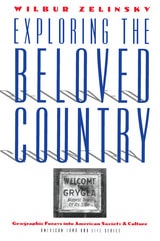
Exploring The Beloved Country
American Society And CultureWilbur Zelinsky
University of Iowa Press, 1994
For fifty years geographer Wilbur Zelinsky has charted the social, cultural, and historical map of the American experience. A self-confessed incurable landscape voyeur, he has produced order and pattern from massive amounts of data, zestfully finding societal meaning in the terra incognita of our postmodern existence. Now he has gathered his most original and exciting explorations into a volume that captures the nature and dynamics of this remarkable phenomenon we call the United States of America. Each the product of Zelinsky's joyous curiosity, these energetic essays trace the innermost contours of our bewildering American reality.
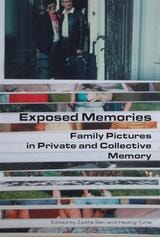
Exposed Memories
Family Pictures in Private and Collective MemoryHedvig Turai
Central European University Press, 2010
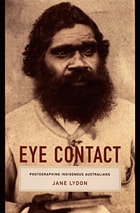
Eye Contact
Photographing Indigenous AustraliansJane Lydon
Duke University Press, 2005
Lydon shows how the photographic portrayals of the Aboriginal residents of Coranderrk changed over time, reflecting various ideas of the colonial mission—from humanitarianism to control to assimilation. In the early twentieth century, the images were used on stereotypical postcards circulated among the white population, showing what appeared to be compliant, transformed Aboriginal subjects. The station closed in 1924 and disappeared from public view until it was rediscovered by scholars years later. Aboriginal Australians purchased the station in 1998, and, as Lydon describes, today they are using the Coranderrk photographic archive in new ways, to identify family members and tell stories of their own.
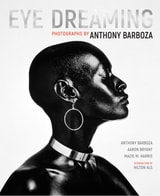
Eye Dreaming
Photographs by Anthony BarbozaAnthony Barboza
J. Paul Getty Trust, The, 2022
Anthony Barboza (b. 1944) is a celebrated artist and writer who has made thousands of photographs in the studio and on the street since 1963. A member of the Kamoinge collective of photographers in New York, Barboza is largely self-taught and has an inimitable, highly intuitive vision that he refers to as “eye dreaming,” or “a state of mind that’s almost like meditation.” Throughout the years he has made countless commercial images, including celebrity portraits, advertisements, and album covers. His personal photographic projects illuminate his deep investment in the art and concerns of Black communities, not only in the United States but also around the globe.
This lavishly illustrated volume follows Barboza’s prolific career from his youth in New Bedford, Massachusetts, to his formative years in New York in the 1960s, to the present day. An introduction by renowned author and critic Hilton Als underscores Barboza’s importance and impact. An essay by curator Aaron Bryant contextualizes Barboza’s life and career as they map against major civil rights events in the United States. In an intimate interview between the artist and curator Mazie M. Harris, Barboza offers astute, humorous, and intimate musings on his long career, foundational influences, and artistic legacy. This monograph, the first on the artist, will appeal to aficionados of photography and Black art and culture.
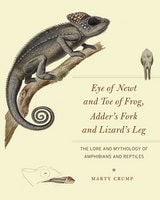
Eye of Newt and Toe of Frog, Adder's Fork and Lizard's Leg
The Lore and Mythology of Amphibians and ReptilesMarty Crump
University of Chicago Press, 2015
Frogs are worshipped for bringing nourishing rains, but blamed for devastating floods. Turtles are admired for their wisdom and longevity, but ridiculed for their sluggish and cowardly behavior. Snakes are respected for their ability to heal and restore life, but despised as symbols of evil. Lizards are revered as beneficent guardian spirits, but feared as the Devil himself.
In this ode to toads and snakes, newts and tuatara, crocodiles and tortoises, herpetologist and science writer Marty Crump explores folklore across the world and throughout time. From creation myths to trickster tales; from associations with fertility and rebirth to fire and rain; and from the use of herps in folk medicines and magic, as food, pets, and gods, to their roles in literature, visual art, music, and dance, Crump reveals both our love and hatred of amphibians and reptiles—and their perceived power. In a world where we keep home terrariums at the same time that we battle invasive cane toads, and where public attitudes often dictate that the cute and cuddly receive conservation priority over the slimy and venomous, she shows how our complex and conflicting perceptions threaten the conservation of these ecologically vital animals.
Sumptuously illustrated, Eye of Newt and Toe of Frog, Adder’s Fork and Lizard’s Leg is a beautiful and enthralling brew of natural history and folklore, sobering science and humor, that leaves us with one irrefutable lesson: love herps. Warts, scales, and all.