Results by title
413 books match the query 'Pictorial works' and 8 start with e
Earth and Mars
A ReflectionStephen E. Strom and Bradford A. Smith
University of Arizona Press, 2015
Earth and Mars is a fusion of art and science, a blend of images and essays celebrating the successful creation of our life-sustaining planet and the beauty and mystery of Mars. Through images of terrestrial landscapes and photographs selected from recent NASA and European Space Agency missions to Mars, Earth and Mars reveals the profound beauty resulting from the action of volcanism, wind, and water. The accompanying text provides a context for appreciating the role of these elemental forces in shaping the surfaces of each planet, as well as the divergent evolutionary paths that led to an Earth that is teeming with life, and Mars that is seemingly lifeless.
Earth and Mars inspires reflection on the extraordinarily delicate balance of forces that has resulted in our good fortune: to be alive and sentient on a bountiful blue world.
Enchanted Rock
A Natural and Human HistoryBy Lance Allred
University of Texas Press, 2009
With intriguing domes of pinkish granite surrounded by a sea of Hill Country limestone, Enchanted Rock State Natural Area attracts over 300,000 visitors every year who come to the park to hike, rock climb, spelunk, camp, picnic, and observe birds and wildflowers. Geologists from around the world come to Enchanted Rock to examine landforms that were shaped by forces on ancient continents of Earth more than one billion years ago! All of these visitors, however, are only the latest comers in a line of human history that stretches back 13,000 years to early Native Americans and includes Spanish explorers, Mexican and German settlers, and thirteen private and public owners up to the current owner, the state of Texas.
Surprisingly, given the area's wealth of unusual geology, native plants and animals, and human history, no comprehensive guide to Enchanted Rock has been published before now. In Enchanted Rock, you'll find everything you need to fully appreciate this unique place. Lance Allred draws on the work of specialists in many fields to offer a popular account of the park's history, geology, weather, flora, and fauna. Whether you want to know more about how Enchanted Rock was formed, identify a wildflower or butterfly, or learn more about plant communities along the hiking trails, you'll find accurate information here, presented in an inviting style. Over a thousand color photographs illustrate the enjoyable text.
Enchanted by Prairie
Bill Witt
University of Iowa Press, 2009
Witt gives us close-ups of pasque flower shoots covered with ice in spring, coneflowers dancing in a summer breeze, and prairie dropseed in its autumn colors as well as such prairie companions as sandhill cranes, northern harriers, and bison. His panoramic visions of prairie landscapes in all seasons focus on the personal pleasure and spiritual sustenance that connecting with prairies, even small and neglected ones, can bring us. Osha Davidson’s essay compares today’s prairie remnants with yesterday’s expanses and calls for us to restore balance to this damaged landscape. Altogether, Enchanted by Prairie celebrates today’s prairie landscape and encourages us, in Davidson’s words, to restore its “beauty and scents and textures and sounds.”
Envisioning Emancipation
Black Americans and the End of SlaveryDeborah Willis
Temple University Press, 2017
The Emancipation Proclamation is one of the most important documents in American history. As we commemorate its 150th anniversary, what do we really know about those who experienced slavery?
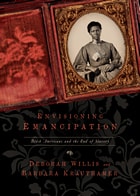
In their pioneering book, Envisioning Emancipation, renowned photographic historian Deborah Willis and historian of slavery Barbara Krauthamer have amassed 150 photographs—some never before published—from the antebellum days of the 1850s through the New Deal era of the 1930s. The authors vividly display the seismic impact of emancipation on African Americans born before and after the Proclamation, providing a perspective on freedom and slavery and a way to understand the photos as documents of engagement, action, struggle, and aspiration.
Envisioning Emancipation illustrates what freedom looked like for black Americans in the Civil War era. From photos of the enslaved on plantations and African American soldiers and camp workers in the Union Army to Juneteenth celebrations, slave reunions, and portraits of black families and workers in the American South, the images in this book challenge perceptions of slavery. They show not only what the subjects emphasized about themselves but also the ways Americans of all colors and genders opposed slavery and marked its end.
Filled with powerful images of lives too often ignored or erased from historical records, Envisioning Emancipation provides a new perspective on American culture.
Envisioning New Jersey
An Illustrated History of the Garden StateLurie, Maxine N
Rutgers University Press, 2016
Winner of the 2017 New Jersey Studies Academic Alliance Author Award
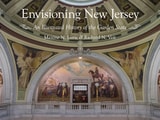
See New Jersey history as you read about it! Envisioning New Jersey brings together 650 spectacular images that illuminate the course of the state’s history, from prehistoric times to the present. Readers may think they know New Jersey’s history—the state’s increasing diversity, industrialization, and suburbanization—but the visual record presented here dramatically deepens and enriches that knowledge.
Compiled by the authors of New Jersey: A History of the Garden State, this volume is intended as an illustrated companion to that earlier volume. Envisioning New Jersey also stands on its own because essays synthesizing each era accompany the illustrations. A fascinating gold mine of images from the state’s past, Envisioning New Jersey is the first illustrated book on the Garden State that covers its complete history, capturing the amazing transformation of New Jersey over time.
View sample pages (http://issuu.com/rutgersuniversitypress/docs/lurie_veit_envisioning_sample)
Thanks to the New Jersey Historical Commission, the New Jersey Council for the Humanities, and generous individual donors for making this project possible.
Escalante
The Best Kind of NothingText by Brooke Williams; Photographs by Chris Noble
University of Arizona Press, 2006
Extracting Appalachia
Images of the Consolidation Coal Company, 1910–1945Geoffrey L. Buckley
Ohio University Press, 2004
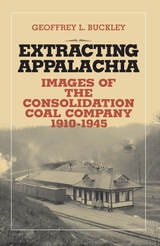
As a function of its corporate duties, the Consolidation Coal Company, one of the largest coal-mining operations in the United States during the first half of the twentieth century, had photographers take hundreds of pictures of nearly every facet of its operations. Whether for publicity images, safety procedures, or archival information, these photographs create a record that goes far beyond the purpose the company intended.
In Extracting Appalachia, geographer Geoffrey L. Buckley examines the company’s photograph collection housed at the Smithsonian Institution’s National Museum of American History. Included in the collection are images of mine openings, mining equipment, and mine accidents, as well as scenes of the company towns, including schools, churches, recreational facilities, holiday celebrations, and company stores.
Although the photographs in the collection provide us with valuable insights, they tell only part of the story. Using company records, state and federal government documents, contemporary newspaper accounts, and other archival materials, Professor Buckley shows that these photographs reveal much more than meets the eye.
Extracting Appalachia places these historic mining images in their social, cultural, and historical context, uncovering the true value and meaning of this rare documentary record.
Eye Contact
Photographing Indigenous AustraliansJane Lydon
Duke University Press, 2005
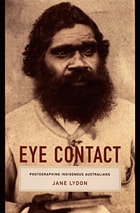
Lydon shows how the photographic portrayals of the Aboriginal residents of Coranderrk changed over time, reflecting various ideas of the colonial mission—from humanitarianism to control to assimilation. In the early twentieth century, the images were used on stereotypical postcards circulated among the white population, showing what appeared to be compliant, transformed Aboriginal subjects. The station closed in 1924 and disappeared from public view until it was rediscovered by scholars years later. Aboriginal Australians purchased the station in 1998, and, as Lydon describes, today they are using the Coranderrk photographic archive in new ways, to identify family members and tell stories of their own.