Results by title
101 books match the query 'Planning' and 4 start with e
Electric Vehicle Charge Point Infrastructure
From planning to operationDavid Trousdale
The Institution of Engineering and Technology, 2025
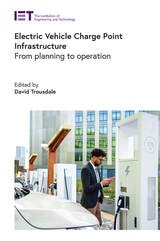
The use of electric vehicles (EVs) is a topic of great importance, given the continued drive towards net zero and the phase out of the sale of new petrol and diesel vehicles. However, a key concern is the need to install enough charge point infrastructure to grow in tandem with increasing EV adoption. Lack of EV charge point infrastructure and range anxiety are often cited as barriers to EV uptake. Therefore, a closer look is needed to understand how to model and build suitable EV charge point infrastructure, and how this can contribute to the broader aim of decarbonising transport.
[more]

Electricity Economics and Planning
T.W. Berrie
The Institution of Engineering and Technology, 1992
This book is unique in gathering under one over all the elements of electricity economics and planning, both for the traditional approach and for the new developments of the 1990s, e.g. privatisation, competition, deregulation and more efficient markets and pricing. All the fundamental institutional aspects of electricity in the 1990s are also discussed, particularly relevant at a time when the utilities of the developed world are being restructured, those of the ex-centrally planned economies are being profoundly reorganised and those of developing countries have enormous debt problems. The book describes how these challenges of the 1990s are to be understood and met.
[more]
Endangered City
The Politics of Security and Risk in BogotáAustin Zeiderman
Duke University Press, 2016
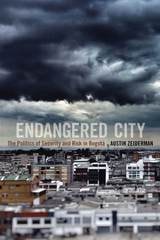
Security and risk have become central to how cities are planned, built, governed, and inhabited in the twenty-first century. In Endangered City, Austin Zeiderman focuses on this new political imperative to govern the present in anticipation of future harm. Through ethnographic fieldwork and archival research in Bogotá, Colombia, he examines how state actors work to protect the lives of poor and vulnerable citizens from a range of threats, including environmental hazards and urban violence. By following both the governmental agencies charged with this mandate and the subjects governed by it, Endangered City reveals what happens when logics of endangerment shape the terrain of political engagement between citizens and the state. The self-built settlements of Bogotá’s urban periphery prove a critical site from which to examine the rising effect of security and risk on contemporary cities and urban life.
[more]
Engaged Urban Pedagogy
Participatory Practices in Planning and Place-MakingEdited by Lucy Natarajan and Michael Short
University College London, 2023
A practical handbook for teaching about the built environment.
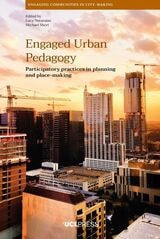
Engaged Urban Pedagogy presents a participatory approach to teaching about the built environment by exploring twelve examples of real-world engagement in urban planning involving people within, and beyond, the university. Starting with curriculum review, course content is analyzed in light of urban pasts, race, queer identity, lived experiences, and the concerns of urban professionals. Case studies then shift to focus on techniques for participatory critical pedagogy, including expanding the classroom with links to live place-making processes, connections made through digital co-design exercises, and student-led podcasting assignments. Finally, the book turns to activities beyond formal university teaching, such as those where school-age children learn about their own participation in urban processes together alongside university students and researchers. Drawing on foundational works of critical pedagogy, the contributors present a distinctly urban praxis that will help those in universities respond to the built environment challenges of today.
Engaged Urban Pedagogy presents a participatory approach to teaching about the built environment by exploring twelve examples of real-world engagement in urban planning involving people within, and beyond, the university. Starting with curriculum review, course content is analyzed in light of urban pasts, race, queer identity, lived experiences, and the concerns of urban professionals. Case studies then shift to focus on techniques for participatory critical pedagogy, including expanding the classroom with links to live place-making processes, connections made through digital co-design exercises, and student-led podcasting assignments. Finally, the book turns to activities beyond formal university teaching, such as those where school-age children learn about their own participation in urban processes together alongside university students and researchers. Drawing on foundational works of critical pedagogy, the contributors present a distinctly urban praxis that will help those in universities respond to the built environment challenges of today.
[more]