Results by title
191 books match the query 'Politics and literature' and 14 start with e
E Pluribus Unum
Nineteenth-Century American Literature and the Constitutional ParadoxHarris, W. C.
University of Iowa Press, 2005
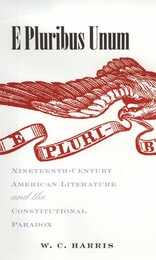
The project of E Pluribus Unum is twofold. Its first and underlying concern is the general philosophic problem of the one and the many as it came to be understood at the time. W. C. Harris supplies a detailed account of the genealogy of the concept, exploring both its applications and its paradoxes as a basis for state and identity formation.
Harris then considers the perilous integration of the one and the many as a motive in the major literary accomplishments of 19th-century U.S. writers. Drawing upon critical as well as historical resources and upon contexts as diverse as cosmology, epistemology, poetics, politics, and Bible translation, he discusses attempts by Poe, Whitman, Melville, and William James to resolve the problems of social construction caused by the paradox of e pluribus unum by writing literary and philosophical texts that supplement the nation’s political founding documents.
Poe (Eureka), Whitman (Leaves of Grass), Melville (Billy Budd), and William James (The Varieties of Religious Experience) provide their own distinct, sometimes contradictory resolutions to the conflicting demands of diversity and unity, equality and hierarchy. Each of these texts understands literary and philosophical writing as having the potential to transform-conceptually or actually-the construction of social order.
This work will be of great interest to literary and constitutional scholars.
ELEGIAC CITYSCAPE
Propertius and the Meaning of Roman MonumentsTara S. Welch
The Ohio State University Press, 2005
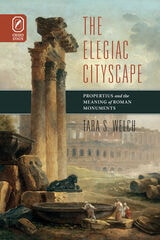
The Elegiac Cityscape explores Propertius’ Rome and the various ways his poetry about the city illuminates the dynamic relationship between one individual and his environment. Combining the approaches of archaeology and literary criticism, Tara S. Welch examines how Propertius’ poems on Roman places scrutinize the monumentalization of various ideological positions in Rome, as they poke and prod Rome’s monuments to see what further meanings they might admit. The result is a poetic book rife with different perspectives on the eternal city, perspectives that often call into question any sleepy or complacent adherence to Rome’s traditional values.
Edward Said and the Work of the Critic
Speaking Truth to PowerPaul A. Bové, ed.
Duke University Press, 2000
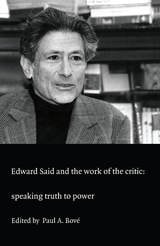
In two separate interviews, Said himself comments on a variety of topics, among them the response of the American Jewish community to his political efforts in the Middle East. Yet even as the Palestinian struggle finds a central place in his work, it is essential—as the contributors demonstrate—to see that this struggle rests on and gives power to his general "critique of colonizers" and is not simply the outgrowth of a local nationalism. Perhaps more than any other person in the United States, Said has changed how the U.S. media and American intellectuals must think about and represent Palestinians, Islam, and the Middle East. Most importantly, this change arises not as a result of political action but out of a potent humanism—a breadth of knowledge and insight that has nourished many fields of inquiry. Originally a special issue of boundary 2, the book includes new articles on minority culture and on orientalism in music, as well as an interview with Said by Jacqueline Rose.
Supporting the claim that the last third of the twentieth century can be called the "Age of Said," this collection will enlighten and engage students in virtually any field of humanistic study.
Contributors. Jonathan Arac, Paul A. Bové, Terry Cochran, Barbara Harlow, Kojin Karatani, Rashid I. Khalidi, Sabu Kohsu, Ralph Locke, Mustapha Marrouchi, Jim Merod, W. J. T. Mitchell, Aamir R. Mufti, Jacqueline Rose, Edward W. Said, Gayatri Chakravorty Spivak, Lindsay Waters

Edwardian Stories of Divorce
Janice Hubbard Harris
Rutgers University Press, 1996
Much as abortion in the United States today is a contentious issue used for scripting women's roles and potential into the national agenda, divorce was an issue dividing England in the Edwardian era. According to Janice Harris, anything and everything, from illicit sex and family values to the Garden of Eden, wrath of children, poverty of women, nature of cruelty, scandal of America, threat of Germany, and future of England were part of the debate over divorce. Living under marriage laws far more restrictive than those of their Protestant neighbors, Edwardian women and men campaigned for reform with a barrage of compelling stories. Organizing her analysis around three major sources of narrative on divorce––the Sunday papers, the Report of the Royal Commission on Divorce and Matrimonial causes, and the novel––Harris uncovers a war of words and a competition of tales. In raising questions about the winners, losers, and spoils, Harris expands our understanding of the history of divorce, the wars between the sexes, and the political import of those wars.
In the end, she presents a complex and lively story herself, one that illuminates battles over marriage and divorce taking place in our own era as well. This humane book on a long-neglected subject marks an important contribution to narrative studies and Edwardian history.
Emerson and the Defense of Equality
Greg Garvey
University of Massachusetts Press, 2025
Arguing for equality as the necessary foundation of liberty
During Ralph Waldo Emerson’s lifetime, the idea of universal human equality was under intensive assault. Repeatedly—in contexts ranging from slavery, to marriage, to politics and workers’ rights—Americans of the time were being told that equality was an obsolete ideal and that the future would belong to those who accepted the hard truth that liberty lies not in egalitarian values but in hierarchies of domination and submission. Greg Garvey’s Emerson and the Defense of Equality focuses on Emerson as a real-time defender of equality during the antebellum culture wars.
In contrast to studies that treat individual liberty as Emerson’s primary concern, Garvey argues that Emerson’s works define a broad and sustained defense of equality as the necessary foundation of liberty. When read as part of a debate about equality, Emerson’s Nature is a treatise on individuality and the common weal; his anti-slavery speeches and English Traits advance evolutionary theories to rebut polygenesist arguments for white supremacy; the essays “Love” and “Domestic Life” challenge gender spheres and explore equality in marriage, friendship, and citizenship. As Emerson speculates on the future, “Politics” and “The Young American” anticipate a “beneficent socialism” in which human rights will always have priority over property rights. In his career-long effort to defend a threatened ideal, Emerson develops an aspirational vision of society that understands equality to be a fundamental aspect of liberty.
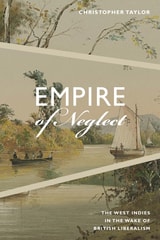
Empire of Neglect
The West Indies in the Wake of British LiberalismChristopher Taylor
Duke University Press, 2018
Enemy Within
Culture Wars and Political Identity in Novels of the French Third RepublicGilbert D. Chaitin
The Ohio State University Press, 2008

England in 1819
The Politics of Literary Culture and the Case of Romantic HistoricismJames Chandler
University of Chicago Press, 1998
"1819? At first sight, it might not seem a 'hot date'; but as James Chandler argues in his powerful book, it would be a mistake to overlook a year of such exceptional political conflagration and literary pyrotechnics in British history. Chandler's study is a wide-ranging, enormously ambitious, densely packed, closely argued work."—John Brewer, New Republic
"The book's largest argument, and the source of its considerable revelations, is that late twentieth-century practices of cultural history-writing have their roots in the peculiar Romantic historicism born in post-Waterloo Britain."—Jon Klancher, Times Literary Supplement
"A monumental work of scholarship."—Terry Eagleton, The Independent
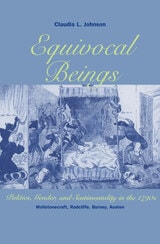
Equivocal Beings
Politics, Gender, and Sentimentality in the 1790s--Wollstonecraft, Radcliffe, Burney, AustenClaudia L. Johnson
University of Chicago Press, 1995
Demonstrating the interrelationships among politics, gender, and feeling in the fiction of this period, Johnson provides detailed readings of Wollstonecraft, Radcliffe, and Burney, and treats the qualities that were once thought to mar their work—grotesqueness, strain, and excess—as indices of ideological conflict and as strategies of representation during a period of profound political conflict. She maintains that the reactionary reassertion of male sentimentality as a political duty displaced customary gender roles, rendering women, in Wollstonecraft's words, "equivocal beings."
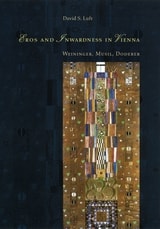
Eros and Inwardness in Vienna
Weininger, Musil, DodererDavid S. Luft
University of Chicago Press, 2003
According to Luft, Otto Weininger viewed human beings as bisexual and applied this theme to issues of creativity and morality. Robert Musil developed a creative ethics that was closely related to his open, flexible view of sexuality and gender. And Heimito von Doderer portrayed his own sexual obsessions as a way of understanding the power of total ideologies, including his own attraction to National Socialism. For Luft, the significance of these three writers lies in their understandings of eros and inwardness and in the roles that both play in ethical experience and the formation of meaningful relations to the world-a process that continues to engage artists, writers, and thinkers today.
Eros and Inwardness in Vienna will profoundly reshape our understanding of Vienna's intellectual history. It will be important for anyone interested in Austrian or German history, literature, or philosophy.
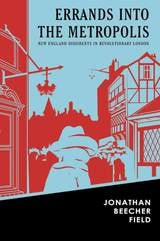
Errands into the Metropolis
New England Dissidents in Revolutionary LondonJonathan Beecher Field
Dartmouth College Press, 2012
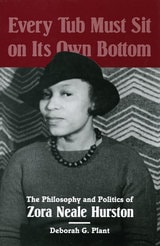
Every Tub Must Sit on Its Own Bottom
The Philosophy and Politics of Zora Neale HurstonDeborah G. Plant
University of Illinois Press, 1995
needed at this point in the evolving critical assessment of Hurston. It
is a paradigm for the study of individual African American women writers."
-- Alice Deck, University of Illinois at Urbana-Champaign
In a ground-breaking study
of Zora Neale Hurston, Deborah Plant takes issue with current notions
of Hurston as a feminist and earlier impressions of her as an intellectual
lightweight who disregarded serious issues of race in American culture.
Instead, Plant calls Hurston a "writer of resistance" who challenged
the politics of domination both in her life and in her work. One of the
great geniuses of the Harlem Renaissance, Hurston stands out as a strong
voice for African-American women. Her anthropological inquiries as well
as her evocative prose provide today's readers with a rich history of
African American folk culture, a folk culture through which Hurston expressed
her personal and political strategy of resistance and self-empowerment.
Through readings of Hurston's
fiction and autobiographical writings, Plant offers one of the first book-length
discussions of Hurston's personal philosophy of individualism and self-preservation.
From a discussion of Hurston's preacher father and influential mother,
whose guiding philosophy is reflected in the title of this book, to the
influence of Spinoza and Nietzsche, Plant puts into perspective the driving
forces behind Hurston's powerful prose.
This fresh look at one of
the most important writers of the twentieth century is sure to shape future
study of Hurston and her work.
Exiles in the City
Hannah Arendt and Edward W. Said in CounterpointWilliam V. Spanos
The Ohio State University Press, 2012
Experiments with Empire
Anthropology and Fiction in the French AtlanticJustin Izzo
Duke University Press, 2019