Results by title
52 books match the query 'Postcolonialism in literature' and 3 start with e
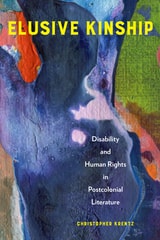
Elusive Kinship
Disability and Human Rights in Postcolonial LiteratureChristopher Krentz
Temple University Press, 2022
Characters with disabilities are often overlooked in fiction, but many occupy central places in literature by celebrated authors like Chinua Achebe, Salman Rushdie, J. M. Coetzee, Anita Desai, Jhumpa Lahiri, Edwidge Danticat, and others. These authors deploy disability to do important cultural work, writes Christopher Krentz in his innovative study, Elusive Kinship. Such representations not only relate to the millions of disabled people in the global South, but also make more vivid such issues as the effects of colonialism, global capitalism, racism and sexism, war, and environmental disaster.
Krentz is the first to put the fields of postcolonial studies, studies of human rights and literature, and literary disability in conversation with each other in a book-length study. He enhances our appreciation of key texts of Anglophone postcolonial literature of the global South, including Things Fall Apart and Midnight’s Children. In addition, he uncovers the myriad ways fiction gains energy, vitality, and metaphoric force from characters with extraordinary bodies or minds.
Depicting injustices faced by characters with disabilities is vital to raising awareness and achieving human rights. Elusive Kinship nudges us toward a fuller understanding of disability worldwide.
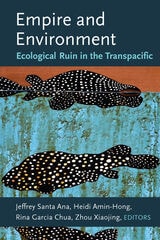
Empire and Environment
Ecological Ruin in the TranspacificJeffrey Santa Ana, Heidi Amin-Hong, Rina Garcia Chua, Zhou Xiaojing, Editors
University of Michigan Press, 2022
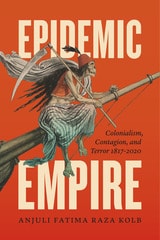
Epidemic Empire
Colonialism, Contagion, and Terror, 1817–2020Anjuli Fatima Raza Kolb
University of Chicago Press, 2021
Terrorism is a cancer, an infection, an epidemic, a plague. For more than a century, this metaphor has figured insurgent violence as contagion in order to contain its political energies. In Epidemic Empire, Anjuli Fatima Raza Kolb shows that this trope began in responses to the Indian Mutiny of 1857 and tracks its tenacious hold through 9/11 and beyond. The result is the first book-length study to approach the global War on Terror from a postcolonial literary perspective.
Raza Kolb assembles a diverse archive from colonial India, imperial Britain, French and independent Algeria, the postcolonial Islamic diaspora, and the neoimperial United States. Anchoring her book are studies of four major writers in the colonial-postcolonial canon: Rudyard Kipling, Bram Stoker, Albert Camus, and Salman Rushdie. Across these sources, she reveals the tendency to imagine anticolonial rebellion, and Muslim insurgency specifically, as a virulent form of social contagion. Exposing the long history of this broken but persistent narrative, Epidemic Empire is a major contribution to the rhetorical history of our present moment.