Results by title
471 books match the query 'Power' and 14 start with e
Ecologics
Wind and Power in the AnthropoceneCymene Howe
Duke University Press, 2019
In her volume, Ecologics, Howe narrates how an antidote to the Anthropocene became both failure and success. Tracking the development of what would have been Latin America's largest wind park, Howe documents indigenous people's resistance to the project and the political and corporate climate that derailed its renewable energy potential. Using feminist and more-than-human theories, Howe demonstrates how the dynamics of energy and environment cannot be captured without understanding how human aspirations for energy articulate with nonhuman beings, technomaterial objects, and the geophysical forces that are at the heart of wind and power.

Edward Said and the Work of the Critic
Speaking Truth to PowerPaul A. Bové, ed.
Duke University Press, 2000
In two separate interviews, Said himself comments on a variety of topics, among them the response of the American Jewish community to his political efforts in the Middle East. Yet even as the Palestinian struggle finds a central place in his work, it is essential—as the contributors demonstrate—to see that this struggle rests on and gives power to his general "critique of colonizers" and is not simply the outgrowth of a local nationalism. Perhaps more than any other person in the United States, Said has changed how the U.S. media and American intellectuals must think about and represent Palestinians, Islam, and the Middle East. Most importantly, this change arises not as a result of political action but out of a potent humanism—a breadth of knowledge and insight that has nourished many fields of inquiry. Originally a special issue of boundary 2, the book includes new articles on minority culture and on orientalism in music, as well as an interview with Said by Jacqueline Rose.
Supporting the claim that the last third of the twentieth century can be called the "Age of Said," this collection will enlighten and engage students in virtually any field of humanistic study.
Contributors. Jonathan Arac, Paul A. Bové, Terry Cochran, Barbara Harlow, Kojin Karatani, Rashid I. Khalidi, Sabu Kohsu, Ralph Locke, Mustapha Marrouchi, Jim Merod, W. J. T. Mitchell, Aamir R. Mufti, Jacqueline Rose, Edward W. Said, Gayatri Chakravorty Spivak, Lindsay Waters
Efficacy of Sound
Power, Potency, and Promise in the Translocal Ritual Music of Cuban Ifá-ÒrìsàRuthie Meadows
University of Chicago Press, 2023
Hailing from Cuba, Nigeria, and various sites across Latin America and the Caribbean, Ifá missionary-practitioners are transforming the landscape of Ifá divination and deity (òrìṣà/oricha) worship through transatlantic travel and reconnection. In Cuba, where Ifá and Santería emerged as an interrelated, Yorùbá-inspired ritual complex, worshippers are driven to “African traditionalism” by its promise of efficacy: they find Yorùbá approaches more powerful, potent, and efficacious.
In the first book-length study on music and Ifá, Ruthie Meadows draws on extensive, multisited fieldwork in Cuba and Yorùbáland, Nigeria, to examine the controversial “Nigerian-style” ritual movement in Cuban Ifá divination. Meadows uses feminist and queer of color theory along with critical studies of Africanity to excavate the relation between utility and affect within translocal ritual music circulations. Meadows traces how translocal Ifá priestesses (ìyánífá), female batá drummers (bataleras), and priests (babaláwo) harness Yorùbá-centric approaches to ritual music and sound to heighten efficacy, achieve desired ritual outcomes, and reshape the conditions of their lives. Within a contentious religious landscape marked by the idiosyncrasies of revolutionary state policy, Nigerian-style Ifá-Òrìṣà is leveraged to transform femininity and masculinity, state religious policy, and transatlantic ritual authority on the island.
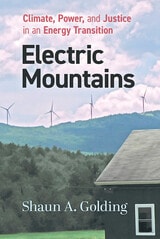
Electric Mountains
Climate, Power, and Justice in an Energy TransitionShaun A. Golding
Rutgers University Press, 2021
Committed environmentalists in one of North America’s most progressive regions desperately wanted energy policies that address the climate crisis. For many of them, wind turbines on Northern New England’s iconic ridgelines symbolize the energy transition that they have long hoped to see. For others, however, ridgeline wind takes on a very different meaning. When weighing its costs and benefits locally and globally, some wind opponents now see the graceful structures as symbols of corrupted energy politics.
This book derives from several years of research to make sense of how wind turbines have so starkly split a community of environmentalists, as well as several communities. In doing so, it casts a critical light on the roadmap for energy transition that Northern New England’s ridgeline wind projects demarcate. It outlines how ridgeline wind conforms to antiquated social structures propping up corporate energy interests, to the detriment of the swift de-carbonizing and equitable transformation that climate predictions warrant. It suggests, therefore, that the energy transition of which most of us are a part, is probably not the transition we would have designed ourselves, if we had been asked.

Eliciting Care
Health and Power in Northern ThailandBo Kyeong Seo
University of Wisconsin Press, 2020
Using the broader concept of elicitation, Seo analyzes the social encounters and forces that shape caregivers. These dynamics challenge dichotomies of subjugation and resistance, consent and coercion, and dependence and autonomy. The intimate and moving stories at the core of Eliciting Care from patients and providers draw attention to a broader, critically important phenomenon at the hospital level. Seo's poignant ethnography engages with feminist theory on the ethics of care, and in so doing, makes a significant contribution to emerging work in the field of health policy and politics.
Empathy and Performance
Enactments of Power in Latinx AmericaLaura V. Sández
Vanderbilt University Press, 2024
To survey different answers to these queries, Sández studies Indigurrito (Nao Bustamante); Dominicanish (Josefina Báez); ¡Bienvenidos Blancos! or Welcome White People! (Alex Torra); the apology delivered by the group Veterans Stand with Standing Rock during protests against the Dakota Access Pipeline; and Kukuli Velarde’s body of work, from We, the Colonized Ones to A Mi Vida. In these artistic enactments, which range from 1992 to 2021, the historical construct of boundaries and bodies becomes evident. Following recent work on empathy by Lanzoni, Maibom, Calloway-Thomas, Bloom, Hogan, and Matravers, among others, Sández examines in-group/out-group divisions, the establishment of identity categories through performance, and the exploration of subaltern identities.
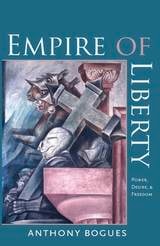
Empire of Liberty
Power, Desire, and FreedomAnthony Bogues
Dartmouth College Press, 2010

Encounter with the Plumed Serpent
Drama and Power in the Heart of MesoamericaMaarten Jansen
University Press of Colorado, 2007
By analyzing and cross-referencing the codices, which have been fragmented and dispersed in far-flung archives, the authors attempt to reconstruct Mixtec history. Their synthesis here builds on long examination of the ancient manuscripts. Adding useful interpretation and commentary, Jansen and Pérez Jiménez synthesize the large body of surviving documents into the first unified narrative of Mixtec sacred history.
Archaeologists and other scholars as well as readers with an interest in Mesoamerican cultures will find this lavishly illustrated volume a compelling and fascinating history and a major step forward in knowledge of the Mixtec.
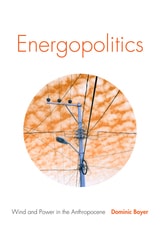
Energopolitics
Wind and Power in the AnthropoceneDominic Boyer
Duke University Press, 2019
In his volume, Energopolitics, Boyer examines the politics of wind power and how it is shaped by myriad factors, from the legacies of settler colonialism and indigenous resistance to state bureaucracy and corporate investment. Drawing on interviews with activists, campesinos, engineers, bureaucrats, politicians, and bankers, Boyer outlines the fundamental impact of energy and fuel on political power. Boyer also demonstrates how large conceptual frameworks cannot adequately explain the fraught and uniquely complicated conditions on the isthmus, illustrating the need to resist narratives of anthropocenic universalism and to attend to local particularities.
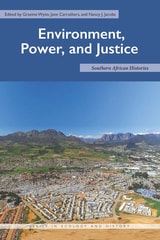
Environment, Power, and Justice
Southern African HistoriesGraeme Wynn
Ohio University Press, 2022

Ex Ante
Power and Prediction in the Real-Time FutureJohn Cheney-Lippold
University of Chicago Press, 2027
An incisive framework for understanding how predictive AI has reshaped our relationship with time.
Ex Ante argues that AI systems draw us into a new experience of time, a continuous stream of machine-generated futures that reshapes our relationship to ourselves, to capitalism, and to infrastructure. Unlike other predictive tools that help us prepare for what might come, these projections—produced by algorithms and sourced by massive flows of data—calibrate our actions moment by moment, second by second.
In this book, John Cheney-Lippold offers a framework he calls the ex ante, Latin for “before the event,” as a way to consider how the future has become capitalism’s latest resource for exploitation. Through case studies spanning TikTok beauty filters that have fueled a surge in plastic surgery consultations, chess engines that redefine how the game is played, online sports betting platforms that commodify probability itself, hospital sepsis algorithms that transform the labor of nursing, and coordinated vehicle networks that collectively anticipate their surroundings to function, Ex Ante offers an exploration and powerful critique of our algorithmic present and the powers behind it.
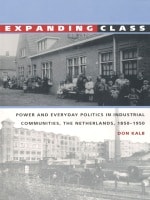
Expanding Class
Power and Everyday Politics in Industrial Communities, The Netherlands 1850–1950Don Kalb
Duke University Press, 1998
Expanding Class compares Brabant’s quaint central shoemaking district to its electrical boomtown Eindhoven, home of the enormous Philips Corporation. It introduces the concept of "flexible familism," a sociological phenomenon in which family daughters were employed to facilitate a cheap and ample labor force. Industrialists manipulated and fostered flexible familism to ensure the discipline and loyalty of the working-class community. By using the industrial Netherlands as a paradigm, Kalb reveals new and productive ways to examine class construction and the development of labor history in other countries over the past thirty years, steering a path between the two schools of thought—cultural and economic—that have dominated labor history discussions in recent years.
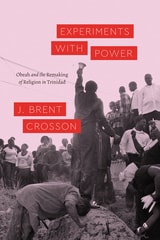
Experiments with Power
Obeah and the Remaking of Religion in TrinidadJ. Brent Crosson
University of Chicago Press, 2020
From eighteenth-century slave rebellions to contemporary responses to police brutality, Caribbean methods of problem-solving “spiritual work” have been criminalized under the label of “obeah.” Connected to a justice-making force, obeah remains a crime in many parts of the anglophone Caribbean. In Experiments with Power, J. Brent Crosson addresses the complex question of what obeah is. Redescribing obeah as “science” and “experiments,” Caribbean spiritual workers unsettle the moral and racial foundations of Western categories of religion. Based on more than a decade of conversations with spiritual workers during and after the state of emergency, this book shows how the reframing of religious practice as an experiment with power transforms conceptions of religion and law in modern nation-states.

Explanation and Power
The Control of Human BehaviorMorse Peckham
University of Minnesota Press, 1988
Explanation and Power was first published in 1988. Minnesota Archive Editions uses digital technology to make long-unavailable books once again accessible, and are published unaltered from the original University of Minnesota Press editions.
The meaning of any utterance or any sign is the response to that utterance or sign: this is the fundamental proposition behind Morse Peckham's Explanation and Power. Published in 1979 and now available in paperback for the first time, Explanation and Power grew out of Peckham's efforts, as a scholar of Victorian literature, to understand the nature of Romanticism. His search ultimately led back to—and built upon—the tradition of signs developed by the American Pragmatists. Since, in Peckham's view, meaning is not inherent in word or sign, only in response, human behavior itself must depend upon interaction, which in turn relies upon the stability of verbal and nonverbal signs. In the end, meaning can be stabilized only by explanation, and when explanation fails, by force. Peckham's semiotic account of human behavior, radical in its time, contends with the same issues that animate today's debates in critical theory — how culture is produced, how meaning is arrived at, the relation of knowledge to power and of society to its institutions. Readers across a wide range of disciplines, in the humanities and social sciences, will welcome its reappearance.