Results by title
194 books match the query 'Practice' and 12 start with e
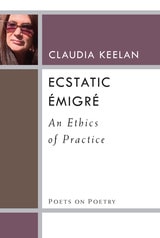
Ecstatic Émigré
An Ethics of PracticeClaudia Keelan
University of Michigan Press, 2018
Ecstatic Émigré pays homage to poets from Thoreau and Whitman to Alice Notley, all of whom share a commitment to living and writing in the moment. Keelan asks the same questions about the growth of flowers or the meaning of bioluminescence as she does about the poetics of John Cage or George Oppen. Her originality is grounded by the ways in which she connects poetic principles with the spiritual concepts of via negativa demonstrated both in St. John of the Cross and Mahayana Buddhism. In addition, her essays demonstrate an activist spirit and share a commitment to the passive resistance demonstrated in Martin Luther King, Jr.’s concept of the “beloved community” and philosopher Simone Weil’s dedication to “exile.”
Effective Teaching of Technical Communication
Theory, Practice, and ApplicationMichael J. Klein
University Press of Colorado, 2021
Drawn from quantitative and qualitative work of practitioners in the field, this edited collection provides an update to the Staples and Ornatowski's influential Foundations of Teaching Technical Communication (1997). The collection is organized around the broad themes of expanding pedagogy, shaping curriculum, incorporating technology, and engaging community. In each section, authors illustrate their experiences with teaching in the university technical communication classroom, addressing topics such as rethinking the role of internships, redesigning student learning outcomes for assessment practices, incorporating ethics into the technical communication classroom, using visual communication in community context, and engaging plain language. These sixteen chapters, taken as a whole or individually, provide readers with insights and examples into teaching technical communication in the 21st century.
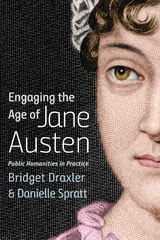
Engaging the Age of Jane Austen
Public Humanities in PracticeBridget Draxler and Danielle Spratt
University of Iowa Press, 2018
Humanities scholars, in general, often have a difficult time explaining to others why their work matters, and eighteenth-century literary scholars are certainly no exception. To help remedy this problem, literary scholars Bridget Draxler and Danielle Spratt offer this collection of essays to defend the field’s relevance and demonstrate its ability to help us better understand current events, from the proliferation of media to ongoing social justice battles.
The result is a book that offers a range of approaches to engaging with undergraduates, non-professionals, and broader publics into an appreciation of eighteenth-century literature. Essays draw on innovative projects ranging from a Jane Austen reading group held at the public library to students working with an archive to digitize an overlooked writer’s novel.
Reminding us that the eighteenth century was an exhilarating age of lively political culture—marked by the rise of libraries and museums, the explosion of the press, and other platforms for public intellectual debates—Draxler and Spratt provide a book that will not only be useful to eighteenth-century scholars, but can also serve as a model for other periods as well. This book will appeal to librarians, archivists, museum directors, scholars, and others interested in digital humanities in the public life.
Contributors: Gabriela Almendarez, Jessica Bybee, Nora Chatchoomsai, Gillian Dow, Bridget Draxler, Joan Gillespie, Larisa Good, Elizabeth K. Goodhue, Susan Celia Greenfield, Liz Grumbach, Kellen Hinrichsen, Ellen Jarosz, Hannah Jorgenson, John C. Keller, Naz Keynejad, Stephen Kutay, Chuck Lewis, Nicole Linton, Devoney Looser, Whitney Mannies, Ai Miller, Tiffany Ouellette, Carol Parrish, Paul Schuytema, David Spadafora, Danielle Spratt, Anne McKee Stapleton, Jessica Stewart, Colleen Tripp, Susan Twomey, Nikki JD White, Amy Weldon
English for Specific Purposes in Theory and Practice
Diane Belcher, Editor
University of Michigan Press, 2009
The field of English for Specific Purposes (ESP) is among the richest areas of second language research and practice because increasing globalization and changing technologies spawn new modes of intercultural connection and new occasions for second language use. English for Specific Purposes in Theory and Practice compasses this burgeoning field by presenting new research and commentary from some of the field’s leading scholars.
This volume explores ESP from academic (secondary and tertiary), occupational (business, medical, and legal), and socio-cultural perspectives. Recurring motifs throughout the volume are the effects of globalization, English as a lingua franca, and the impact of migrant populations. One of the major questions this volume seeks to answer is, How can ESP instructors meet their own teacher knowledge needs? Also considered is, How have ESP practitioners succeeded in gaining control of the knowledge they need to address their students’ needs?
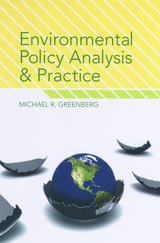
Environmental Policy Analysis and Practice
Greenberg, Michael R
Rutgers University Press, 2008
In Environmental Policy Analysis and Practice, Michael R. Greenberg cuts through the complicated layers of bureaucracy, science, and the public interest to show how all policy considerations can be broken down according to six specific factors: 1) the reaction of elected government officials, 2) the reactions of the public and special interests, 3) knowledge developed by scientists and engineers, 4) economics, 5) ethical imperatives, and 6) time pressure to make a decision.
The book is organized into two parts, with the first part defining and illustrating each one of these criteria. Greenberg draws on examples such as nuclear power, pesticides, brownfield redevelopment, gasoline additives, and environmental cancer, but focuses on how these subjects can be analyzed rather than exclusively on the issues themselves. Part two goes on to describe a set of over twenty tools that are used widely in policy analysis, including risk assessment, environmental impact analysis, public opinion surveys, cost-benefit analysis, and others. These tools are described and then illustrated with examples from part one.
Weaving together an impressive combination of practical advice and engaging first person accounts from government officials, administrators, and leaders in the fields of public health and medicine, this clearly written volume is poised to become a leading text in environmental policy.

Ethical Principles and Practice
John Howie
Southern Illinois University Press, 1987
The second volume in applied ethics based on the distinguished Wayne Leys Memorial Lectureship Series.
With guidelines from legal reasoning, Michael D. Bayles examines “Moral Theory and Application.” Abraham Edel questions “Ethics Applied Or Conduct Enlightened?” The late Warner A. Wick shows in “The Good Person and the Good Society: Some Ideals Foolish and Otherwise” that devotion to ideals need not be either fanaticism or foolishness. John Lachs contends that many public gains are purchased at the cost of individuals being manipulated in “Public Benefit, Private Costs.” James E. Childress in “Gift of Life…” considers ethical issues in obtaining and distributing human organs. Carl Wellman in “Terrorism and Moral Rights” argues that there can be no “rights-based justification” for anti-abortion terrorism.
Ethics and Practice in Science Communication
Edited by Susanna Priest, Jean Goodwin, and Michael F. Dahlstrom
University of Chicago Press, 2018
In three sections—how ethics matters, professional practice, and case studies—contributors to this volume explore the many complex questions surrounding the communication of scientific results to nonscientists. Has the science been shared clearly and accurately? Have questions of risk, uncertainty, and appropriate representation been adequately addressed? And, most fundamentally, what is the purpose of communicating science to the public: Is it to inform and empower? Or to persuade—to influence behavior and policy? By inspiring scientists and science communicators alike to think more deeply about their work, this book reaffirms that the integrity of the communication of science is vital to a healthy relationship between science and society today.
Evaluative Research
Principles and Practice in Public Service and Social Action ProgrEdward Suchman
Russell Sage Foundation, 1968
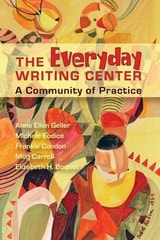
Everyday Writing Center
A Community of PracticeAnne E. Geller, Michele Eodice, Frankie Condon, Meg Carroll, Elizabeth H. Boquet
Utah State University Press, 2007
The Everyday Writing Center challenges some of the most comfortable traditions in its field, and it does so with a commitment and persuasiveness that one seldom sees in scholarly discussion. The book, at its core, is an argument for a new writing center consciousness--one that makes the most of the writing center's unique, and uniquely fluid, identity.
Writing center specialists live with a liminality that has been acknowledged but not fully explored in the literature. Their disciplinary identity is with the English department, but their mission is cross-disciplinary; their research is pedagogical, but they often report to central administration. Their education is in humanities, but their administrative role demands constant number-crunching. This fluid identity explains why Trickster--an icon of spontaneity, shape-shifting, and the creative potential of chaos--has come to be a favorite cultural figure for the authors of this book.
Adapting Lewis Hyde and others, these authors use Trickster to develop a theme of ordinary disruptions ("the everyday") as a source of provocative learning moments that can liberate both student writers and writing center staff. At the same time, the authors parlay Etienne Wenger's concept of "community of practice" into an ethos for a dynamic, learner-centered pedagogy that is especially well-suited to the peculiar teaching situation of the writing center.
Through Trickster, they question not only accepted approaches to writing center pedagogy, but conventional approaches to race, time, leadership, and collaboration as well. They encourage their field to exploit the creative potential in ordinary events that are normally seen as disruptive or defeating, and they challenge traditions in the field that tend to isolate a writing center director from the department and campus.
Yet all is not random, for the authors anchor this high-risk/high-yield approach in their commitment to a version of Wenger's community of practice. Conceiving of themselves, their colleagues, student writers, and student tutors as co-learners engaged together in a dynamic life of learning, the authors find a way to ground the excess and randomness of the everyday, while advancing an ethic of mutual respect and self-challenge.
Committed to testing a region beyond the edge of convention, the authors of The Everyday Writing Center constantly push themselves and their field toward deeper, more significant research, and more reflective, dynamic teaching.
Exchange Rate Theory and Practice
Edited by John F. Bilson and Richard C. Marston
University of Chicago Press, 1984
Expanding Fields of Architectural Discourse and Practice
Curated Works from the P.E.A.R. JournalEdited by Matthew Butcher and Megan O'Shea
University College London, 2020
The book features contributions by architectural practitioners, design researchers, artists, architectural theorists, historians, journalists, curators, and even a paleobiologist, all of whom contributed to the journal. Here, they provide a unique presentation of architectural discourse and practice that seeks to test new ground while forming distinct relationships to recent, and more longstanding, historical legacies.
Experimental Economics
Theory and PracticeJohn A. List
University of Chicago Press, 2025
A landmark practical guide from the twenty-first-century pioneer in economics.
Experimental economics—generating and interpreting data to understand human decisions, motivations, and outcomes—is today all but synonymous with economics as a discipline. The advantages of the experimental method for understanding causal effects make it the gold standard for an increasingly empirical field. But until now the discipline has lacked comprehensive and definitive guidance for how to optimally design and conduct economic experiments.
For more than 30 years, John A. List has been at the forefront of using experiments to advance economic knowledge, expanding the domain of economic experiments from the lab to the real-world. Experimental Economics is his A-to-Z compendium for students and researchers on the ground floor of designing, conducting, analyzing, and interpreting data that they generate. List seeks not only to guide readers on how to develop and implement their experimental projects—everything from design to administrative and ethical considerations—but to help them avoid all the mistakes he’s made in his career, too. Experimental Economics codifies its author’s refined approach to the design, execution, and analysis of laboratory and field experiments. It is a milestone work poised to become the definitive reference for the next century of economics (and economists).