Results by title
159 books match the query 'Present' and 7 start with e
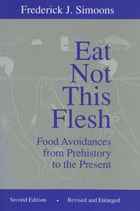
Eat Not This Flesh, 2nd Edition
Food Avoidances from Prehistory to the PresentFrederick J. Simoons
University of Wisconsin Press, 1994
Hailed as a classic when initially published in 1961, Eat Not This Flesh was the first book that explored, from a historical and cultural perspective, taboos against eating certain kinds of flesh. Frederick J. Simoons's research remains original and invaluable, the only attempt of its kind to reconstruct the origin and spread of food avoidances while challenging current Western explanations. In this expanded and updated edition, Simoons integrates new research as he examines the use and avoidance of flesh foods—including beef, pork, chicken, and eggs, camel, dog, horse, and fish—from antiquity to the present day.
Simoons suggests that Westerners are too ready, even in the absence of supporting evidence, to cite contemporary thinking about disease and environmental factors to explain why certain cultures avoid particular kinds of meat. He demonstrates how historical and archaeological evidence fails to support such explanations. He examines the origin of pork rejection in the Near East, explores the concept of the sacred cow in India and the ensuing ban on beef, and reveals how some African women abstain from chicken and eggs, fearing infertility.
While no single explanation exists for food taboos, Simoons finds that the powerful, recurrent theme of maintaining ritual purity, good health, and well-being underlies diet habits. He emphasizes that only a full range of factors can explain eating patterns, and he stresses the interplay of religious, moral, hygienic, ecological, and economic factors in the context of human culture. Maps, drawings, and photos highlighting food avoidance patterns in Africa, Asia, Europe, and the Pacific provide additional information throughout the book.
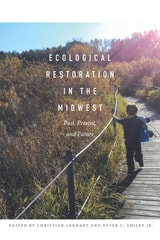
Ecological Restoration in the Midwest
Past, Present, and FutureChristian Lenhard and Peter C. Smiley, Jr.
University of Iowa Press, 2018
Most people do not realize it, but the Midwest has been at the forefront of ecological restoration longer than perhaps any other region in the United States, dating back to the 1930s. Because of its industrial history, agricultural productivity, and natural features such as the Great Lakes, the Midwest has always faced a unique set of ecological challenges.
Focusing on six cutting-edge case studies that highlight thirty restoration efforts and research sites throughout the region— Iowa, Indiana, Illinois, Wisconsin, Michigan, Minnesota, and Ohio— editors Christian Lenhart and Peter “Rocky” Smiley Jr. bring together a group of scholars and practitioners to show how midwestern restoration efforts have developed, as well as where they are headed. Whether cleaning up contamination from auto plants in Ohio, or restoring native prairie grasses along the Iowa highway, the contributors uncover a vast network of interested citizens and volunteer groups committed to preserving the region’s environment.
This study, intended for researchers, students, and practitioners, also provides an updated synthesis of restoration theory and practice, and pinpoints emerging issues of importance in the Midwest, such as climate change and the increase in invasive species it will bring to the region. Though focusing exclusively on the Midwest, the contributors demonstrate how these case studies apply to restoration efforts across the globe.
Contributors: Luther Aadland, David P. Benson, Andrew F. Casper, Hua Chen, Joe DiMisa, Steve Glass, Heath M. Hagy, John A. Harrington, Neil Haugerud, Constance Hausman, Michael J. Lemke, Christian Lenhart, Jen Lyndall, Dan Shaw, John A. Shuey, Peter C. Smiley Jr., Daryl Smith
Editing the Bible
Assessing the Task Past and PresentJohn S. Kloppenborg
SBL Press, 2012

Educating Film-Makers
Past, Present and FutureDuncan Petrie and Rod Stoneman
Intellect Books, 2014
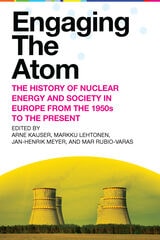
Engaging the Atom
The History of Nuclear Energy and Society in Europe from the 1950s to the PresentArne Kaijser
West Virginia University Press, 2021
With the aim of overcoming the disciplinary and national fragmentation that characterizes much research on nuclear energy, Engaging the Atom brings together specialists from a variety of fields to analyze comparative case studies across Europe and the United States. It explores evolving relationships between society and the nuclear sector from the origins of civilian nuclear power until the present, asking why nuclear energy has been more contentious in some countries than in others and why some countries have never gone nuclear, or have decided to phase out nuclear, while their neighbors have committed to the so-called nuclear renaissance. Contributors examine the challenges facing the nuclear sector in the context of aging reactor fleets, pressing climate urgency, and increasing competition from renewable energy sources.
Written by leading academics in their respective disciplines, the nine chapters of Engaging the Atom place the evolution of nuclear energy within a broader set of national and international configurations, including its role within policies and markets.
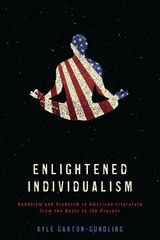
Enlightened Individualism
Buddhism and Hinduism in American Literature from the Beats to the PresentKyle Garton-Gundling
The Ohio State University Press, 2019
This “enlightened individualism” uses Buddhist and Hindu philosophy to reframe American freedom in terms of spiritual liberation, and it also reinterprets Asian teachings through Western traditions of political activism and countercultural provocation. Garton-Gundling argues that even though works by Kerouac, Walker, Kingston, and others wrestle with issues of exoticism and appropriation, their characters are also meaningfully challenged and changed by Asian faiths. These literary adaptations, then, can help Americans reenvision individualism in a more transcendent and cosmopolitan context.
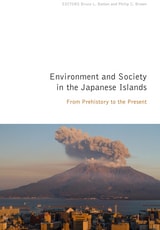
Environment and Society in the Japanese Islands
From Prehistory to the PresentBruce L. Batten
Oregon State University Press, 2015
Environment and Society in the Japanese Islands attempts to answer these questions through a series of case studies by leading Japanese and Western historians, geographers, archaeologists, and climatologists. These essays, on diverse topics from all periods of Japanese history and prehistory, are unified by their focus on the key concepts of “resilience” and “risk mitigation.” Taken as a whole, they place Japan’s experience in global context and call into question the commonly presumed division between pre-modern and modern environmental history.
Primarily intended for scholars and students in fields related to Japan or environmental history, these accessibly-written essays will be valuable to anyone wishing to learn about the historical roots of today’s environmental issues or the complex relationship between human society and the natural environment.