Results by title
50 books match the query 'Press and politics' and 2 start with e

Editors Make War
Donald E. Reynolds
Southern Illinois University Press, 2006
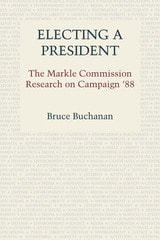
Electing a President
The Markle Commission Research on Campaign '88By Bruce Buchanan, Lloyd N. Morrisett, and Robert M. O'Neil
University of Texas Press, 1991
The image of a prison with a revolving door helped George Bush win the presidency in 1988, but did negative advertising damage the electoral process itself? Why did campaign ’88 represent an all-time low in the minds of many voters? These are some of the questions that impel this thought-provoking analysis of the 1988 presidential election, sponsored by the John and Mary R. Markle Foundation.
Using extensive empirical studies of the candidates, the media, and the voters, Bruce Buchanan, executive director of the Markle Commission on the Media and the Electorate, traces the roots of popular dissatisfaction with the 1988 election. Buchanan argues that the campaign drifted too far from popular ideals of how democratic processes ought to work—that the substitution of negative advertising and quickie “sound bites” for reasoned debate on national problems and issues alienated much of the electorate, causing the lowest voter turnout in sixty-four years.
Negative campaigning, however, cannot bear the full blame for the 1988 election. While the Markle Commission offers specific recommendations for improvements in candidate and media performance, the great need, says Buchanan, is for voters to reclaim the electoral process, to insist that candidates and the media give enough information about positions and programs for voters to make informed choices. Voters need to be educated out of the idea that democratic elections and representative government can somehow occur without the participation of ordinary citizens.
At a time when the American democratic process is being used as a model by newly independent nations around the world, it is particularly appropriate to ask how well it works at home. Electing a President does just that.