Results by title
176 books match the query 'Prevention' and 5 start with e
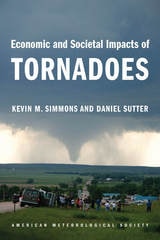
Economic and Societal Impacts of Tornadoes
Kevin M. Simmons and Daniel Sutter
American Meteorological Society, 2011
For almost a decade, economists Kevin M. Simmons and Daniel Sutter have been studying the economic impacts and social consequences of the approximately 1,200 tornadoes that touch down across the United States annually. During this time, Simmons and Sutter have been compiling information from sources such as the National Oceanic and Atmospheric Administration and the U.S. Census in order to examine the casualties caused by tornadoes and to evaluate the National Weather Service’s efforts to reduce these casualties. In Economic and Societal Impacts of Tornadoes, Simmons and Sutter present their findings. This analysis will be extremely useful to anyone studying meteorology and imperative for anyone working in emergency disaster management.

Electrical Safety
A guide to the causes and prevention of electrical hazardsJ. Maxwell Adams
The Institution of Engineering and Technology, 1994
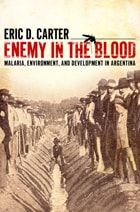
Enemy in the Blood
Malaria, Environment, and Development in ArgentinaEric D. Carter
University of Alabama Press, 2012
Tracing the Fight Against Malaria and the Making of Modern Argentina.
Enemy in the Blood: Malaria, Environment, and Development in Argentina examines the dramatic yet mostly forgotten history of malaria control in northwest Argentina. Carter traces the evolution of malaria science and policy in Argentina from the disease’s emergence as a social problem in the 1890s to its effective eradication by 1950. Malaria-control proponents saw the campaign as part of a larger project of constructing a modern identity for Argentina. Insofar as development meant building a more productive, rational, and hygienic society, the perceptions of a culturally backwards and disease-ridden interior prevented Argentina from joining the ranks of “modern” nations. The path to eradication, however, was not easy due to complicated public health politics, inappropriate application of foreign malaria control strategies, and a habitual misreading of the distinctive ecology of malaria in the northwest, especially the unique characteristics of the local mosquito vector. Homegrown scientific expertise, a populist public health agenda, and an infusion of new technologies eventually brought a rapid end to malaria’s scourge, if not the cure for regional underdevelopment.
Enemy in the Blood sheds light on the often neglected history of northwest Argentina’s interior, adds to critical perspectives on the history of development and public health in modern Latin America, and demonstrates the merits of integrative social-environmental research.
Equal Justice in the Balance
America's Legal Responses to the Emerging Terrorist ThreatRaneta Lawson Mack and Michael J. Kelly
University of Michigan Press, 2004
-Michael Ratner, President, Center for Constitutional Rights, from the foreword
"A compelling and sophisticated critique of the U.S. government's post-9/11 actions. Mack and Kelly set the stage with the historical perspective on America's response to terrorism and the assessment of terrorist threats, before launching into a comprehensive analysis of the USA Patriot Act. Their hard-hitting approach and easy-to-read style makes for a fascinating treatment of the government's legislative and executive response to the attacks."
-Michael P. Scharf, Case Western Reserve University School of Law
With its sweeping critique of the USA Patriot Act and the Bush administration's maneuvers in pursuit of terrorists, Equal Justice in the Balance is a sobering and exacting look at American legal responses to terrorism, both before and after 9/11.
The authors detail wide-ranging and persuasive evidence that American antiterrorism legislation has led to serious infringements of our civil rights. They show us how deviations from our fundamental principles of fairness and justice in times of heightened national anxiety-whether the Red Scare, World War II, or the War on Terrorism-have resulted in overreaction and excess, later requiring apologies and reparations to those victimized by a paranoia-driven justice system.
While terrorist attacks-especially on a large scale and on American soil-damage our national pride and sense of security, the authors offer powerful arguments for why we must allow our judicial infrastructure, imperfect as it is, to respond without undue interference from the politics of anger and vengeance.
Essays on Genocide and Humanitarian Intervention
Guenter Lewy
University of Utah Press, 2012
The essays in this book, written over a span of some twenty years but updated for this publication, discuss episodes of mass murder that are often considered instances of genocide: the large-scale killing of Armenians in Ottoman Turkey during World War I, the near-extinction of North America’s Indian population, the vicious persecution of the “Roma” or Gypsies under the Nazi regime. But in line with Article II of the Genocide Convention of 1948, Lewy stresses the crucial importance of looking closely at the intent of the perpetrators. In contrast to the Holocaust, the killers in the atrocities mentioned above did not seek to destroy an entire people, and so, these three large-scale killings do not deserve the label of genocide.
Lewy argues that affirming the distinctiveness of the Holocaust does not deny, downgrade, or trivialize the suffering of other people. The crimes against the Ottoman Armenians, the American Indians, and the Gypsies—even if they did not reach the threshold of genocide—involved horrendous suffering and a massive loss of life. The genocides of Cambodia and Rwanda that took place in the second half of the twentieth century remind us that man’s inhumanity to man can take many forms and is not the special prerogative of any particular group. The last essay of the collection deals with the complications of humanitarian intervention to prevent genocide. As the recent support of the Libyan rebels by NATO demonstrates, the issues raised here remain topical and controversial.