Results by title
60 books match the query 'Problem' and 3 start with e
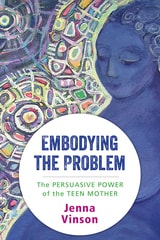
Embodying the Problem
The Persuasive Power of the Teen MotherVinson, Jenna
Rutgers University Press, 2018
Vinson shows that these representations prevent a focus on the underlying structures of inequality and poverty, perpetuate harmful discourses about women, and sustain racialized gender ideologies that construct women’s bodies as sites of national intervention and control.
Embodying the Problem also explores how young mothers resist this narrative. Analyzing fifty narratives written by young mothers, the recent #NoTeenShame social media campaign, and her interviews with thirty-three young women, Vinson argues that while the stigmatization of teenage pregnancy and motherhood does dehumanize young pregnant and mothering women, it is at the same time a means for these women to secure an audience for their own messages.
More information on the author's website (https://jennavinson.com)
Emily Dickinson's Approving God
Divine Design and the Problem of SufferingPatrick J. Keane
University of Missouri Press, 2008
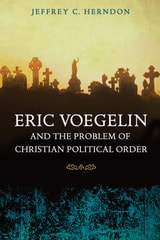
Eric Voegelin and the Problem of Christian Political Order
Jeffrey C. Herndon
University of Missouri Press, 2007
Although some critics of Eric Voegelin’s later work have faulted his failure to deal with the historical Jesus and to address the implications of Christianity for social and political life, the recent publication of Voegelin’s History of Political Ideas has allowed a more complete assessment of his position regarding the Christian political order. This book addresses that criticism through an analysis of Voegelin’s early work.
In Eric Voegelin and the Problem of Christian Political Order, Jeffrey C. Herndon analyzes the development of Voegelin’s thought regarding the origins of Christianity in the person of Jesus, the development of the church in the works of Paul, and the relationship between an immanent institutional order symbolizing the divine presence and the struggle for social and political order. Focusing on the tension between a spiritual phenomenon based on Pauline faith and the institutionalization of that experience in the church, Herndon offers one of the first examinations of the relationship of the History of Political Ideas to Voegelin’s larger body of work.
In his wide-ranging study, Herndon explores Voegelin’s examination of the problem of Christian political order from the inception of Christianity through the Great Reformation. He also presents a clarification of Voegelin’s theory of civilizational foundation and of Voegelin’s philosophy of history with regard to Christianity and Western political order.
Herndon addresses not only the nagging problem in Voegelin scholarship regarding his relationship with the historical Jesus but also the “Pauline compromises with the world” that enabled Christianity to become the instrument by which the West was civilized. He also shows that Voegelin’s interpretation of the historical pressures released by the Great Reformation is important to an understanding of his later work regarding the negative effect of Christian symbols in the creation of ideological disorder.
Eric Voegelin and the Problem of Christian Political Order clarifies issues in Voegelin studies regarding the intersection between political theory and Christian concerns, addressing the relation of religious experience to the public sphere of political life in the West and helping to explain Voegelin’s contention that the death of the spirit is the price of progress. It offers scholars a perspective heretofore lacking in Voegelin scholarship and a clearer view of Voegelin’s understanding of the Christian dispensation and its influence on the course of Western development, history, and philosophy.