Results by title
322 books match the query 'Regional' and 11 start with e
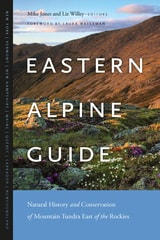
Eastern Alpine Guide
Natural History and Conservation of Mountain Tundra East of the RockiesEdited by Mike Jones and Liz Willey
University Press of New England, 2018

Echoes from the Hills
Critical Essays on Ozarks LiteratureJohn J. Han
University of Arkansas Press, 2027
Echoes from the Hills: Critical Essays on Ozarks Literature offers a sustained critical examination of Ozarks writing through literary, ecological, cultural, and theoretical perspectives. Bringing together sixteen essays, the collection marks a shift in Ozarks studies from archival recovery and author-focused scholarship toward more self-aware literary criticism, showing that Ozarks literature is a dynamic field capable of serious interpretive work.
Organized around themes such as Arcadian myth, ecocriticism, postcolonialism, feminist criticism, and noir, the essays place Ozarks texts in conversation with broader debates in American literary studies and the environmental humanities. Discussions of writers such as Daniel Woodrell and Sue Hubbell, along with attention to film and visual culture including Minari, highlight how regional stories engage issues of land use, environmental strain, economic precarity, and cultural displacement.
The collection also broadens the field by addressing gaps in representation and including a wider range of voices and perspectives. By bringing together scholars from within and beyond the region, the book encourages dialogue across disciplinary and geographic boundaries. Overall, it presents Ozarks literature as an evolving part of American literary scholarship, one that reflects the complex intersections of place, memory, identity, and cultural change.
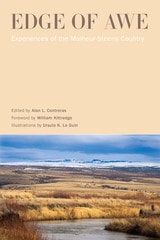
Edge of Awe
Experiences of the Malheur-Steens CountryAlan L. Contreras
Oregon State University Press, 2019
Edge of Awe celebrates the immense variety of human experience in the Malheur-Steens region. This high-desert marsh country has long been a place of human habitation, work, and recreation, but this compendium is weighted toward the writing of visitors over the past one hundred years. It encompasses a wide range of experiences, such as fishing the Blitzen River, attending the Steens Running Camp, leading a mule train on Steens mountain, looking for rare migrant birds, boating on the great marshes, and much more.
Anyone who has visited the awe-inspiring Malheur-Steens country or plans to do so, and anyone with an interest in the region, will find inspiration in this literary companion.
CONTRIBUTORS
Chas Biederman
Charles E. Bendire
Greg Bryant
Sean Burns
Alan L. Contreras
Harry Fuller
Ira N. Gabrielson
Quinton Hallett
Ada Hastings Hedges
David Hedges
Hendrik Herlyn
Meli Hull
William Kittredge
Ursula K. Le Guin
Maitreya
David B. Marshall
John F. Marshall
Tom McAllister
Thomas C. Meinzen
Peter Pearsall
Dallas Lore Sharp
William Stafford
Noah K. Strycker
Peter Walker
Ellen Waterston
C.E.S. Wood
Enchanted by Prairie
Bill Witt
University of Iowa Press, 2009
Witt gives us close-ups of pasque flower shoots covered with ice in spring, coneflowers dancing in a summer breeze, and prairie dropseed in its autumn colors as well as such prairie companions as sandhill cranes, northern harriers, and bison. His panoramic visions of prairie landscapes in all seasons focus on the personal pleasure and spiritual sustenance that connecting with prairies, even small and neglected ones, can bring us. Osha Davidson’s essay compares today’s prairie remnants with yesterday’s expanses and calls for us to restore balance to this damaged landscape. Altogether, Enchanted by Prairie celebrates today’s prairie landscape and encourages us, in Davidson’s words, to restore its “beauty and scents and textures and sounds.”
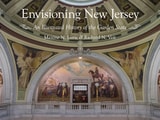
Envisioning New Jersey
An Illustrated History of the Garden StateLurie, Maxine N
Rutgers University Press, 2016
Winner of the 2017 New Jersey Studies Academic Alliance Author Award
See New Jersey history as you read about it! Envisioning New Jersey brings together 650 spectacular images that illuminate the course of the state’s history, from prehistoric times to the present. Readers may think they know New Jersey’s history—the state’s increasing diversity, industrialization, and suburbanization—but the visual record presented here dramatically deepens and enriches that knowledge.
Compiled by the authors of New Jersey: A History of the Garden State, this volume is intended as an illustrated companion to that earlier volume. Envisioning New Jersey also stands on its own because essays synthesizing each era accompany the illustrations. A fascinating gold mine of images from the state’s past, Envisioning New Jersey is the first illustrated book on the Garden State that covers its complete history, capturing the amazing transformation of New Jersey over time.
View sample pages (http://issuu.com/rutgersuniversitypress/docs/lurie_veit_envisioning_sample)
Thanks to the New Jersey Historical Commission, the New Jersey Council for the Humanities, and generous individual donors for making this project possible.
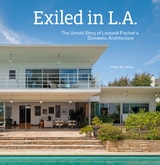
Exiled in L.A.
The Untold Story of Leopold Fischer’s Domestic ArchitectureVolker M. Welter
J. Paul Getty Trust, The, 0
In 1936, Leopold Fischer (1901–1975), in exile from Nazi Germany, arrived in California, where he created a small but distinct oeuvre of mostly domestic architecture. In contrast to his famous peers Rudolph Schindler and Richard Neutra, immigrants whose Southern California buildings are frequently examined—and who, like Fischer, studied with the modernist architect Adolf Loos—Fischer and his California structures have, until now, escaped the attention of architectural history.
Exiled in L.A. examines Fischer’s important, yet overlooked, contributions to Southern California architecture. As the whereabouts of Fischer’s archives remain unknown, Volker M. Welter grounds the designer’s California works in comparison with his pre-exile projects and the compositions of fellow architects in California. In the 1920s, Fischer created experimental working-class housing estates in Germany that pioneered ecological construction and living practices. Comparable to their predecessors, Fischer's California buildings revolve around the “functioning, the organization of a home,” as he defined domestic architecture in 1926. Featuring new photography and detailed architectural plans, this book is an original contribution to the literature on Southern California’s built heritage.
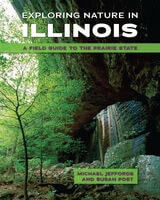
Exploring Nature in Illinois
A Field Guide to the Prairie StateMichael Jeffords and Susan Post
University of Illinois Press, 2014
From the colorful variety of birds at War Bluff Valley Audubon Sanctuary to the exposed bedrock and cliff faces of Apple River Canyon, Exploring Nature in Illinois will inspire readers to explore wonders hidden from urban sprawl and cultivated farmland. Maps and descriptions help travelers access even hard-to-find sites while a wealth of detail and photography offers nature-lovers insights into the flora, fauna, and other aspects of vibrant settings and ecosystems. The authors also include diary entries describing their own impressions of and engagement with the sites.
A unique and much-needed reference, Exploring Nature in Illinois will entertain and enlighten hikers, cyclers, students and scouts, morning walkers, weekend drivers, and anyone else seeking to get back to nature in the Prairie State.
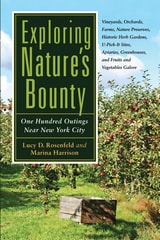
Exploring Nature's Bounty
One Hundred Outings Near New York CityRosenfeld, Lucy D
Rutgers University Press, 2012
When lifelong friends Lucy D. Rosenfeld and Marina Harrison set off on their outings in the region, they are always on the lookout for the gifts that nature offers. Exploring Nature’s Bounty, their ninth collaboration, invites us to share the rich array of agricultural delights they’ve discovered within a two-hour radius of New York City—from beautiful vineyards to the latest in hydroponic greenhouses to peach-filled orchards to community farms and historic sites.
The places chosen all welcome visitors who will see first hand the art of agriculture, pick their own produce, help out on the farm, or simply enjoy being outdoors so close to the city. Many of them are off-the-beaten-track locations where readers and their families can walk among rows of grapes, cornstalks, apple trees, and so much more. The sites range from traditional fruit orchards to greenhouses filled with water-grown tomatoes and basil to neatly ordered herb gardens in historic settings. Local vineyards make wineries fun and glamorous places to visit, whether on the North Fork of Long Island or in the Hudson Valley. Some venues focus on crop preservation—the American chestnut, for example—while others introduce readers to honey making and maple sugaring. Those interested in taking classes or seeing demonstrations will find places to do just that, and many activities are geared toward children, from corn mazes to hayrides to pumpkin picking.
Rosenfeld and Harrison provide a list of festivals featuring local produce and, at the end of the book, a guide to choosing an outing that will best fit readers, their families, and their taste buds. Directions are provided in each write-up as well as information on schedules, guided tours, and walks within many of the sites.
Exploring Nature’s Bounty focuses on the natural, the organic, the sustainable, and the close-at-hand. By avoiding places overrun with commercialism, it helps readers create their own adventures, enjoy time with family and friends, and connect to the farms that nourish us all.
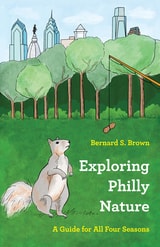
Exploring Philly Nature
A Guide for All Four SeasonsBernard S. Brown
Temple University Press, 2022
Do snakes and salamanders fascinate you or make you squeamish? Have you ever listened closely to the birds chirping in your neighborhood? Can you identify the flowers growing in Philadelphia’s urban parks? (Moreover, are the mushrooms safe to eat?) Exploring Philly Nature is amateur naturalist, urban herper,* and Grid contributor Bernard Brown’s handy guide to experiencing the flora and fauna in Philly.
This compact illustrated volume contains 52 activities from birding, (squirrel) fishing, and basement bug-hunting to joining a frog call survey and visiting a mussel hatchery. Brown encourages kids (as well as their parents) to connect with the natural world close to home. Each entry contains information on where and when to participate, what you will need (even if it is only patience), and tips on clubs and organizations to contact for access.
The city and its environs contain a multitude of species from the lichen that grows on gravestones or trees to nocturnal animals like opossums, bats, and raccoons. Exploring Philly Nature is designed to get readers eager to discover, observe, and learn more about the concrete jungle that is Philadelphia.
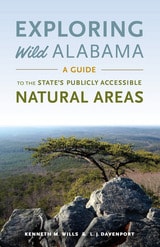
Exploring Wild Alabama
A Guide to the State's Publicly Accessible Natural AreasKenneth M. Wills and L. J. Davenport
University of Alabama Press, 2016
The most comprehensive guide available to Alabama’s publicly accessible natural destinations.
Exploring Wild Alabama is an exceptionally detailed guide to the most beautiful natural destinations in the state. From the rocky outcrops of the Appalachian plateaus to the sugar-white beaches of the Gulf Coast’s Orange Beach and Dauphin Island, Alabama offers a wealth of remarkable sites to explore by car or canoe, bicycle or motorcycle, or on foot.
Intrepid explorers Kenneth M. Wills and L. J. Davenport divide Alabama into eleven geographic regions that feature state parks and preserves, national monuments and forests, wildlife management areas, Nature Conservancy and Forever Wild properties, botanical gardens and arboreta, as well as falls, caverns, and rock cliffs. Exploring Wild Alabama provides detailed site entries to one hundred and fifty destinations. Each section is beautifully illustrated with color photographs and area maps.
Exploring Wild Alabama includes a large state map and numerous local topographic maps to help readers locate each site. Individual site entries include
· written directions to each site and GPS coordinates;
· engaging notes about the ecology, landscape features, and local species of plants and animals of the sites; and
· international recreation symbols for hiking, fishing, boating, camping, hunting, and other fun outdoor activities.
Wills and Davenport guide travelers to Alabama jewels such as Sand Mountain’s Chitwood Barrens, which harbors the rare Green Pitcher Plant and other exotic botanical species; Blowing Springs Cave in Lauderdale County, named for the cool air and the clear spring flowing out of the cave opening; Jackson Prairies in the Lime Hills region; and Booker’s Mill in Conecuh County, offering diverse habitats and historic structures.
Long a favorite destination for outdoor sports enthusiasts, Alabama is fast becoming a major “ecotourism” destination, with thousands of travelers discovering the state’s unsung natural treasures. Exploring Wild Alabama will be used and trusted by anyone who loves the outdoors—birders, botanists, cave explorers, cyclists, hunters, fishermen, rock climbers, canoeists, teachers, and other outdoor enthusiasts.
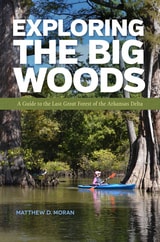
Exploring the Big Woods
A Guide to the Last Great Forest of the Arkansas DeltaMatthew D. Moran
University of Arkansas Press, 2016
Exploring the Big Woods: A Guide to the Last Great Forest of Eastern Arkansas is both a natural history and a guide to one of the last remnants of Mississippi bottomland forest, an ecosystem that once stretched from southern Illinois to the Gulf Coast.
Crossed by the White River and its tributaries, which periodically flood and release nutrients, the Big Woods is one of the few places in the Mississippi River Valley where this life-giving flood cycle persists. As a result, it is home to an unusual abundance of animals and plants.
Immense cypresses, hickories, sweetgums, oaks, and sycamores; millions of migrating waterfowl; incredible scenery; and the complex relationship between humans and nature are all to be discovered here.
Exploring the Big Woods will introduce readers to the natural features, plants, animals, and hiking and canoeing trails going deep into the forests and swamps of this rare and beautiful natural resource.