Results by title
177 books match the query 'Shakespeare' and 6 start with e
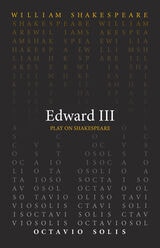
Edward III
William Shakespeare
Arizona Center for Medieval and Renaissance Studies, 2022
Written after England’s victory over the Spanish Armada in 1588, Edward III follows the exploits of King Edward III and his son Edward, the Black Prince of Wales. England dominates on the battlefield as the play explores questions of kinghood and chivalry through the actions of King Edward and his son. Octavio Solis’s translation of the play provides all of the complexity and richness of the original while renewing the allusions and metaphors lost through time.
This translation of Edward III was written as part of the Oregon Shakespeare Festival’s Play On! project, which commissioned new translations of thirty-nine Shakespeare plays. These translations present work from “The Bard” in language accessible to modern audiences while never losing the beauty of Shakespeare’s verse. Enlisting the talents of a diverse group of contemporary playwrights, screenwriters, and dramaturges from diverse backgrounds, this project reenvisions Shakespeare for the twenty-first century. These volumes make these works available for the first time in print—a new First Folio for a new era.
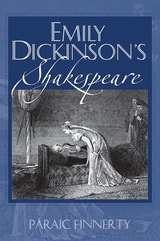
Emily Dickinson's Shakespeare
Paraic Finnerty
University of Massachusetts Press, 2006
Páraic Finnerty clarifies the essential role that Shakespeare had in Dickinson's life by locating her allusions to his writings within a nineteenth-century American context and by treating reading as a practice that is shaped, to a large extent, by culture. In the process, he throws new light on Shakespeare's multifaceted presence in Dickinson's world: in education, theater, newspapers, public lectures, reading clubs, and literary periodicals.
Through analysis of letters, journals, diaries, records, periodicals, newspapers, and marginalia, Finnerty juxtaposes Dickinson's engagement with Shakespeare with the responses of her contemporaries. Her Shakespeare emerges as an immoral dramatist and highly moral poet; a highbrow symbol of class and cultivation and a lowbrow popular entertainer; an impetus behind the emerging American theater criticism and an English author threatening American creativity; a writer culturally approved for women and yet one whose authority women often appropriated to critique their culture. Such a context allows the explication of Dickinson's specific references to Shakespeare and further conjecture about how she most likely read him.
Finnerty also examines those of Dickinson's responses to Shakespeare that deviated from what might have been expected and approved of by her culture. Imaginatively departing from the commonplace, Dickinson chose to admire three of Shakespeare's most powerful and transgressive female characters—Cleopatra, Queen Margaret, and Lady Macbeth—instead of his more worthy and virtuous heroines. More startling, although the poet found resonance for her own life in Hamlet, Romeo and Juliet, and Macbeth, she chose, in the racially charged atmosphere of nineteenth-century America, to identify with Shakespeare's most controversial character, Othello, thereby defying expectations once again.
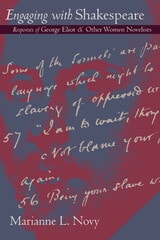
Engaging with Shakespeare
Responses of George Eliot and other Women NovelistsMarianne L. Novy
University of Iowa Press, 1998
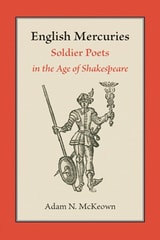
English Mercuries
Soldier Poets in the Age of ShakespeareAdam N. McKeown
Vanderbilt University Press, 2009
These misgivings are a powerful undercurrent in much of the literature of the period, even the most ostensibly patriotic works, but it is in the writings on war by soldier poets where they are most clearly pronounced. Fashioning themselves as servants of both Mars and Mercury (the god of war and the god of writing), Elizabethan soldier poets focused their war stories on the gritty realities of military campaigning, the price individuals paid for serving the state, and the difficulties of returning to civilian life. The book reconsiders some familiar writers like John Donne and Ben Jonson in the context of their military experiences and provides comprehensive studies of some important but underappreciated soldier poets like Thomas Churchyard, George Gascoigne, and John Harington.

Essaying Shakespeare
Karen Newman
University of Minnesota Press, 2009
A pioneering scholar of Shakespeare and early modern letters provides an overview of work in the field
For more than twenty-five years, Karen Newman has brought her critical acumen to bear on early modern studies. In this collection of her essays on Shakespeare—some acknowledged classics and others never before published—Newman shows how changing theoretical trends have shaped Shakespeare studies, from new historicism and gender studies to critical race studies and globalization.
Central to Newman’s work is social exchange, or the circulation of people and objects. At least two of these essays have had a powerful and lasting impact on Shakespeare studies: “Renaissance Family Politics and Shakespeare’s The Taming of the Shrew” and “‘And wash the Ethiop White’: Femininity and the Monstrous in Othello.” Three essays appear in print for the first time: an examination of clothing of the poor and the portrayal of the king as a beggar in Richard II; a stinging review of Harold Bloom’s book Shakespeare: The Invention of the Human; and a rethinking of claims about the globalization of culture and cultural translation.Essaying Shakespeare chronicles Newman’s own critical development to provide a significant map of critical work on Shakespeare.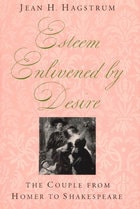
Esteem Enlivened by Desire
The Couple from Homer to ShakespeareJean H. Hagstrum
University of Chicago Press, 1992
Hagstrum looks mainly at depictions of love in art and literature, works of the imagination that reflect social reality but also often transcend it to challenge restrictive codes and open up new possibilities for human nature. Among these possibilities, the association of esteem with sexual desire is one of the most invigorating that artists and thinkers have ever addressed. Tracing this motif through many different kinds of expression—from the Homeric epics, the Oresteia, Augustine's Confessions to the stories of Ovid, the Decameron, the plays and sonnets of Shakespeare—Hagstrum also illuminates a number of related themes, including other forms of relationship, from friendship to lust; marriage for political ends; liaisons with the same sex; and the presence of passion in religious commitment.
The culmination of Hagstrum's long career, Esteem Enlivened by Desire offers generous insight into the amorous heritage of the West—and honors one of its most important, enduring, and hard-won achievements.